Last Updated on January 2, 2026
A Shinkansen Train Trip
One autumn day, my mother and I took a shinkansen train trip from Tokyo to Karuizawa in Nagano Prefecture. Nagano Prefecture may feel a bit far from Tokyo, but Japan’s bullet train makes it possible to get there in about one hour.
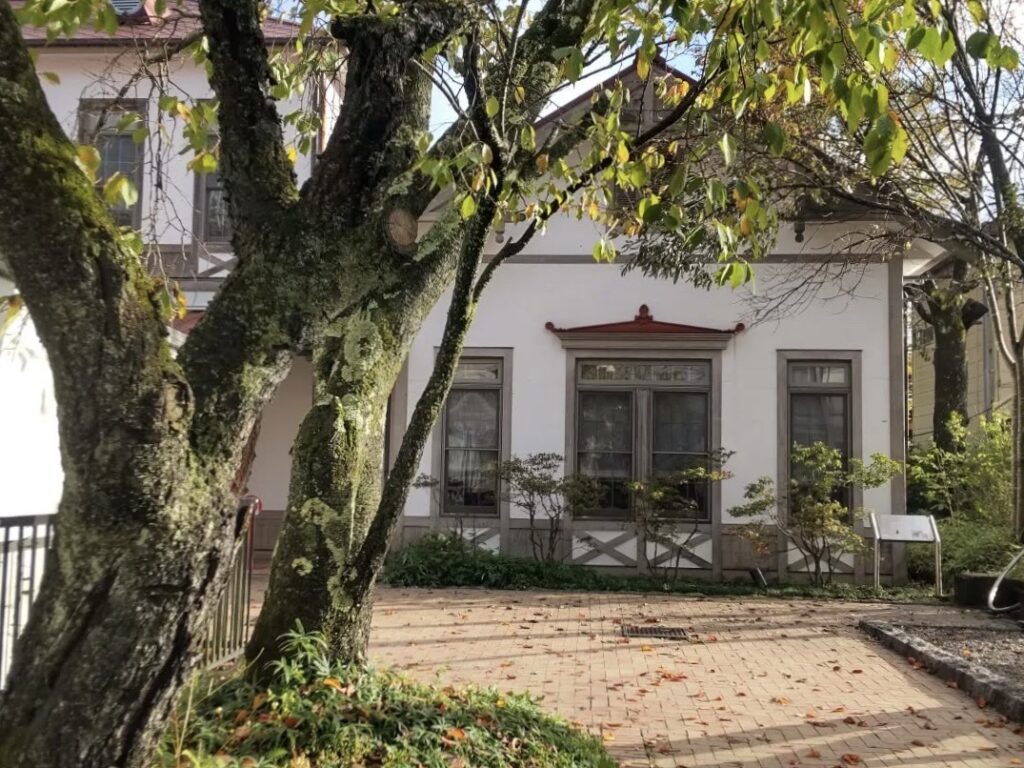
The main photo shows Karuizawa’s old station building. Karuizawa’s story began in 1888 when Canadian missionary A.C. Shaw built a villa here. Surrounded by lush nature, it stays cool even in summer, making it a popular place for vacation homes. The town also has many shops selling bread, ham, and other goods favored by villa owners, and it gradually developed as a tourist destination.
So we decided to take a little trip, leaving everyday life behind to enjoy nature and a touch of elegance.
 Hakutaka
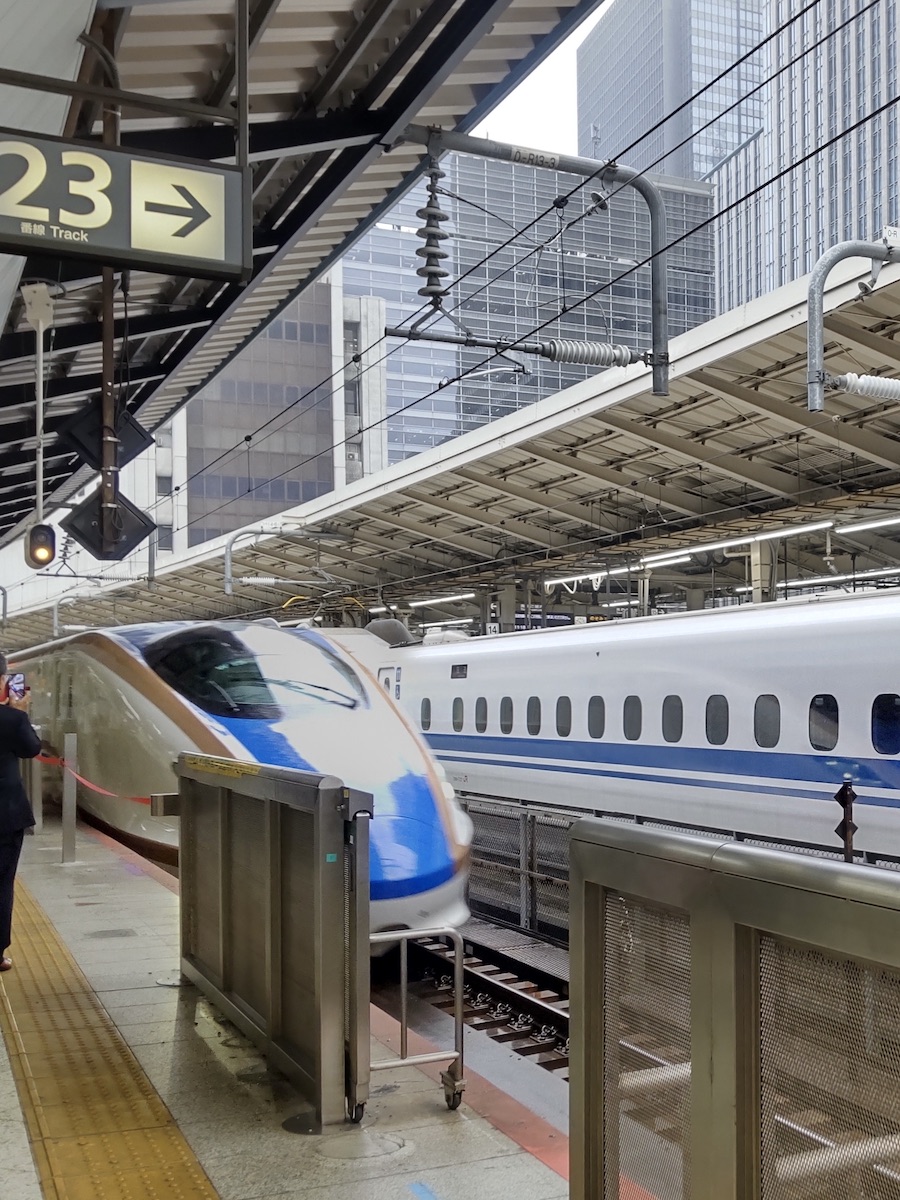 Hakutaka
Now, the Shinkansen for Karuizawa has arrived. It departs from Tokyo at 10:33 a.m. and Karuizawa is the fourth stop. This Shinkansen is an E7 or W7 series, with a stylish calm blue and bronze color scheme.
Many boys love Shinkansen trains, so it’s not uncommon for their parents to learn a lot about the train too. These Shinkansen trains run from Tokyo toward Niigata and the Hokuriku region.
Out of all the Shinkansen trains, this one is my favorite.
Train Snacks
Inside Tokyo Station, you can find a large shopping complex called Gransta. It offers a wide variety of Japanese and Western sweets, fresh desserts, bakeries, restaurants, and cafés.
I had enough time before departure, so I did some shopping. However, Tokyo Station is very crowded and busy. Therefore, make sure to stay alert so you don’t get lost when boarding the train.
For this trip, my train snacks were fried manju, okaki (rice crackers), and hojicha tea.
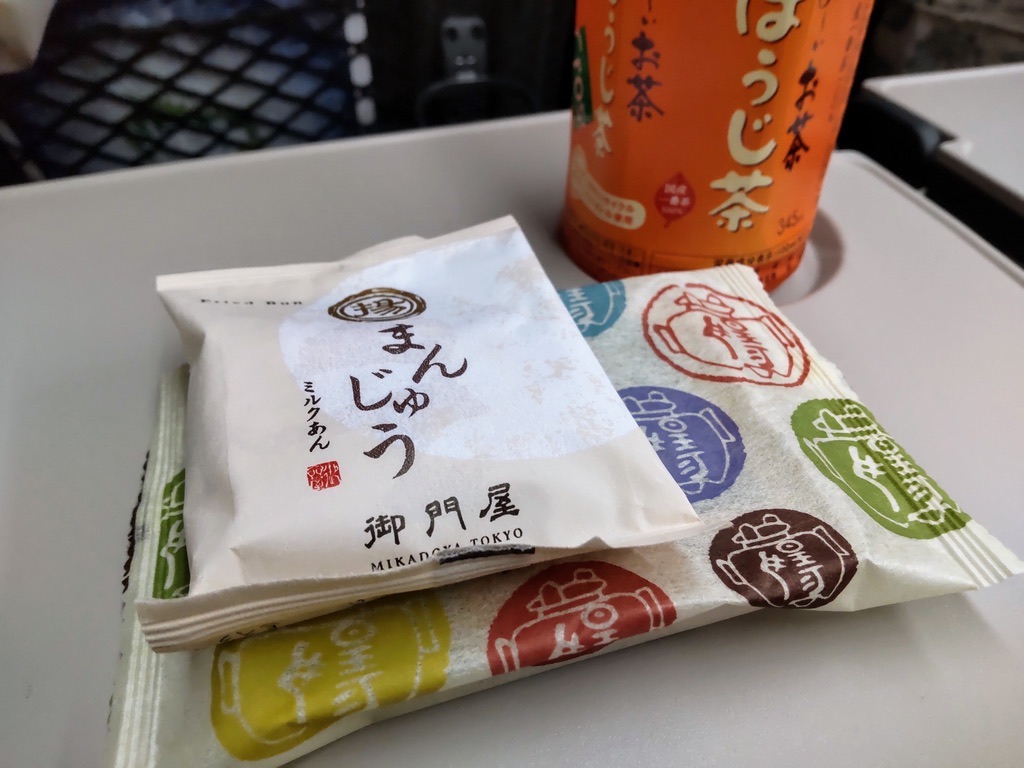
Many of you may know that manju is a steamed sweet. People make it from flour and sweet red bean paste. Fried manju is just manju that people deep-fry, and it tastes a bit like a donut. I’ll include details about the shop in the information section below.
I really liked the manju’s filling—it was white bean paste with a hint of milk. The okaki (rice crackers) came in various flavors, and my mother and I enjoyed them while sharing our thoughts on the taste and taking in the scenery.
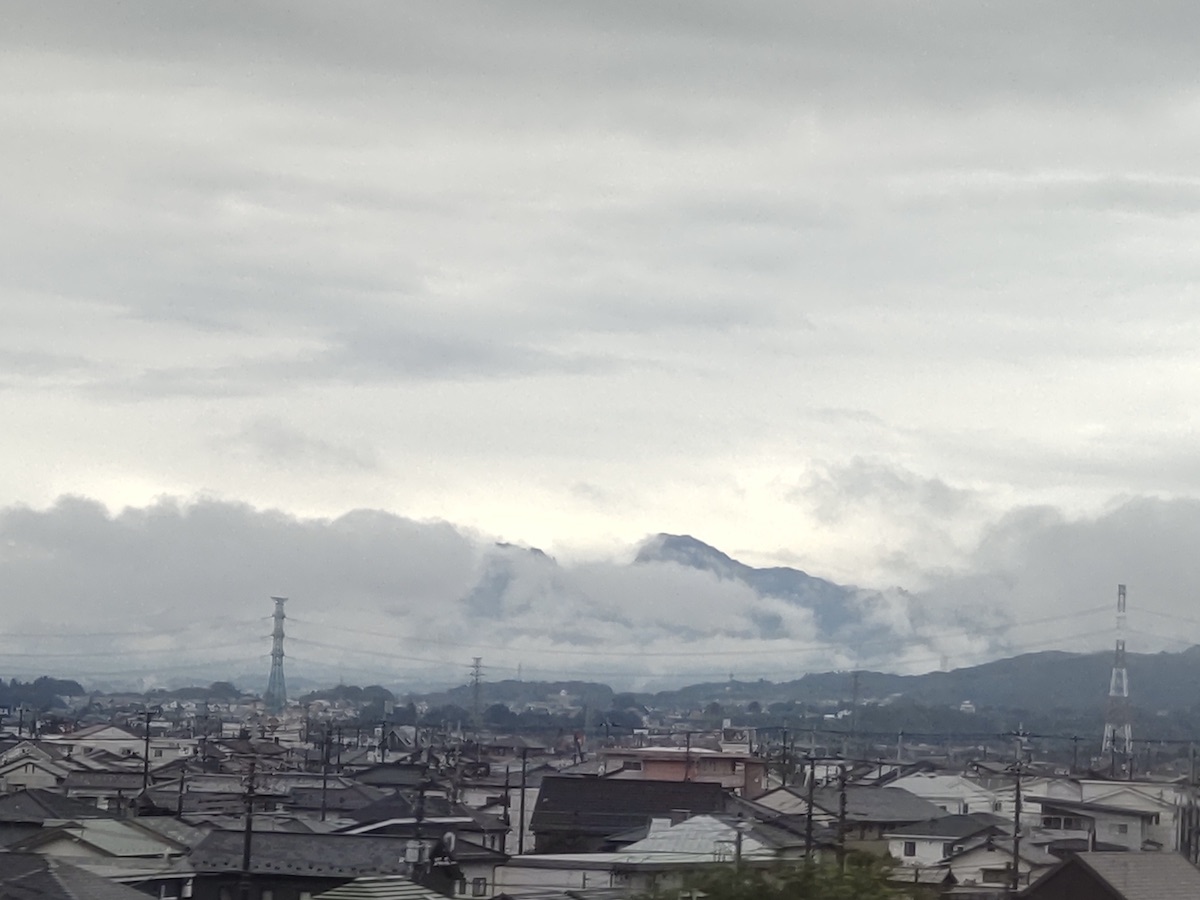
The mountains of Gunma came into view, and before we knew it, we arrived in Karuizawa, amazed at how quickly the journey had passed. Around the station, there are places you can reach on foot or by bus, but we wanted to visit some spots farther away, so we rented a car first.
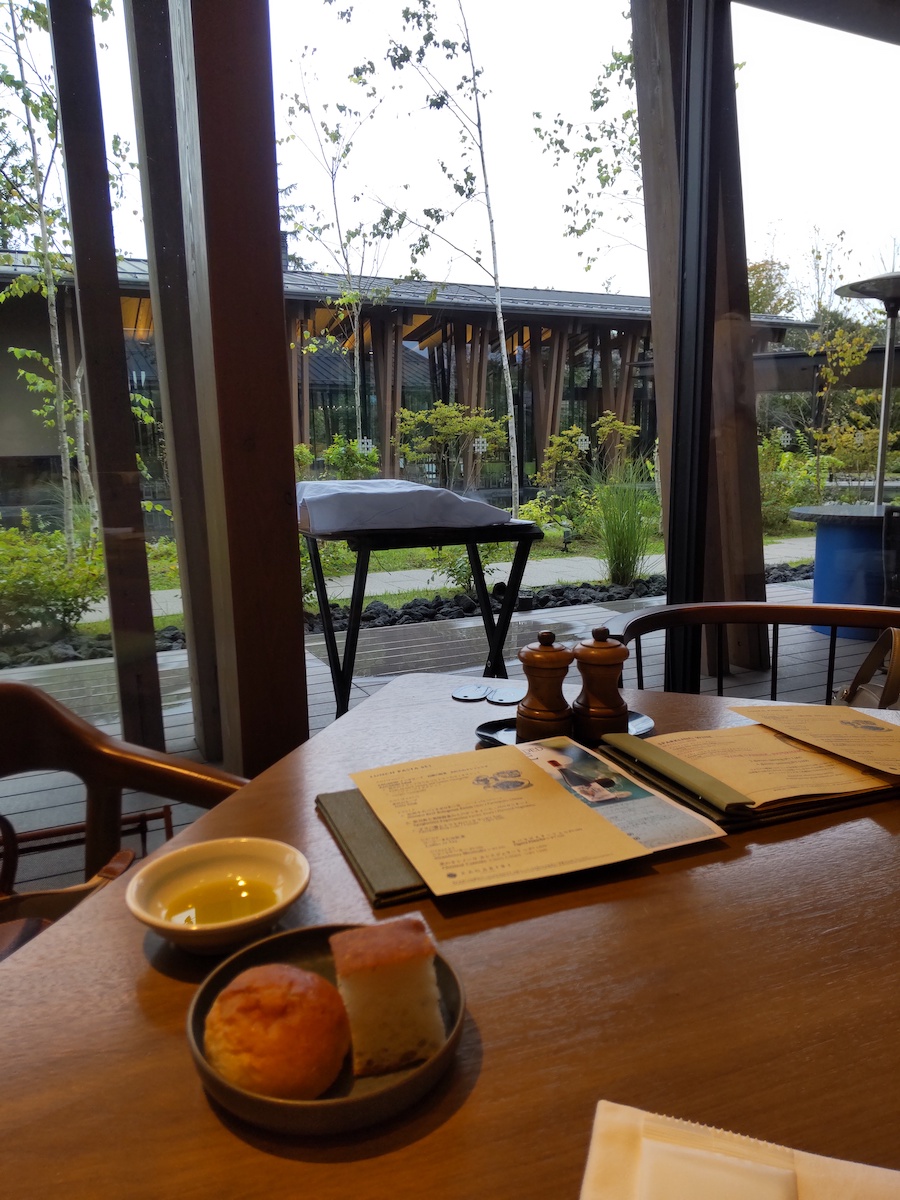
It was almost lunchtime, so we headed to KAGARIBI, a restaurant at Hotel Indigo that we had reserved.
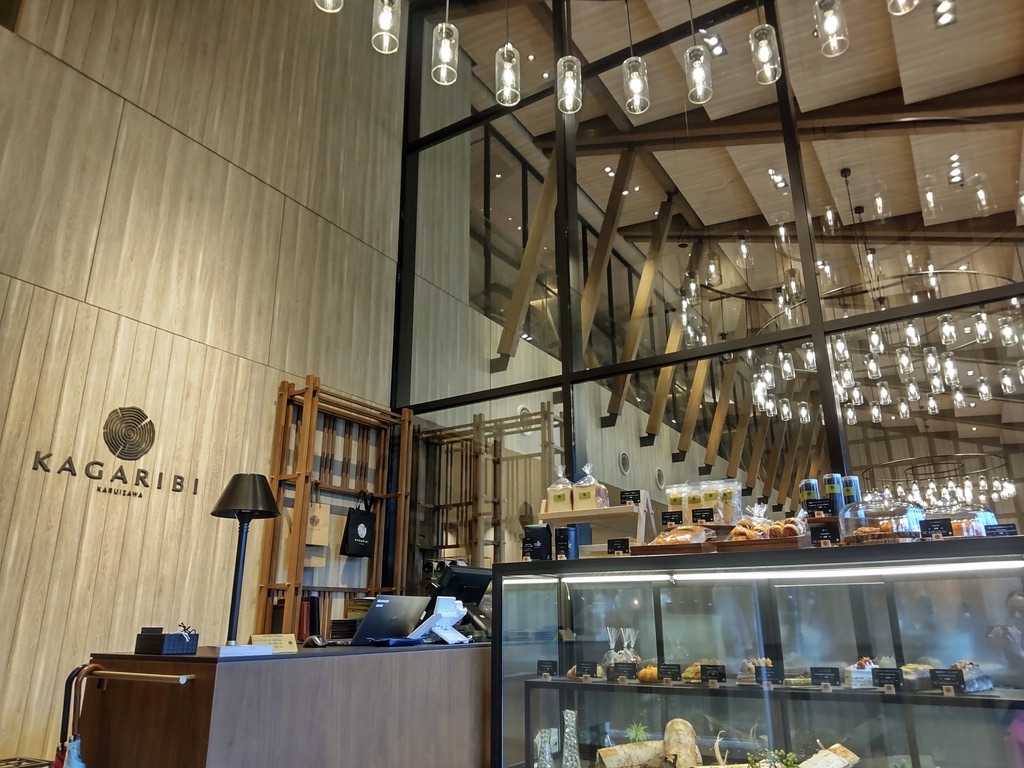
In Japanese, “kagaribi” means a fire lit to light the way at night. Hotel Indigo Karuizawa opened in 2022, and I had been wanting to visit. We couldn’t stay this time because our family was waiting for us at home, but we still got to enjoy the atmosphere.
KAGARIBI
 KAGARIBI
Hotel Indigo is an IHG Hotels & Resorts brand that focuses on offering neighborhood-inspired experiences unique to each location. It was unfortunately a rainy day, but the interior was beautiful with high ceilings and large windows, and we were given a spacious, open seating area.
Finally, it’s lunchtime!
Continue reading the next part below.
Shop Info
Tokyo station mall
– GRANSTA English website
Fried manju and rice cracker
– Mikadoya
Price:
Fried manju milk flavor
Set of 3 – 2.82 USD / 2.39 EUR
Okaki – 0.96 USD / 0.81 EUR
(approximate conversion from JPY)
Restaurant Info
KAGARIBI
Price:
Italian lunch course
– 24.32 USD / 20.63 EUR
(approximate conversion from JPY)
Access:
2.4 Km / 1.49 mi from Karuizawa Station
Instagram: @hotelindigokaruizawa
All info is current as of my visit.