Last Updated on September 19, 2026
Disclosure: This article may contain affiliate links.
If you’re looking for Kabuki tickets in Tokyo, Kabukiza Theater is one of the best-known places to experience traditional Japanese theater.
After finishing an exam at Kabukiza Tower in Ginza, I treated myself to a relaxing matcha break at a nearby tea cafe. If you’re curious about Kabuki or want an easy way to experience traditional Japanese culture in Tokyo, this post shares my personal experience along with practical tips on tickets, seating, and enjoying both Kabuki performances and nearby food spots.
What you will learn in this guide:
- Kabuki basics – History of Kabukiza Theater and Kabuki traditions
- Choosing seats – From premium to single-act Hitomakumi options
- Budget tips – Online reservations, upgraded seats, and English subtitles
- Tea at Jugetsu-do – Matcha, seasonal wagashi, and tea ceremony culture
- Lunch in Ginza – Charcoal-grilled fish and crowd/seating tips
- Cultural outing tips – Combining theater, food, and a relaxing experience
Kabukiza Theater & Tower
On this day, I went to Kabukiza Tower to take an exam related to bookkeeping. Kabukiza Tower, built in 2013 along with the rebuilding of the Kabukiza Theater due to its aging structure, is a large office building that also houses a venue for certification exams. That is why I chose this venue, thinking I could have something delicious after the exam.
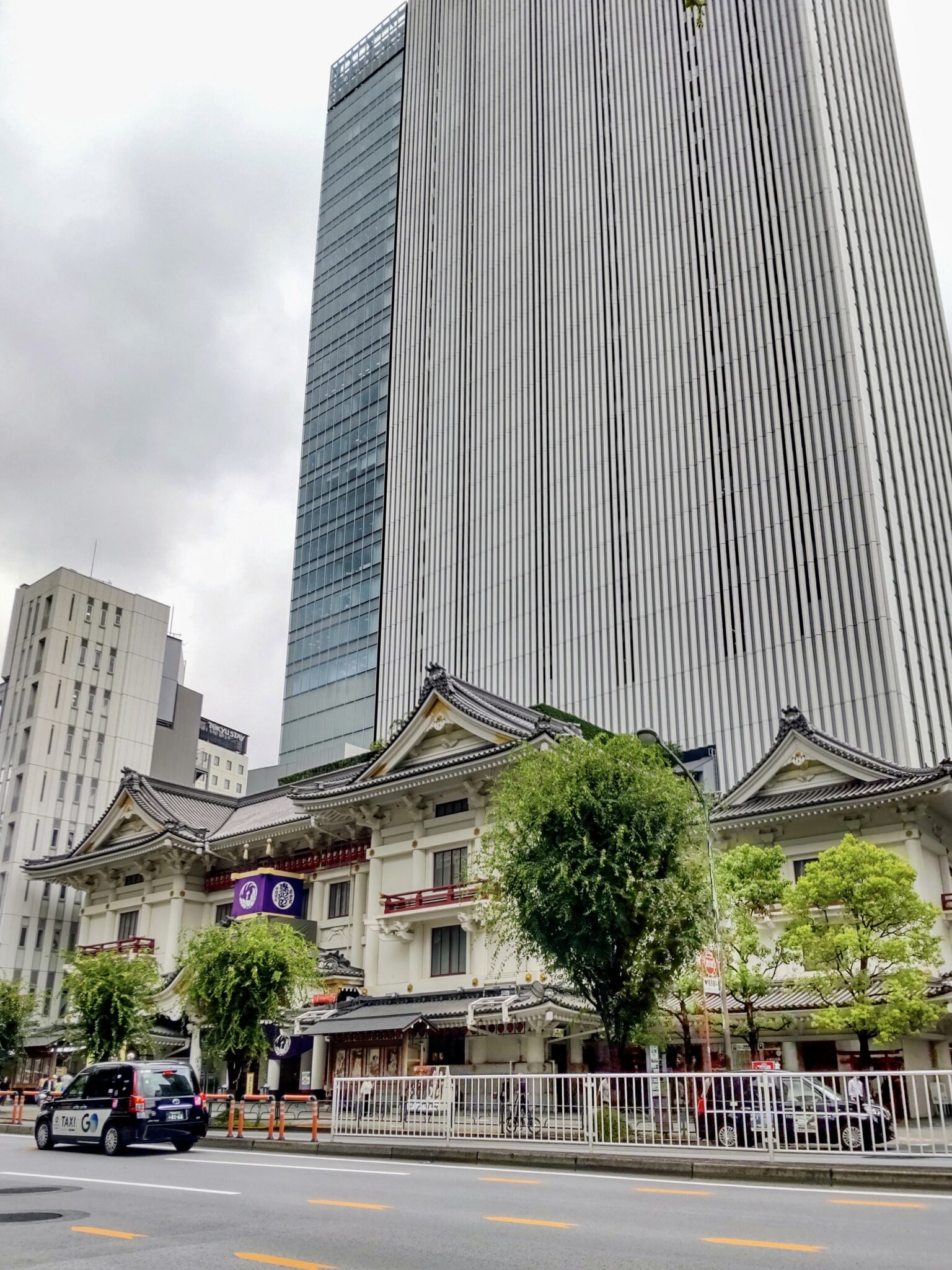
This is the current Kabukiza Theater and Kabukiza Tower. I had visited the theater several times to see Kabuki performances even before Kabukiza Tower was built. The current Kabukiza Theater has a main entrance and a small souvenir shop on the 1st floor (street level in Japan). Below, the basement mall has many stores selling Japan-themed products.
A Brief History of Kabuki
Kabuki began in Kyoto in the early 1600s, around the same time opera was born in Europe. In 1624, the first Nakamuraza theater was established in Edo (present-day Tokyo), making Kabuki a popular form of entertainment in the city.
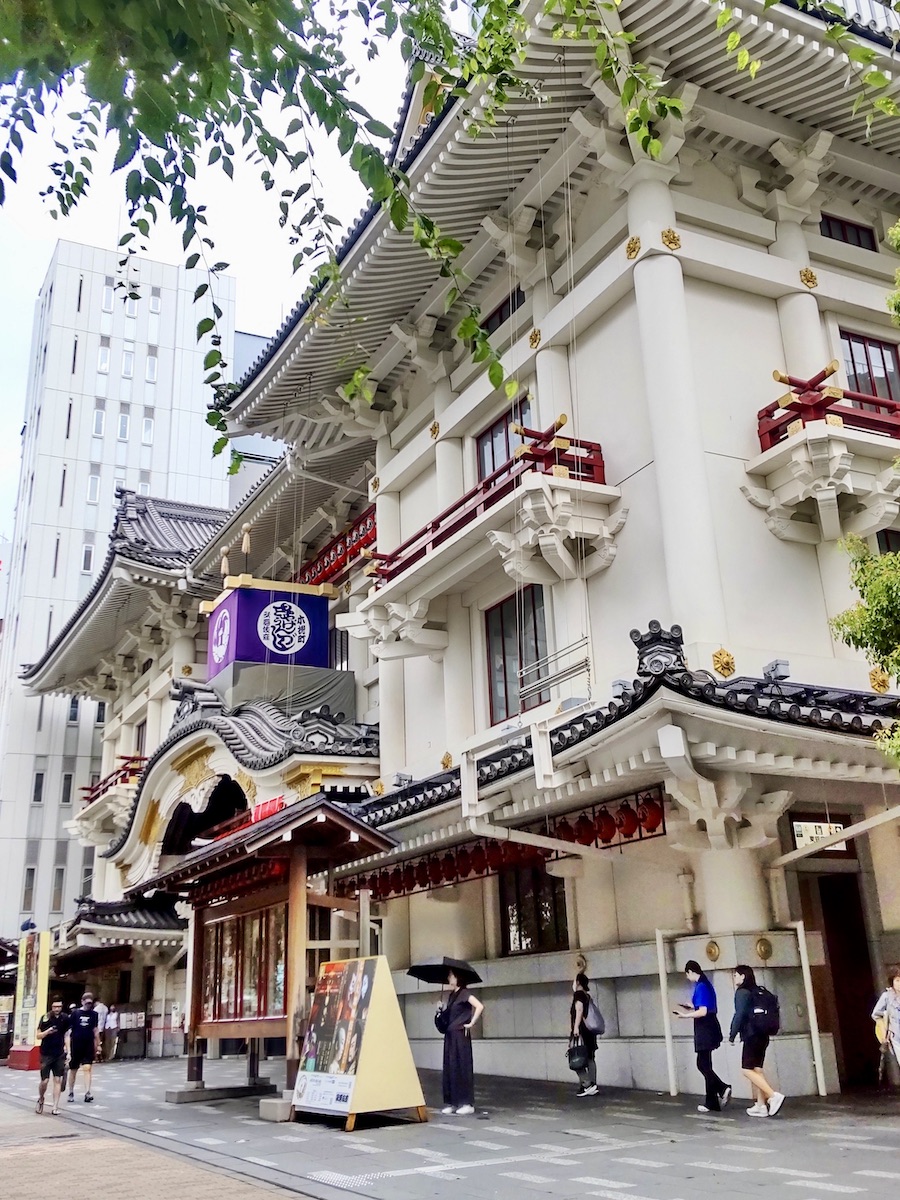 The Kabukiza Theater itself opened in 1889. It has since undergone four major reconstructions to reach its current form. Interestingly, the very first Kabukiza was actually a Western-style building—a surprising fact even for many Japanese fans!
Kabuki Tickets
Is Kabuki Expensive?
Kabukiza Theater has seating up to the fourth floor. Ticket prices currently range from around ¥5,000 (approx. $31.7 / €27.3) for 3rd-floor seats to around ¥20,000 (approx. $127 / €109) for seats on the 1st floor, depending on how easily you can see the stage. Except for special performances or opening and closing shows, prices for each seat type remain mostly the same throughout the year.
Which Seats Should You Choose?
The Kabukiza seating chart shows a runway-like stage extending through the audience on the left side. This is called the hanamichi. Actors often perform or enter along the hanamichi toward the premium seats. These seats cost the most. Even if your tickets are elsewhere, watching the hanamichi can offer dramatic moments when actors run along it.
Depending on availability, it’s better to choose seats closer to the front and near the hanamichi. However, some performances do not use the hanamichi at all, so please check in advance. The hanamichi is like an optional feature for dramatic entrances or effects.
Also, although the number of performances is limited, some Kabuki plays—such as Yoshitsune Senbon Zakura—use a stage trick called “chunori,” where actors are lifted into the air with wires. In some cases, they can fly as high as the 3rd-floor seats. For more details, contact Kabukiza Theater directly. English assistance is available.
Tips for Seeing Kabuki on a Budget
You may have noticed that Kabukiza Theater has four floors of seating, but the ticket information often lists seats only up to the 3rd floor. That’s because the 4th-floor seats, called Hitomakumi seats, let you enjoy just a single act of the performance—a perfect option if you want to experience Kabuki without committing to the full show.
Prices are very reasonable, ranging from around ¥1,000 (approx. $6.3 / €5.5) to ¥3,000 (approx. $19.0 / €16.4). Please note that the cheapest option may sometimes be a traditional dance performance rather than a Kabuki play with a story, so please be careful when choosing the performance.
In Japan, these seats are often used by devoted Kabuki fans who visit Kabukiza regularly. But thanks to this system, even first-time or curious visitors can enjoy Kabuki without spending too much. I think these tickets are perfect for anyone who wants to get a feel for the theater’s atmosphere or experience a short taste of Kabuki drama.
How to Buy Hitomakumi Tickets
To reserve Hitomakumi tickets, go to the Shochiku Multilingual Online Ticket site and select “Single Act.” However, the number of seats is limited, and sometimes tickets may not be available. Please check in advance.
In the past, visitors could only get these tickets by lining up on the day of the performance. Since 2023, however, the theater allows online purchases starting at 12:00 p.m. the day before your visit. While a few same-day tickets remain, most seats are reserved, so I recommend booking online to secure your spot. From my experience, even catching just one act gives a memorable glimpse into this centuries-old art form.
Securing Your Seat Online
Since 2023, you can reserve Hitomakumi (single-act) tickets online starting at 12:00 p.m. the day before your visit. While a few walk-in tickets may be available, booking through the official Shochiku multitasking site is highly recommended to ensure you don’t miss out on this affordable way to experience Kabuki.
Single-Act tickets must be booked through the official website, but for an easier option, you can also find selected regular seats on GetYourGuide.
NOTE
- The 4th-floor seats are very far from the stage, so it’s safe to say you won’t be able to see the actors’ expressions.
- The 4th-floor seats have a separate entrance, so you cannot access the 1st–3rd floors (including the food court and shops) from there.
- Hitomakumi seats are sold per act, with a complete change of audience after each act. A single Kabuki story is typically made up of around three acts.
- The number of seats is limited, and sometimes tickets may not be available. Please check in advance.
Other rules are the same as for regular seats. Even if your view is limited, please try not to lean forward and block the person behind you. During the performance, it’s best to remain quiet, avoid kicking or pushing the seat in front, and avoid using your smartphone during the performance. These guidelines are similar to those you might follow in a movie theater, and they are by no means difficult to follow.
Opera Glasses at Kabukiza
Functional opera glasses are not available for rental at the 4th-floor Hitomakumi seats. The theater does sell simple 3× magnification glasses at the ticket counter, but I actually bought one once, but I couldn’t see anything clearly. Currently, they seem to sell for around ¥1,000, but I highly recommend bringing your own. For watching Kabuki performances, opera glasses with 6× to 8× magnification are considered ideal.
I heard that some visitors with regular tickets were able to borrow a functional opera glass at Kabukiza for an extra ¥500 plus a refundable deposit of ¥5,000. But I couldn’t find any information about this on the official website. Also, I heard that the souvenir shop used to sell 8× opera glasses featuring the Kabukiza logo for around ¥2,500. However, availability may have varied, so it’s best to check in advance.
Upgrade Hitomakumi Seats
Compared with the regular seats, the 4th-floor seats are quite narrow, and even many Japanese visitors find them tight. Some overseas visitors may find them especially uncomfortable. For this reason, the theater allocates part of the First Class seating to Upgraded Hitomakumi tickets. These tickets appear to be unavailable on Japanese-language websites.
Ticket prices currently range from around ¥4,000 (approx. $25.4 / €21.8) to ¥9,000 (approx. $57.0 / €49.1), depending on the performance. Compared with the 4th-floor Hitomakumi seats, these 2nd-floor seats make it easier to fully enjoy the performance without feeling detached from the stage.
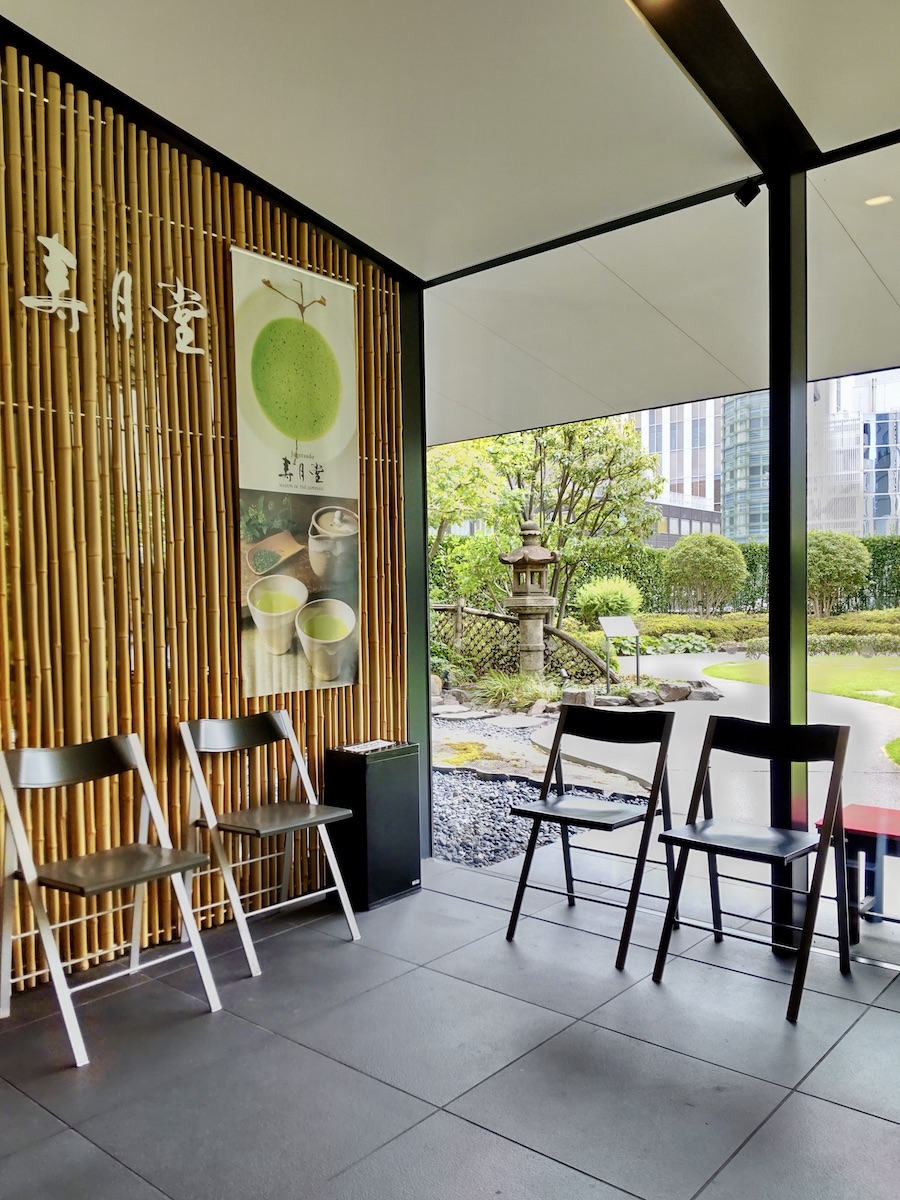 This is a shop called Jugetsu-do. Jugetsu-do is a Japanese green tea specialty shop opened in 2003 in Tsukiji by a seaweed merchant that has been in business since the Edo period. They expanded to Paris in 2008 and opened this location in Kabukiza Tower in 2013.
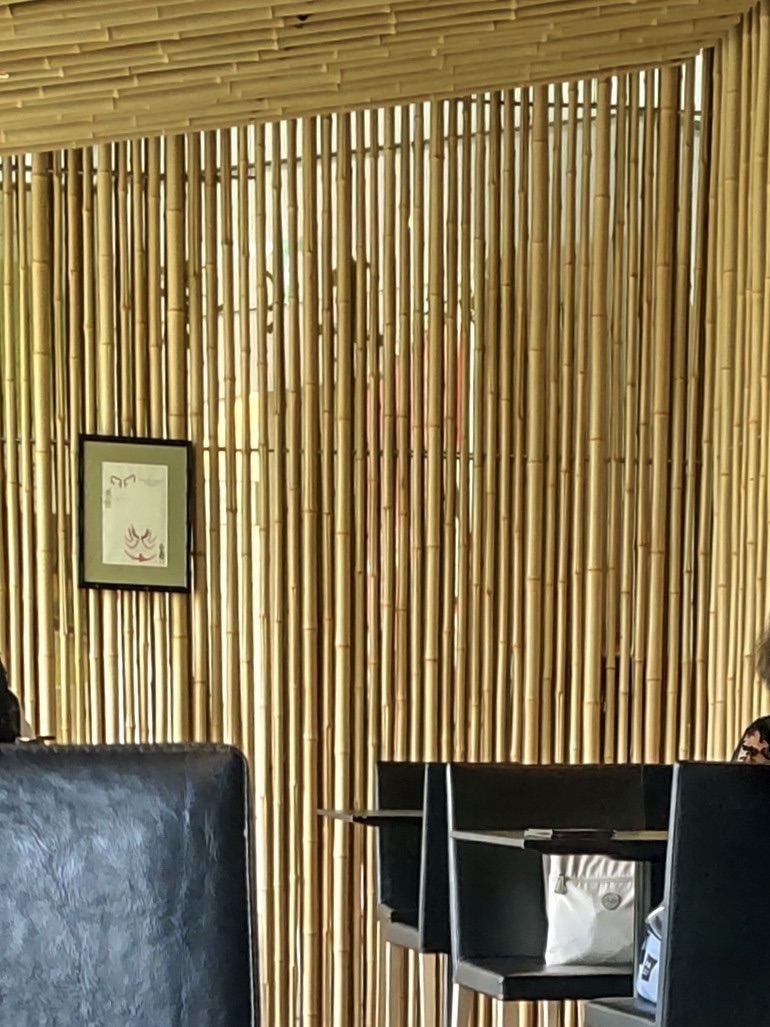 Kengo Kuma is famous for his designs that blend Japanese tradition with modern elements using natural materials. In this shop and cafe area, his style creates an atmosphere that perfectly complements a Japanese tea shop. Also, here you can enjoy tea while overlooking a beautiful Japanese garden, right in the heart of the city. You can even step outside to explore the garden.
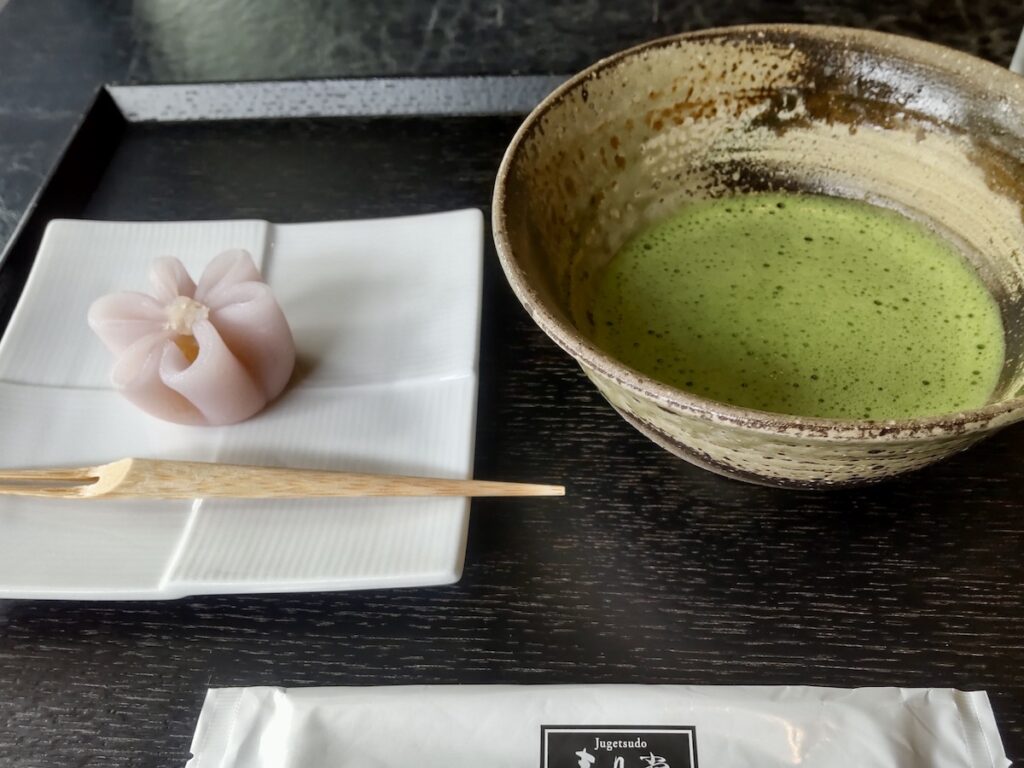
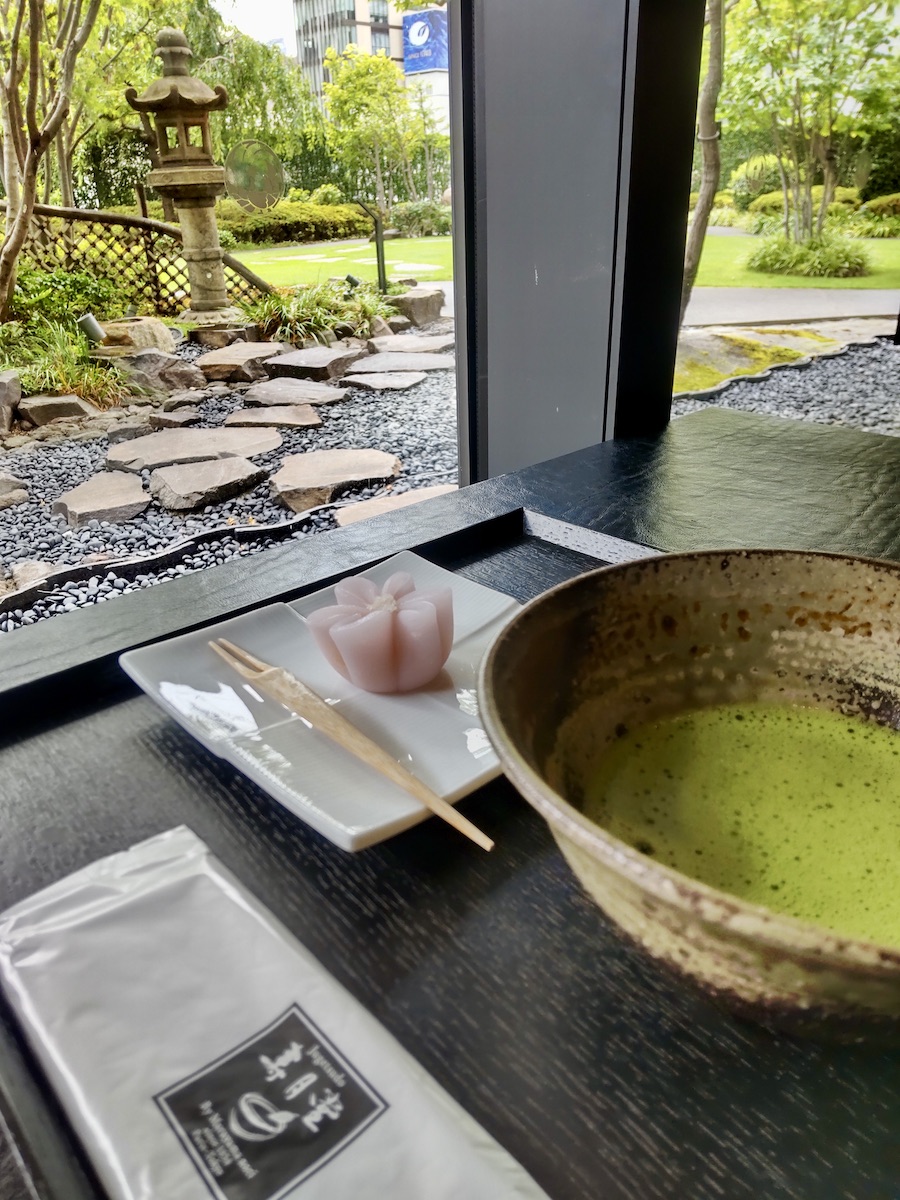 At the Jugetsu-do Kabukiza branch, you can enjoy wagashi from Shiose Sohonke. I was told that this particular sweet was designed with a Clematis (tessen in Japanese) motif. The wagashi, inspired by a flower that begins blooming in early summer, gave me a sense of the new season and lifted my spirits. I also felt a warm appreciation for the thoughtfulness behind it.