Last Updated on September 19, 2026
Disclosure: This article may contain affiliate links.
On a day in March, my mother and I took a day trip from Tokyo to Morioka in Iwate. From scenic train views to local cuisine and cozy cafés, this post shares our experience and provides practical tips for making the most of a short visit.
In this guide, you will find:
- Tohoku Shinkansen tips: Choosing seats and enjoying scenic views, including Mount Fuji
- Hayabusa & Komachi: Key differences and what to expect when they run together
- Exploring Morioka: Must-try local foods like Jajamen and recommended cafés like Kōgensha
- Crowd management: Tips for avoiding long waits at popular spots
- Travel savings: How to make the most of JR East Pass and other discounts
About this trip:
| Route | Tokyo Station to Morioka Station |
| Travel time | About 2 hr 15 min (one way) |
| Train | Tohoku Shinkansen |
| Fare | JR East Tabi Kyun Early Bird Pass (1-day pass) ¥10,000 (approx. $61.5 / €53.9) *The JR East Tabi Kyun Early Bird Pass was a limited-time rail pass that allowed unlimited travel for ¥10,000 on the day of travel. |
Tohoku Shinkansen
It takes a little over two hours to get from Tokyo to Morioka, Iwate, by Shinkansen. The Shinkansen is Japan’s bullet train. There are various types of trains, and it’s not only convenient for travelers but also very popular with children.
When my children were little, I used to take them to various train-spotting spots just to catch a glimpse of these Shinkansens. I will never forget how they would excitedly try to tell me how fast the trains were or describe the “clunk!” of the coupling with big gestures.
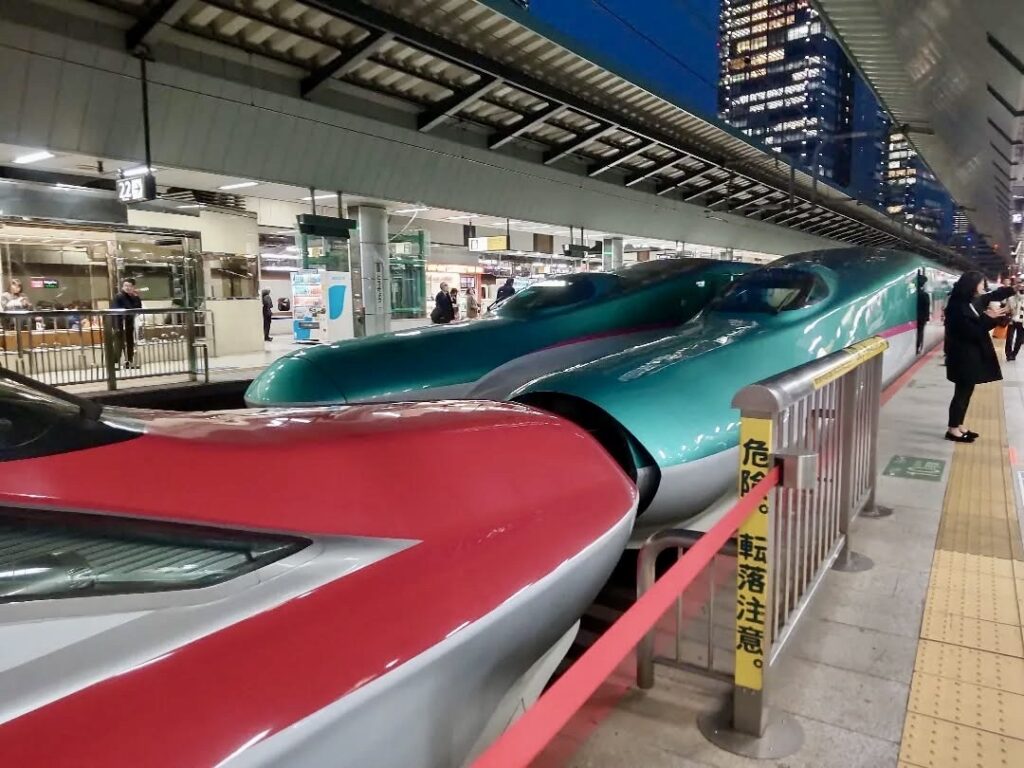
The red Shinkansen in the front is the Komachi, and the green one behind is the Hayabusa. From Tokyo to Morioka, they run coupled together. Then, at Morioka, the trains separate: the Komachi heads west to Akita, while the Hayabusa continues north to Aomori.
Scenic Views from the Shinkansen
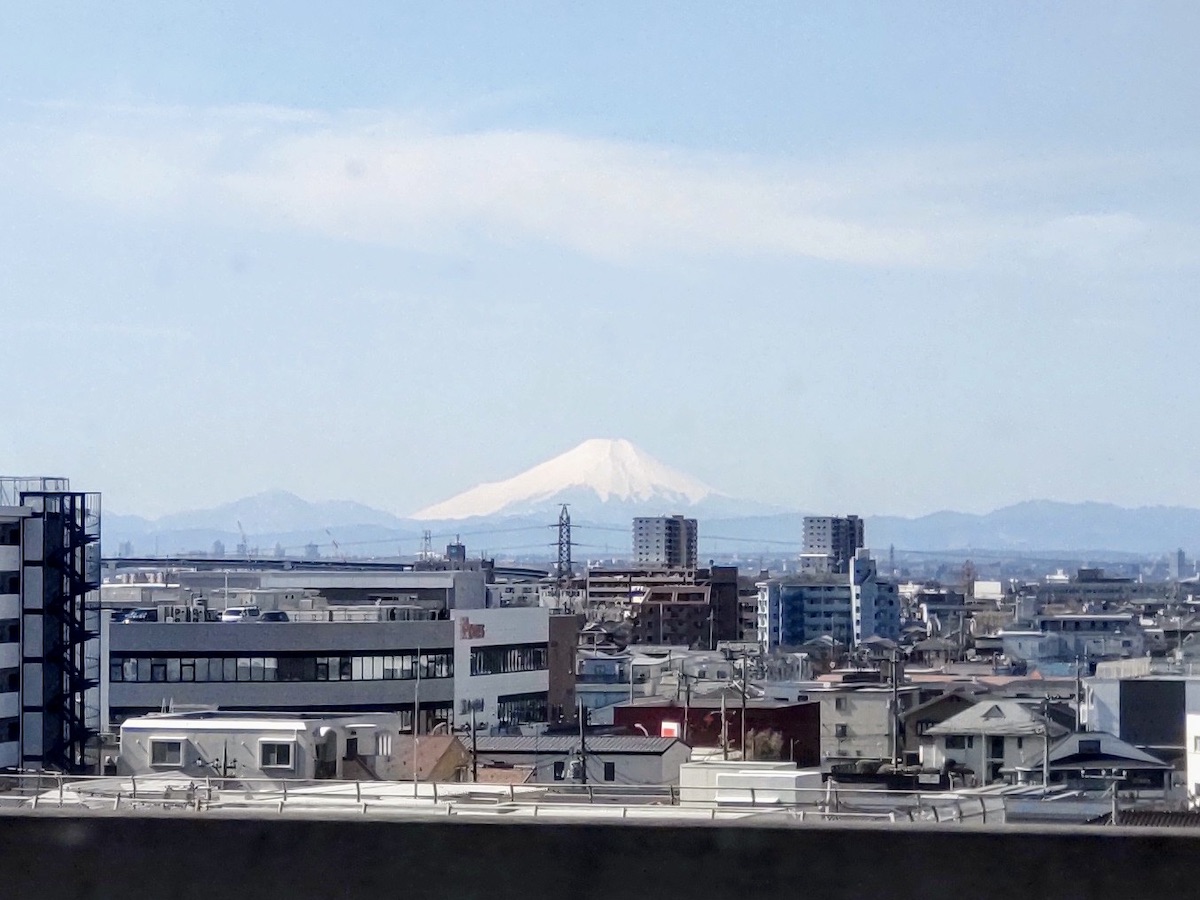
As the Shinkansen sped along, Mount Fuji, capped with snow, appeared on the left side of the train. From my seat, I could admire Japan’s iconic peak—a breathtaking sight that made the journey even more memorable. In Japan, there is a common feeling that seeing Mount Fuji clearly is a sign of good things to come, and I couldn’t help but feel the same.
Mountains in Fukushima
About an hour and a half after leaving Tokyo, we started to see the mountains of Fukushima Prefecture. Fukushima Station, which we passed through, was situated on high ground, and I could imagine that standing on the platform would offer an amazing view.
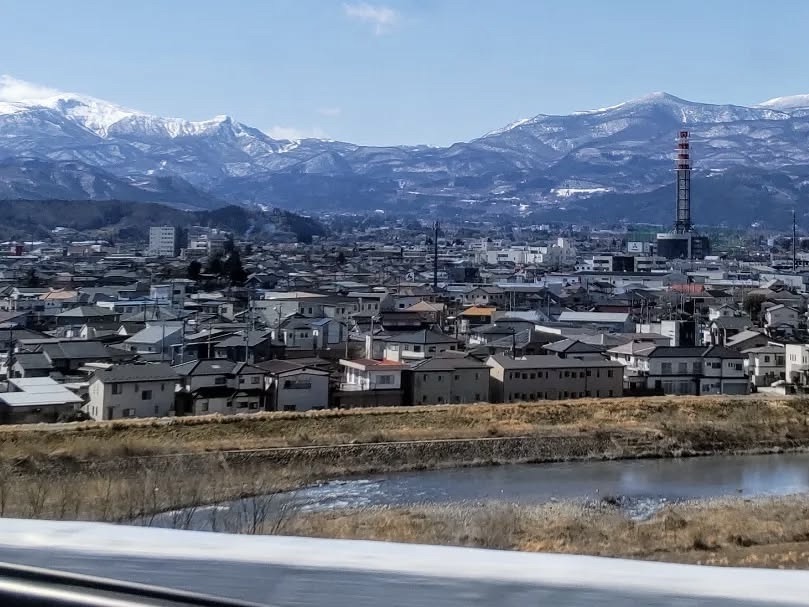
From my seat, towering mountains rose behind the traditional Japanese houses, while autumn-colored embankments and rivers below painted a vivid picture of Japan’s rich landscapes. Being able to see these majestic mountains from my seat and enjoying the changing scenery really made me feel the excitement of heading to a completely different city.
Iwate is home to Mount Iwate, which is said to be visible from around Morioka Station. I was looking forward to seeing it, but according to the weather forecast, it was expected to be cloudy in Iwate. I was grateful that we could still enjoy such beautiful scenery along the way.
Which Seat Should You Choose?
Both Mount Fuji and the mountains of Fukushima Prefecture could be seen on the left side of the train’s direction from Tokyo toward Morioka. To enjoy these mountain views, I highly recommend booking a seat on the left side.
However, if you are traveling in the opposite direction, from Morioka back to Tokyo, remember that the views will be on the right side of the train. In addition, some people find the seats on the Mount Fuji side to be a bit too bright due to the direct evening sunlight, but it’s all a matter of personal preference. You can choose between the beautiful scenery or a more shaded, quiet seat.
Choosing the Best Side for Views
When traveling from Tokyo toward Morioka, booking a window seat on the left side (Seat E) is highly recommended. This side offers the best views of Mount Fuji in the distance and the majestic mountain ranges of Fukushima. On the return trip to Tokyo, remember to choose the right side to enjoy the same scenic highlights.
How to Save on Your Trip
We used the JR East Tabi Kyun Early Bird Pass, a limited-time rail pass that offered unlimited travel within the eligible JR East area for ¥10,000. It made our round trip to Morioka much more affordable. If you’re planning a trip in Japan, it’s always worth checking for seasonal discounts or special rail passes before you travel.
Hayabusa & Komachi
When searching for a train on the Tohoku Shinkansen line, you might notice something interesting: two different train names, Hayabusa and Komachi, listed at the exact same departure and arrival times.
This is because they run coupled together as one long train between Tokyo and Morioka. The experience inside can be quite different:
- Hayabusa : Features a 3+2 seat layout. The cars are wider, giving the cabin a spacious feel.
- Komachi : Features a 2+2 seat layout. The cars are slightly narrower because this train eventually travels on local lines, but many people prefer the two-seat rows as they feel more private and cozy.
Depending on whether you prefer a spacious interior or a quieter 2-seat configuration, you can choose the train that best suits your style. However, please note that not all Hayabusa trains are connected to a Komachi. If you only see “Hayabusa” as an option, it means that specific train is running independently without a “Komachi” attached.
Exploring Morioka
When we arrived at Morioka Station, we stopped at Pairon, a local restaurant inside the station building, to try Morioka Jajamen, a specialty noodle dish. It consists of flat noodles topped with a special meat miso, cucumber, green onions, and other ingredients, which you mix together before eating.
How to Eat Jajamen
Although Jajamen is available in Tokyo supermarkets, I had never tried the authentic version in Morioka before. So, I carefully read the instructions on the table before digging in.
What we didn’t know was that you make a soup at the end. Carefully following the instructions, we added a raw egg that had been on the table and then asked the staff for some of the noodle cooking water. By adjusting the piping-hot cooking water to our taste, we created the soup called “Chītan-tan.” I hadn’t known this method before, so it was a delightful discovery. Jajamen is a brothless noodle dish, but this soup provided a refreshing and satisfying finish to the meal.
Since I don’t get to travel freely often—trying the real thing in Morioka was truly special. I wasn’t able to take a photo of the Jajamen, so I’ve included the restaurant information below.
How to Finish Your Jajamen Like a Local
Don’t finish everything in your bowl! Leave a small amount of noodles and meat miso, crack a raw egg into the bowl, and mix it well. Then, ask the staff for “chi-tan-tan” (hot noodle cooking water). They will add the broth to your bowl, creating a comforting soup that perfectly concludes your meal.
Crowd Situation: Pairon
By the time we arrived, it was exactly noon, and there was already a long line. After waiting for about 40 minutes, we finally got a seat. We needed to be back at the station by the evening for our train, so the long wait made us feel a bit rushed. As this is a Morioka specialty restaurant right at the station, it tends to be packed with tourists. It’s best to come a bit earlier if you want to avoid the line.
Our family was waiting at home, so this ended up being just a day trip. Once we have more freedom to travel, I would love to stay overnight and truly enjoy Morioka at a more relaxed pace.
Kogen-Sha
As the weather forecast predicted, it was cloudy like this, and Mount Iwate was completely hidden from view. Cheering ourselves up, we went to Kōgensha, a store that sells traditional folk crafts. The café is part of the store, and I had been looking forward to visiting it, as it was reputed to be beautiful.
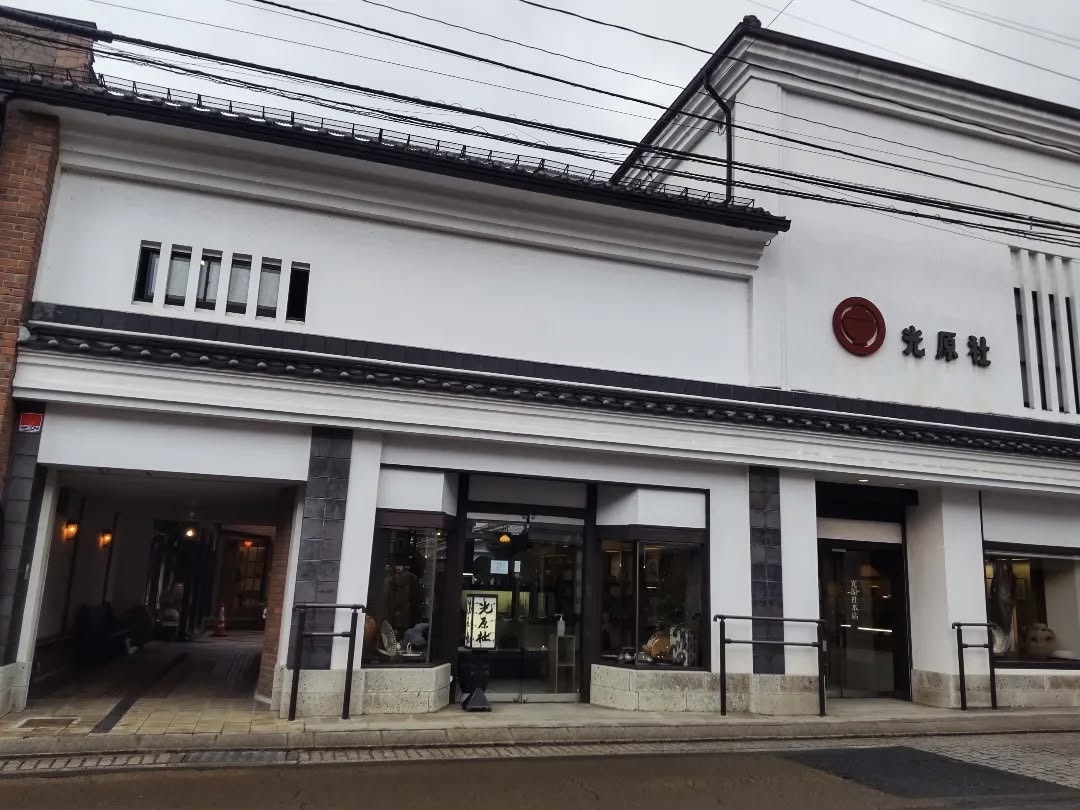
Kōgensha was originally a publishing company, known for publishing the famous Japanese author Kenji Miyazawa’s “The Restaurant of Many Orders.” It moved to this area in 1937.
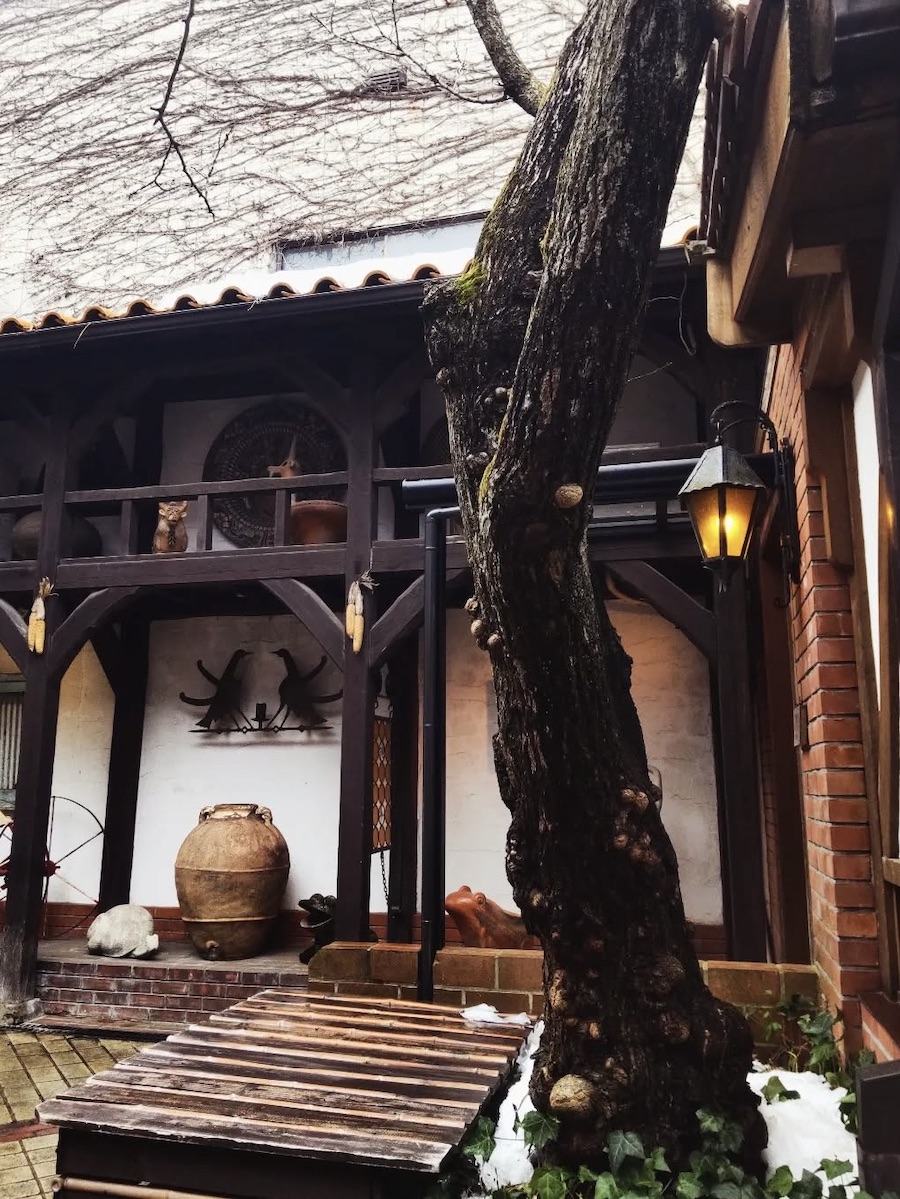 A Storybook Feel
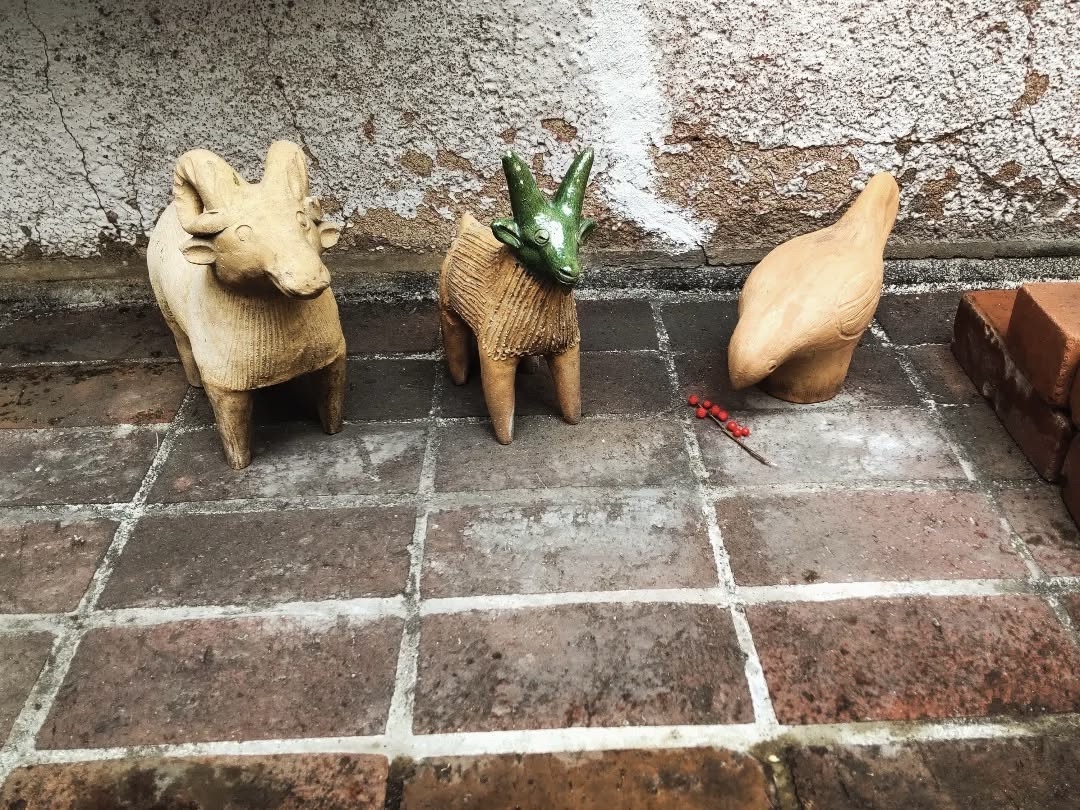
The courtyard at Kōgensha was adorned with crafts from across Japan, making the rainy day feel even more magical. I found myself lingering over each piece of folk art, imagining the hands that had carefully crafted them. After admiring these beautiful creations, we finally headed to the café we had come for, feeling wrapped in a gentle sense of time slowing down.
A Cozy Coffee Break
The interior of the café had a calm atmosphere, and at the counter, staffs were carefully brewing coffee. Some of the windows were made of stained glass, casting vibrant colors into the dim interior.
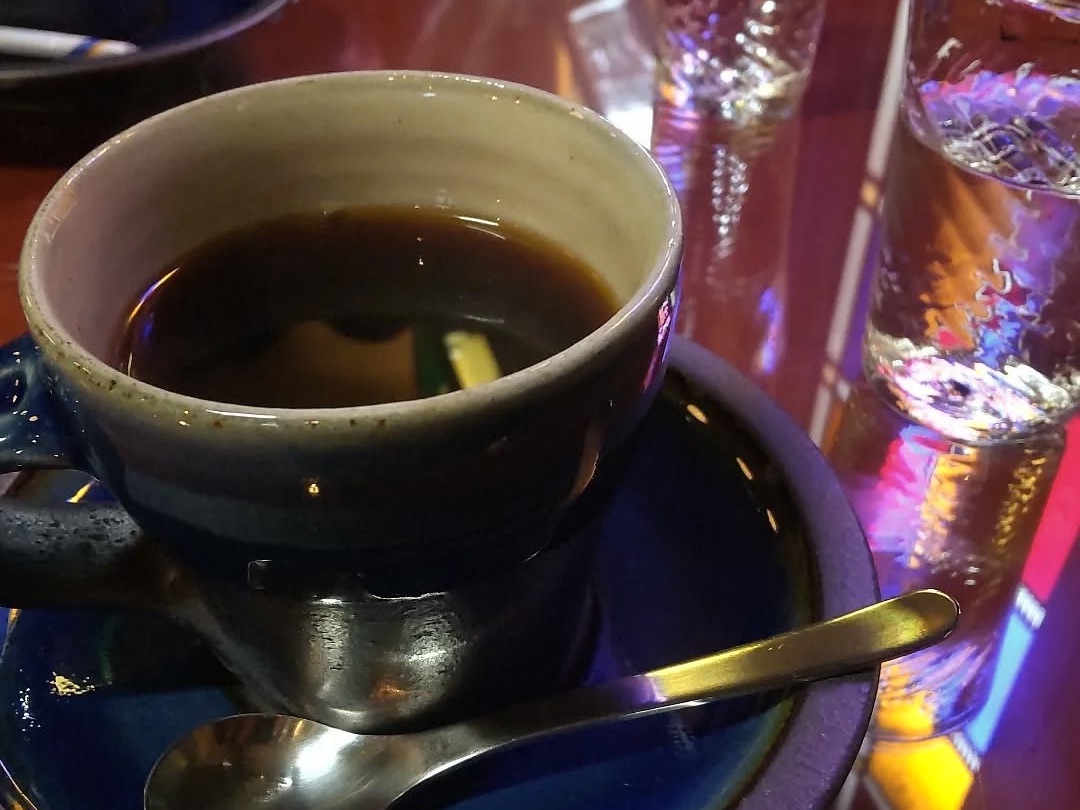
In Japan, water is usually served for free as soon as you sit down. The glass in the background—possibly handmade—had a warm, charming shape. The rounded edge of the glass makes it fit comfortably against your lips. The stained glass colors danced across the rippling surface of the glass, creating a truly beautiful sight.
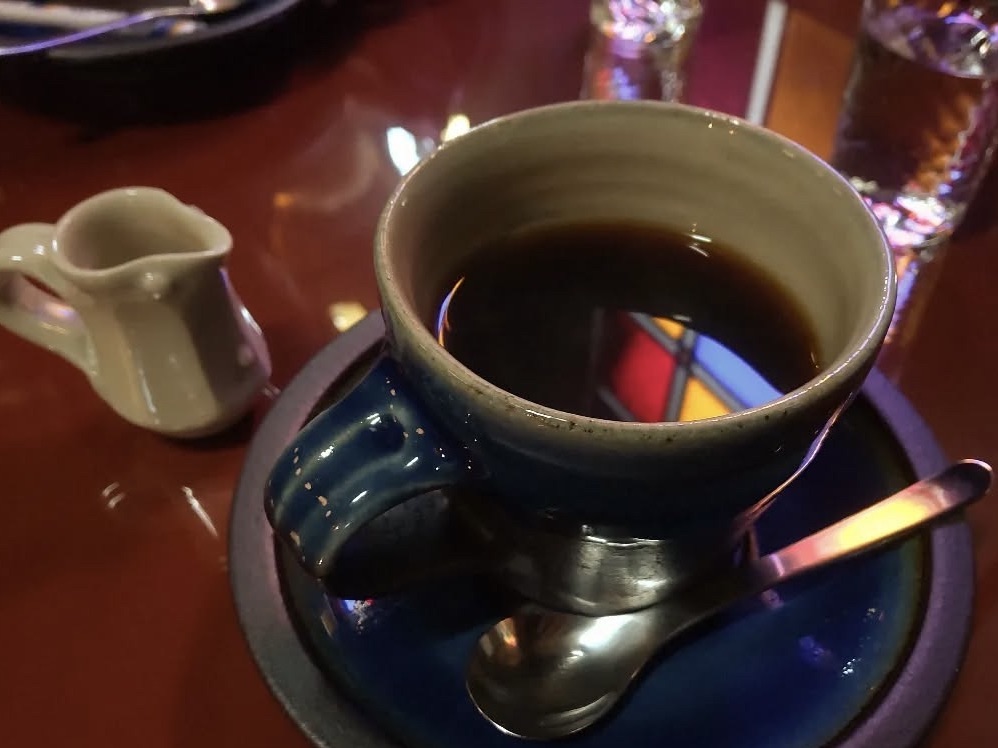
The coffee cups and the milk pitcher were rustic and cute. We occasionally sipped our coffee, catching glimpses of the stained glass reflected on its surface, and enjoyed a relaxing moment. Inside the warm and quiet shop, we found ourselves gazing out at the rain, lost in thought.
Crowd Situation: Kogen-Sha
I had read about this place online and in guidebooks, and it seemed quite popular. When we arrived, there were already about two groups waiting outside. I was surprised that we couldn’t get in right away, even on a rainy weekday. This was the second time we felt a bit rushed that day, but after waiting for about 20 minutes, we finally got a seat.
The café doesn’t offer a lunch menu and only serves coffee and small treats, so visiting right after opening or around lunchtime might be a good time to enjoy it without the crowd.
A Quiet Break at Kogen-sha
This cafe is a popular spot even on weekdays. To avoid long waits, try visiting right after they open or during the typical lunch hour (around 12:00–1:00 p.m.) when most people are at restaurants. Please note that while you can take photos of your coffee and treats, photography of the shop’s interior is generally not permitted to preserve its calm, historic atmosphere.
Note: Photography is not allowed inside the shop, but you are welcome to take pictures of your food and drinks.
A Heartwarming Farewell
Outside the café, there was this little scene: someone had placed red berries under a small bird, creating a heartwarming moment. Although it rained in Iwate, the places we visited perfectly suited the rainy weather. We bought some local food for our family and returned to Tokyo on the Shinkansen as planned.
Another Highlight
When heading back to Tokyo, you can witness the exciting moment when the Hayabusa (arriving from Aomori) and the Komachi (arriving from Akita) are coupled together at Morioka Station.
This is a major highlight for train enthusiasts and children, but I found myself just as excited. When I actually saw the two trains connecting right in front of me, my mother and I couldn’t help but exclaim, “Ooh!” in amazement. It was a powerful and impressive sight that felt like a special part of our journey.
While many people look forward to the coupling at Morioka Station, please note that not all Hayabusa trains are connected to a Komachi. On timetables and reservation screens, if you see two train names—like the Hayabusa and the Komachi—displayed with the exact same departure and arrival times, this indicates that the two trains are running coupled together between Tokyo and Morioka.
Back at Tokyo Station
The station was glowing in the evening sky, filled with the lights of the surrounding buildings. After getting off the train, I felt the comfort of returning to my own city, yet the beautiful night view and the sleek, shiny Shinkansen trains made my heart race all over again.
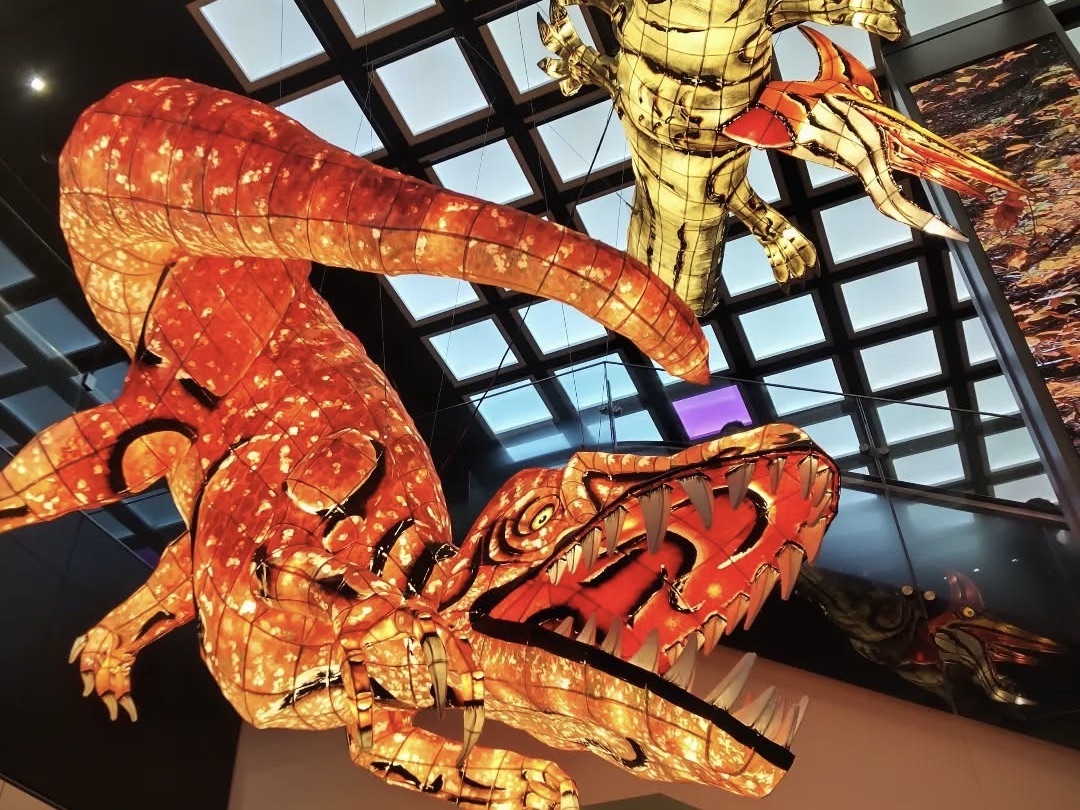
Large dinosaurs made of washi paper were hanging to commemorate the extension of the Hokuriku Shinkansen to Fukui Prefecture in the Hokuriku region. Washi is traditional Japanese paper, and Fukui Prefecture is famous for Echizen washi and dinosaur fossils. Fukui faces the Sea of Japan and is known for its delicious seafood, so I would love to visit there someday.
Conclusion
Morioka offers a delightful combination of scenic train journeys, local cuisine, and charming cafés—all easily reachable on a day trip from Tokyo. Even with limited time, the city’s unique flavors, traditional crafts, and gentle atmosphere make for a memorable escape.
By planning your visit around the station area and exploring at a relaxed pace, you can enjoy both iconic local foods like Jajamen and cultural experiences at places like Kōgensha without feeling rushed. From scenic views from the Shinkansen to cozy cafés and folk crafts, Morioka provides a taste of Tohoku’s charm in just one day.
Whether it’s your first visit or a return trip, Morioka is a place where you can enjoy Japan’s rich culture, beautiful landscapes, and a moment of peaceful respite from the city.
Recommended For:
• Travelers seeking a short but fulfilling day trip from Tokyo
• Food enthusiasts wanting to try local specialties like Morioka Jajamen
• Families or travelers who enjoy scenic train rides and train-spotting
• Visitors interested in traditional crafts, cozy cafés, and relaxing local experiences
Check out my other bullet train day trip below:
Information
Information, prices and exchange rates are current as of my visit but may change. Please check official sites.
Kogensya Coffee-Kan
Coffee
– ¥600 (approx. $3.8 / €3.3)
Access
– About 1970 ft (600 m) from Morioka Station
Pairon Morioka Jajang noodles
Jajang noodles
– ¥630 (approx. $4.0 / €3.5)
Chiitan-tan soup
– ¥50 (approx. $0.3 / €0.3)
Access
– First floor of Morioka Station
– Google Maps
Shinkansen Bullet Train
JR-EAST
– Official English website
Klook
– Shinkansen Tickets – Japan Bullet Train
This article contains affiliate links. We may earn a commission at no extra cost to you.