Last Updated on September 29, 2026
Kyu-Furukawa Gardens is a historic garden in Tokyo known for its Western-style mansion, rose garden, and traditional Japanese garden. I visited in late April to enjoy the fresh spring greenery, a relaxing matcha experience in the traditional tea room, and the elegant atmosphere of the historic mansion.
In this guide, I’ll share my half-day experience, including how to get to Kyu-Furukawa Gardens, the best time to visit, and what you can enjoy during the fresh green season in April.
What you’ll find in this guide:
-
- A peaceful spring itinerary to Kyu-Furukawa Gardens
- The “hidden gem” timing to enjoy lush greenery without the crowds
- An authentic matcha experience in a traditional Japanese tea house
- Insights into the unique blend of Western and Japanese garden styles
Kyu-Furukawa Gardens in Tokyo
Kyu-Furukawa Gardens is a historic garden in northern Tokyo. Once the residence of the Furukawa family, one of Japan’s leading industrial families, it is now famous for its beautiful Western-style rose garden and traditional Japanese garden.
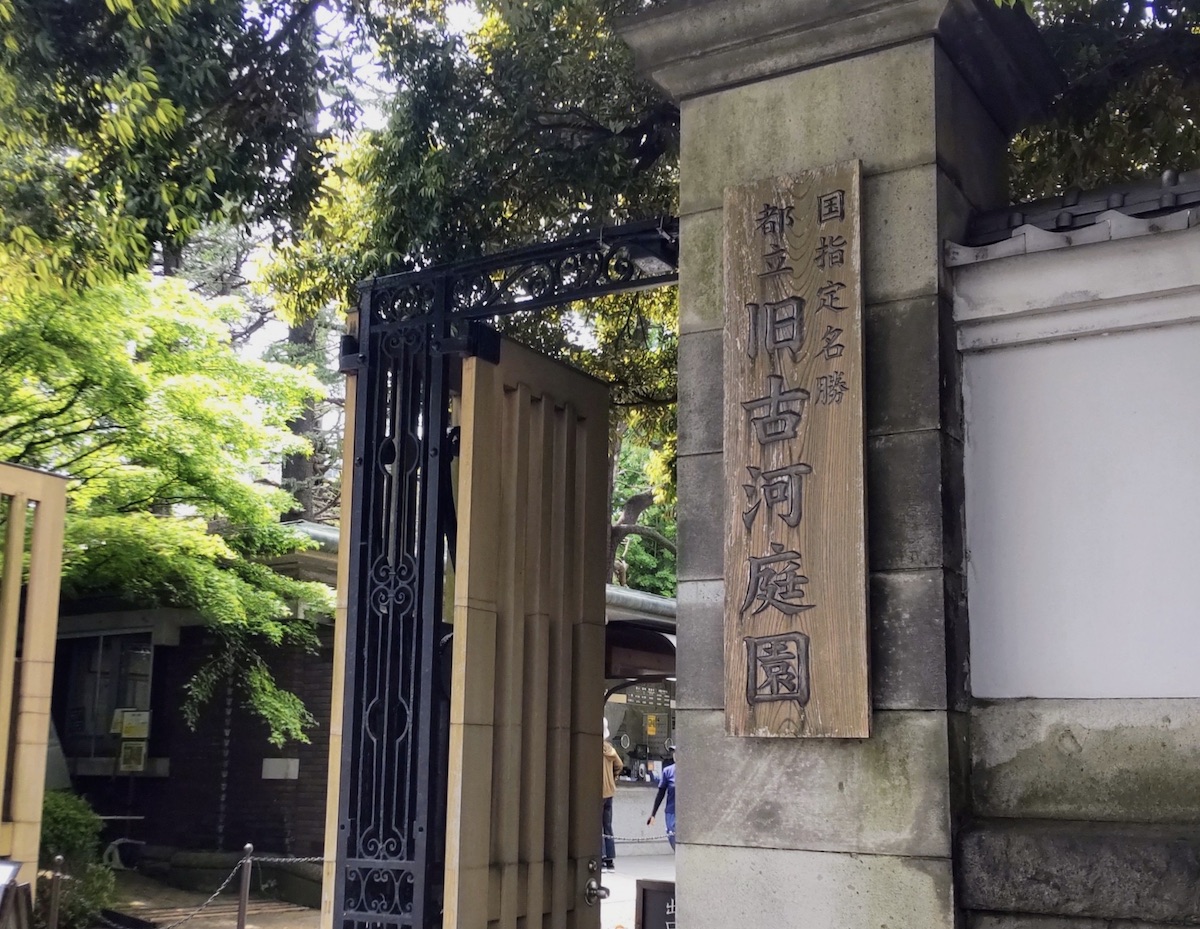
The property features a beautifully preserved Western-style mansion from the Meiji era. It also has a formal rose garden that blooms spectacularly in spring and autumn.
Behind the mansion, the garden opens into a tranquil Japanese-style landscape. There are ponds, stone arrangements, and walking paths, creating a peaceful atmosphere for a quiet stroll.
Admission Fee & Tickets
General admission is 150 yen (approximately $1.0 / €0.8). You can also reserve tickets online, but outside the Rose Festival period, the ticket counter is usually not very crowded. I visited in late April, just before the Rose Festival, and was able to buy my ticket without waiting.
How to Get to Kyu-Furukawa Gardens
There are several ways to get to Kyu-Furukawa Gardens, but this time I took a community bus from Komagome Station on the JR Yamanote Line. The JR Yamanote Line is a circular train line that runs around central Tokyo, with trains arriving every few minutes. Because it is frequent and easy to navigate, it is especially convenient for international visitors exploring the city.
A community bus is a local bus service designed to serve neighborhood residents.
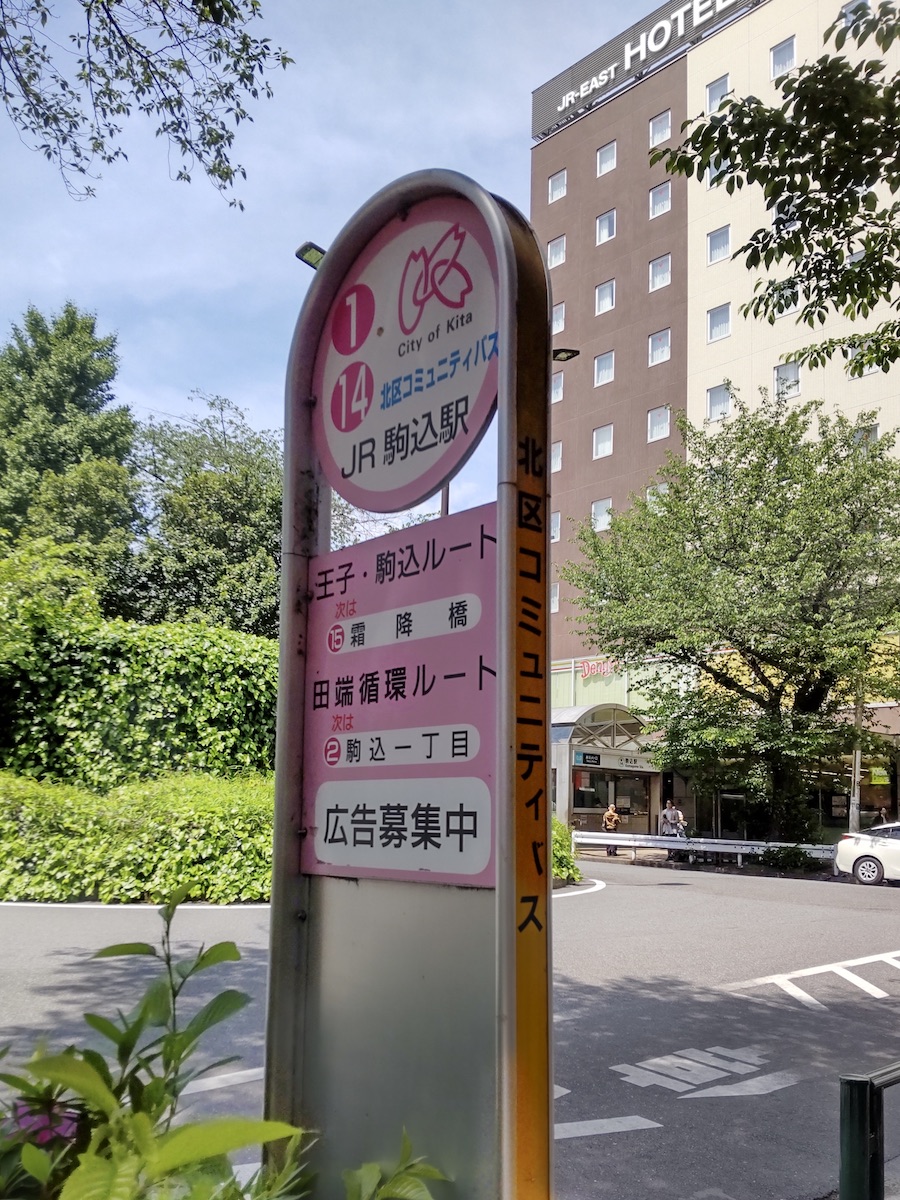 The bus runs only about two to three times per hour, so it is not very frequent, but it takes you from the station area to the garden entrance. If you prefer walking, it is also just a little over a 10-minute walk, making it very accessible either way.
This bus stop serves two routes: one bound for Oji Station and another for Tabata Station. Please make sure to take the bus heading toward Oji Station. Komagome Station is stop number 14, and Kyu-Furukawa Gardens is stop number 17.
When returning to Komagome Station, you can take a bus via the Oji Station route, which is the same route I used to get there, or choose the Tabata Station route instead. I have included the details in the information section below.
Payment Methods:
The bus fare is 100 yen. You can pay with cash or IC cards such as Suica or PASMO. Coins are accepted, and the change machine on the bus can also exchange ¥1,000 bills. Larger bills are not accepted.
When I arrived, the bus had just left, so I ended up waiting about 20 minutes for the next one. Fortunately, the weather was pleasant, and the area around Komagome Station was quiet and filled with fresh greenery. Spending a little time there made the visit feel even more relaxing before I arrived at Kyu-Furukawa Gardens.
Near the bus stop
There are also convenience stores nearby, and some even sell Suica character goods, which are fun to browse even if you are not planning to buy anything. There was also a Denny’s nearby, which I introduced in my previous post.
The bus bound for Oji Station arrived a few minutes before departure, allowing passengers to board and wait inside comfortably.
Best Time to Visit
I visited just a few days before the Rose Festival. It was a perfect opportunity to quietly enjoy the garden’s lush greenery without the crowds. There wasn’t a line at the ticket counter, so I was able to buy my ticket without any hassle.
Around noon is probably the best time to visit the Japanese tea room. I arrived there at around 11:30 a.m., but it might have been even nicer a bit later, when the greenery looked brighter.
Like Koishikawa Korakuen Gardens, this Japanese garden also has many tall trees. If you plan to visit the tea house, it is better to go after the sun has risen higher rather than too early, as soft sunlight filters through the trees. Until the sun gets higher, I recommend exploring other areas.
Matcha in a Japanese Tea House
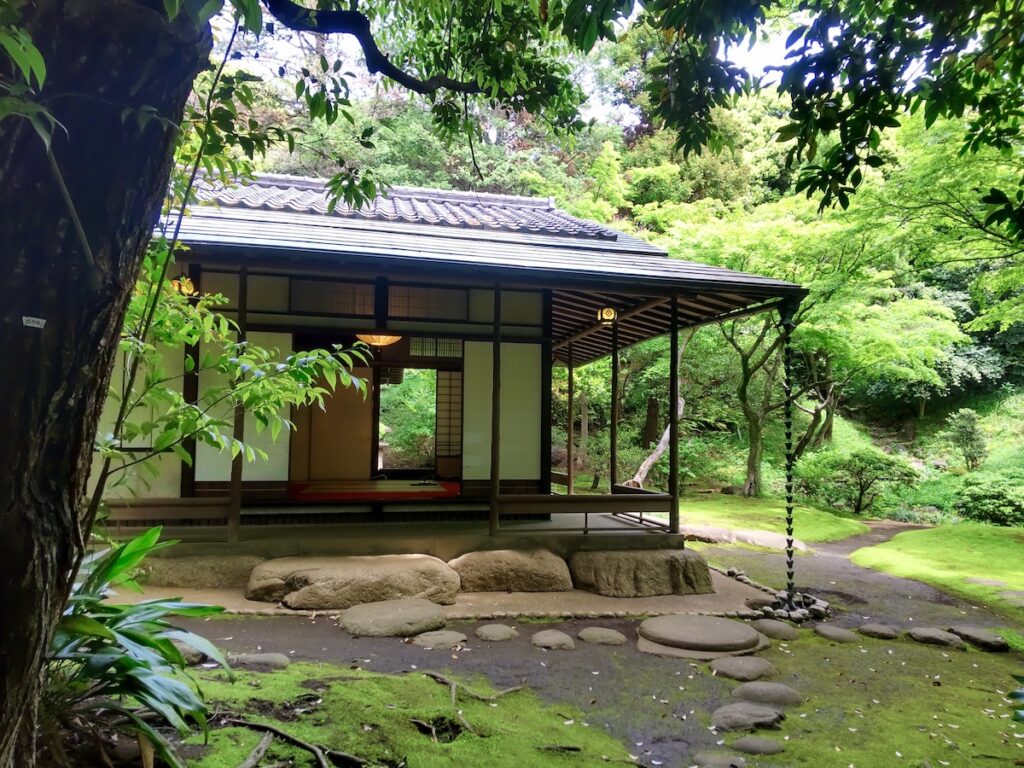
After exploring the Western-style mansion and rose garden, I headed toward the Japanese garden and its tea house. During spring and autumn, visitors can enjoy matcha and a traditional sweet here for 700 yen.
I had visited once before and remembered how peaceful the atmosphere was, so I had wanted to return during the fresh green season.
The tea house is located beyond a small gate inside the Japanese garden. When I arrived, a staff member mentioned that the timing was especially good because there were no other visitors yet. She then guided me to a seat with a beautiful view of the greenery outside.
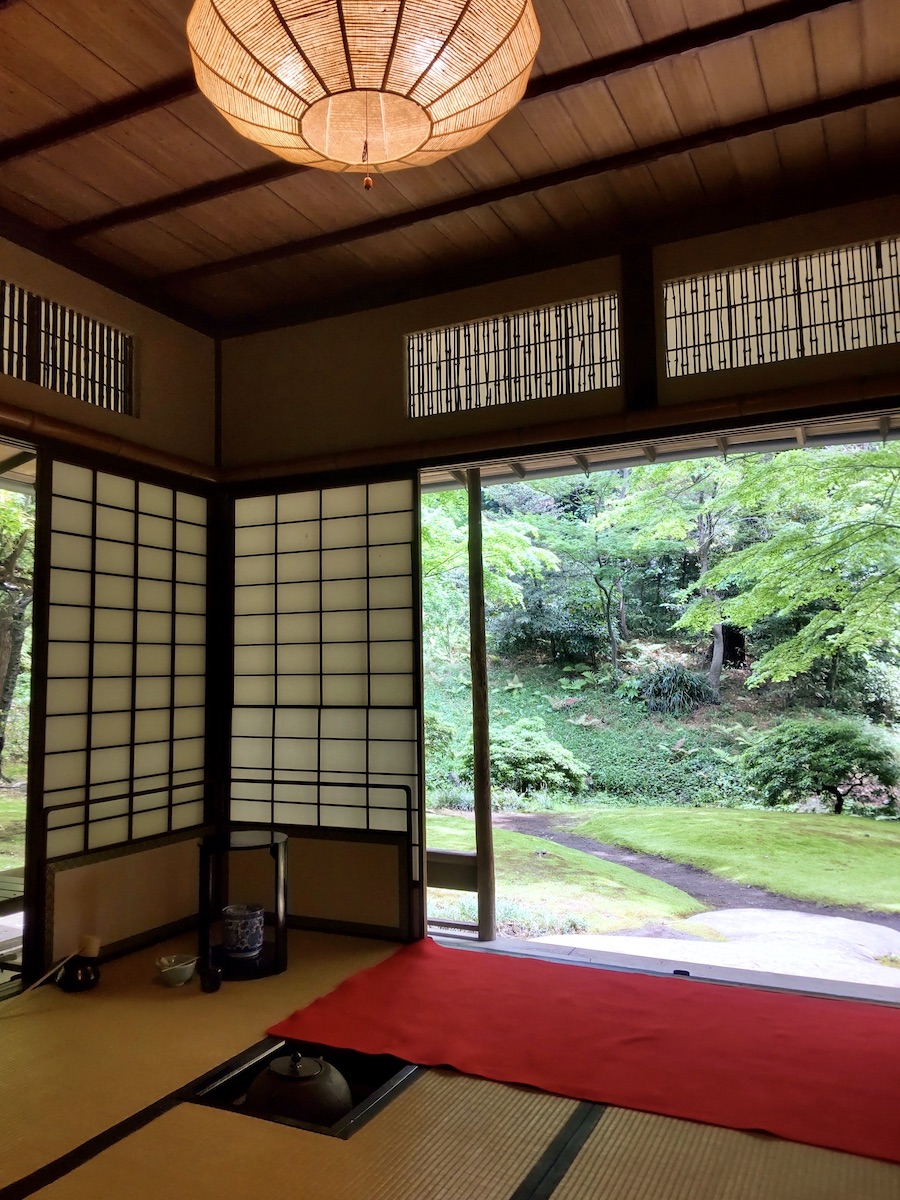
Inside the tea room, tea ceremony utensils were carefully displayed in one corner. Although a formal tea ceremony is not held here, the setting still allows visitors to experience the atmosphere of a traditional Japanese tea room.
The seating area was covered with a red mat, and seasonal flowers and a hanging scroll decorated the alcove, creating a calm and elegant atmosphere.
Hospitality Experience:
The hanging scroll and seasonal flowers are prepared for guests visiting the tea room. They offer a chance to appreciate the season and to ask about their meanings, which adds to the experience.
Matcha Experience
After a while, a staff member brought over two traditional dried Japanese sweets (higashi) served on a small sheet of paper. After explaining the sweet, she bowed formally and invited me to relax and take my time.
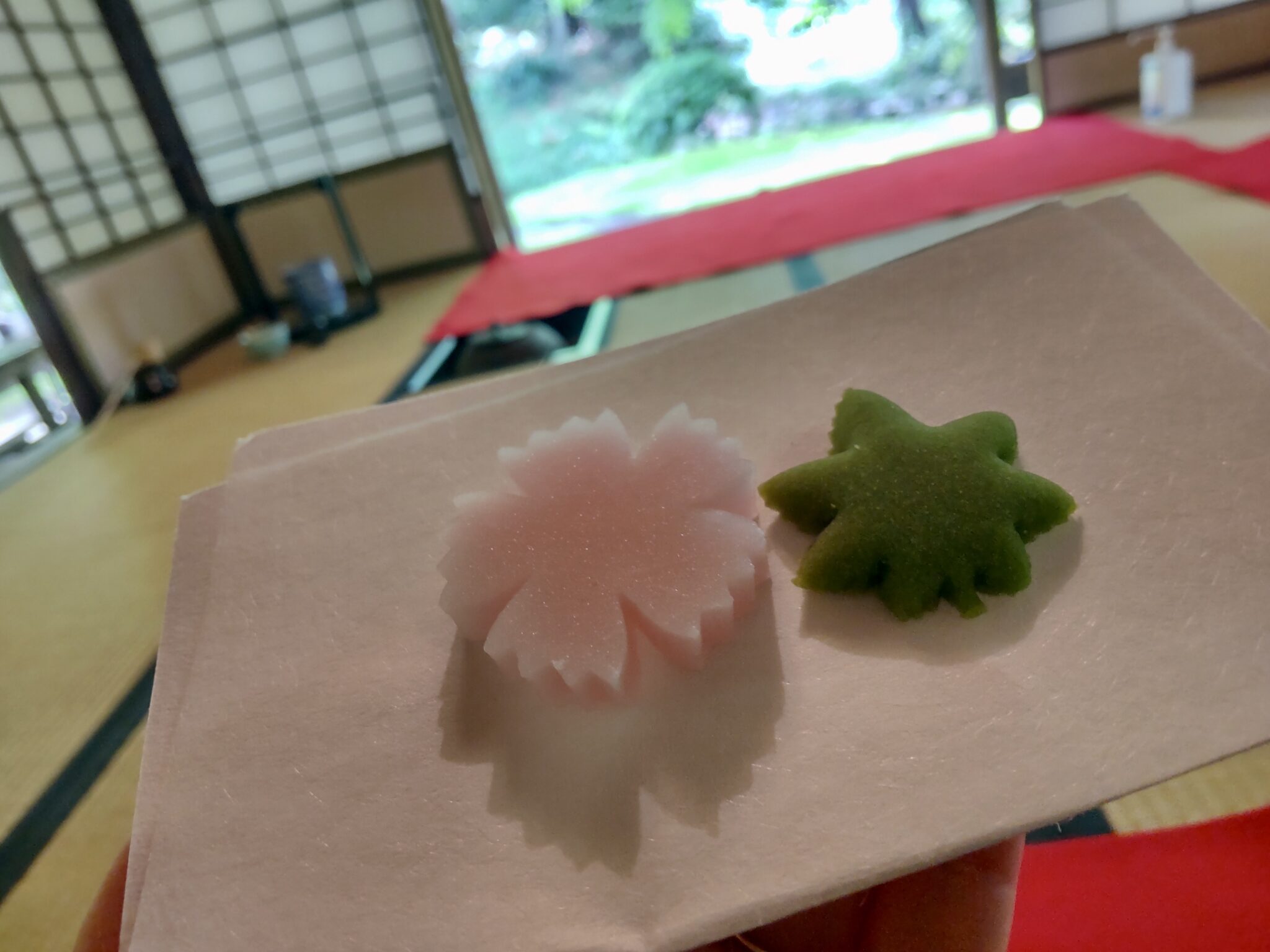
By the time I finished one of the dried sweets, she returned with a bowl of matcha and gave another formal bow before leaving. When the staff bring you sweets or tea in the tea room, it’s perfectly fine to simply follow their lead and return a similar formal bow.
In a traditional tea ceremony, it is standard to finish the sweet before drinking the matcha. However, in this case, if the tea is served earlier, it is better to prioritize drinking the matcha first. You can then continue eating the sweet afterward if you like.
Tip: How to Handle the Tea Bowl
Matcha is served with the front of the bowl facing the guest. Before drinking, gently turn the bowl in your hands so that the front is no longer facing you. After finishing, turn it back so that the front faces the host again before returning it.
Tasting Matcha and Wagashi
The pink sweet was coated with a sugar glaze. It was something I was not very used to, but it had a light refreshing taste, with a crunchy exterior and a jelly-like texture inside. It was also very cute in appearance and perfect after a bit of walking around.
The matcha was lightly whisked and not too bitter. Although no sugar is added, it had a natural sweetness, and I was able to enjoy its pleasant aroma. After taking a sip, I paused for a moment and looked out at the greenery. The beautiful scenery, calm atmosphere, and gentle aroma made the experience feel truly special.
The green sweet seemed to be made from kinako (soybean flour) mixed with syrup. It was very tasty, with a rich, nutty and slightly chewy texture that paired well with the matcha.
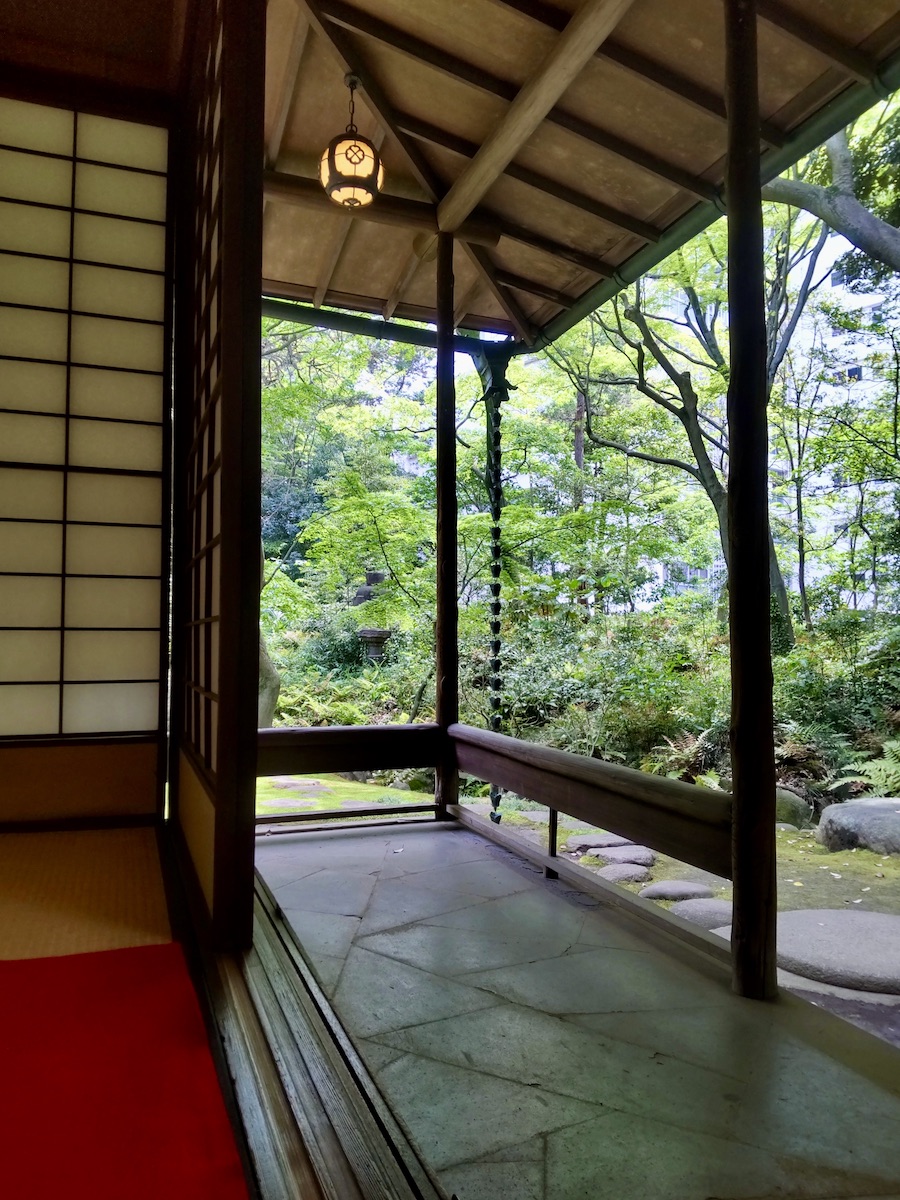 Being able to easily and casually experience this kind of atmosphere in central Tokyo is truly rare and valuable. After spending such a wonderful time, I decided to take another walk around the garden.
Japanese Garden
The Japanese garden was covered with beautiful moss beneath the green trees. With every gentle breeze, soft sunlight sparkled over the lush green carpet, creating a calm and refreshing atmosphere.
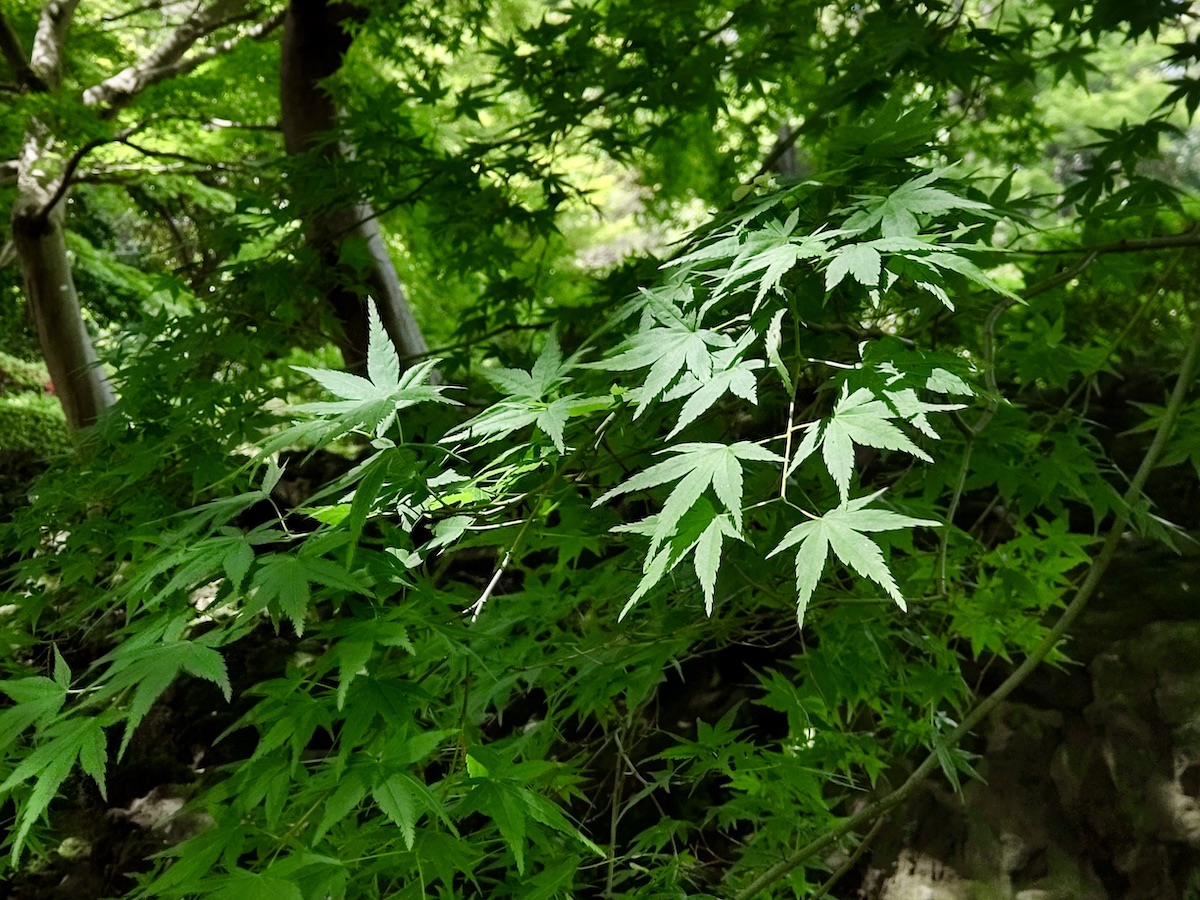
There are many maple trees throughout the garden, and I imagine it must be especially beautiful during the autumn foliage season. However, the fresh green leaves are just as stunning. The leaves, about the size of a child’s hand, overlap in layers, glowing softly as sunlight filters through them.
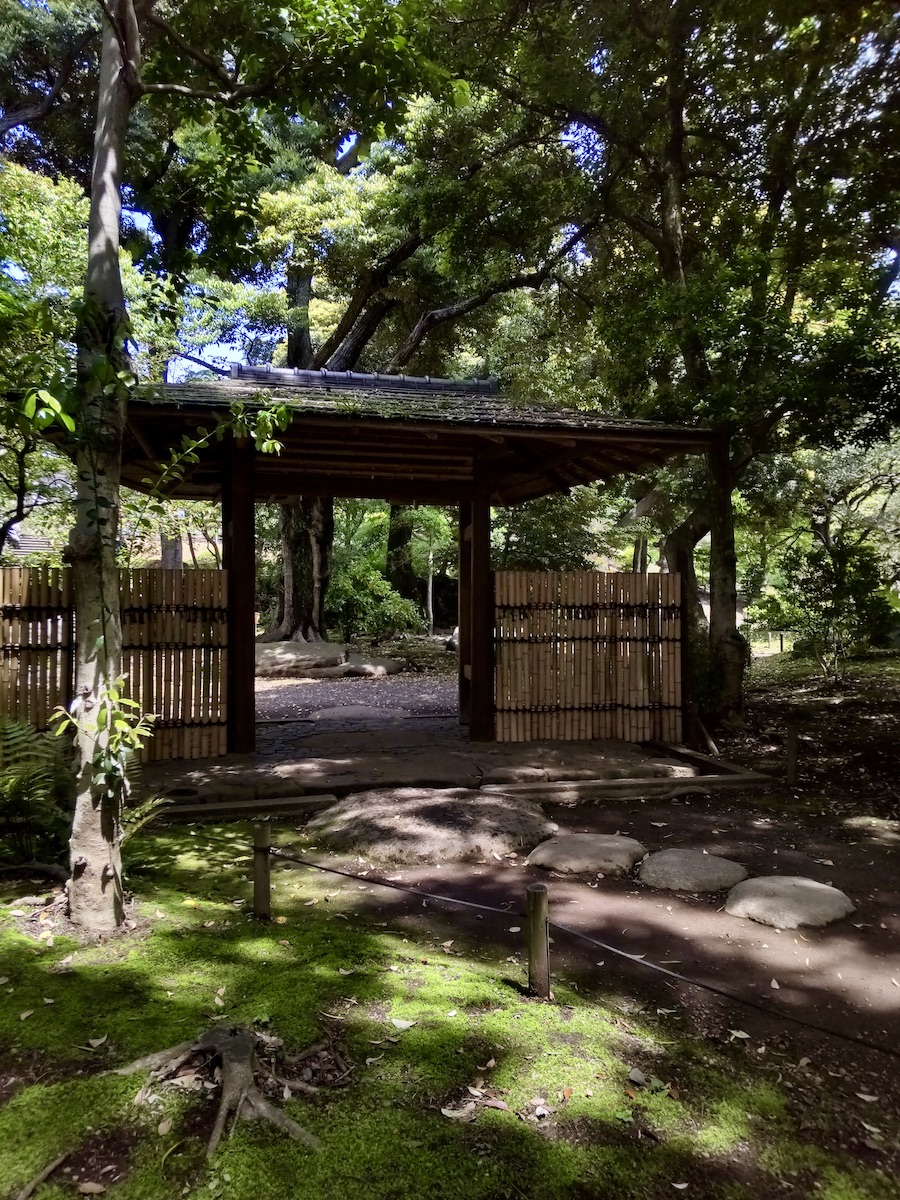 At the back of the Japanese garden, there was a gate made of bamboo and wood. Grass had begun to grow on the roof, giving it a sense of harmony with nature, as if it were part of the landscape itself.
There were very few people around, and it was quiet. I felt it was the perfect place to experience a peaceful, distinctly Japanese atmosphere.
Pond Views
I passed through the gate and walked around the garden, eventually coming out to a spot overlooking a pond.
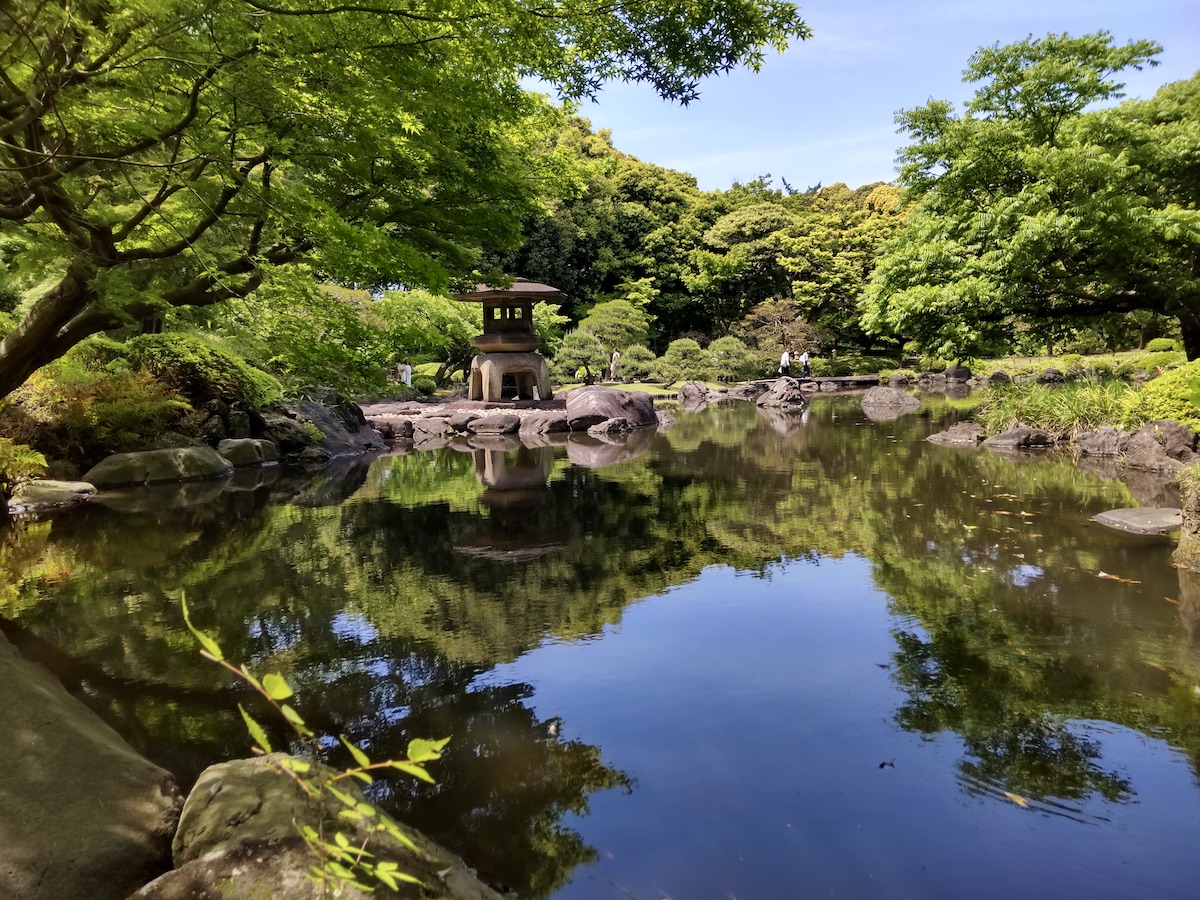
Around the pond, there are stone bridges and stepping stones that keep the walk interesting. The water reflects the surrounding greenery and the sky, and the height of the trees around it makes the space feel even more open and expansive.
Although the sunlight felt quite strong, the shade of the trees and the cool spring breeze made it a very comfortable place to spend time.
Scenic Waterfall
The garden is built on sloped terrain, with stairs leading down from the entrance to the rose garden and further down to the Japanese garden. The varied landscape is one of the reasons it offers such a rich experience.
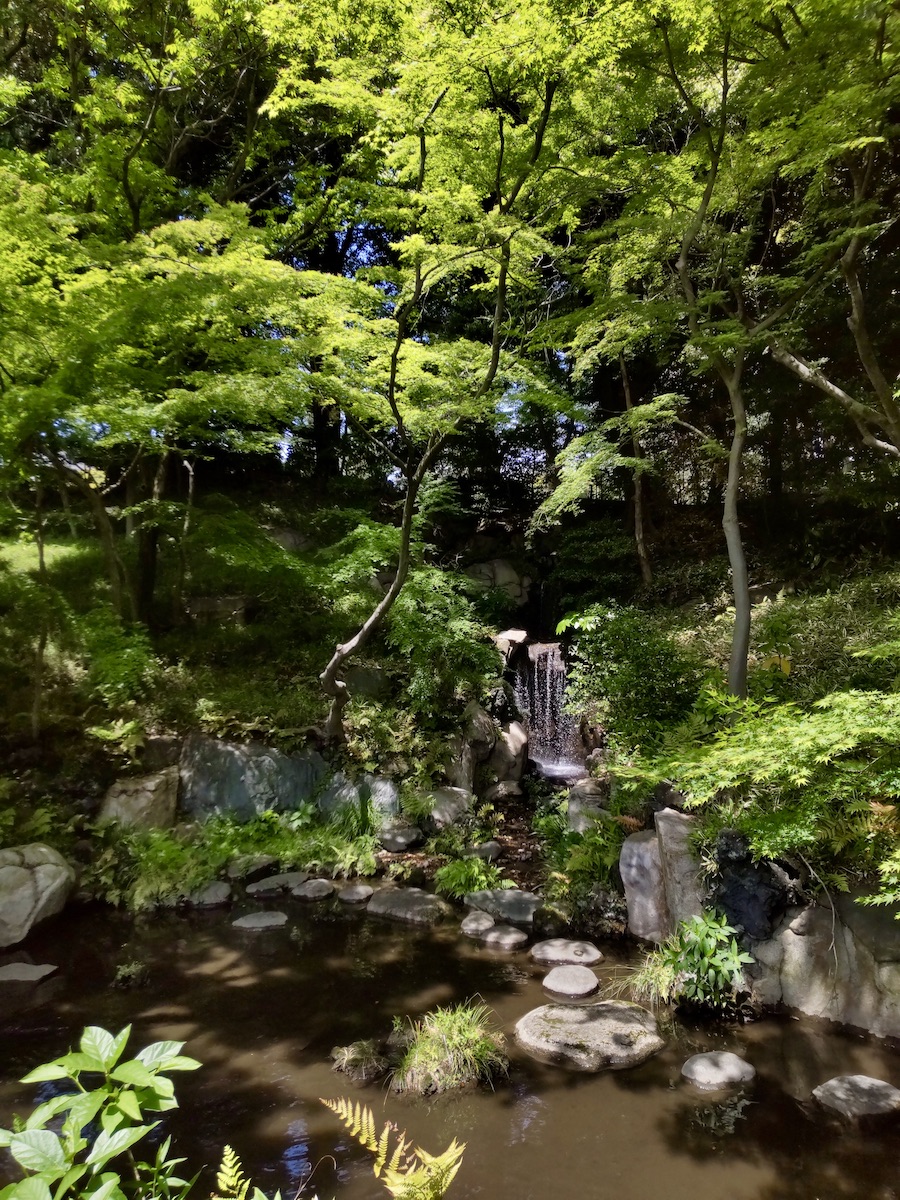
Taking advantage of the natural terrain, the Japanese garden also features a waterfall. As I got closer, the sound of flowing water became more noticeable, creating a refreshing and soothing atmosphere.
Japanese gardens are designed to highlight natural scenery, and I almost forgot I was in central Tokyo, feeling as if I were walking through nature itself. The garden was designed by Jihei Ogawa VII, a renowned landscape designer from Kyoto known for blending traditional Japanese garden aesthetics with natural scenery.
Rose Garden
After enjoying the Japanese garden, I returned to the area with the Western-style mansion and the rose garden.
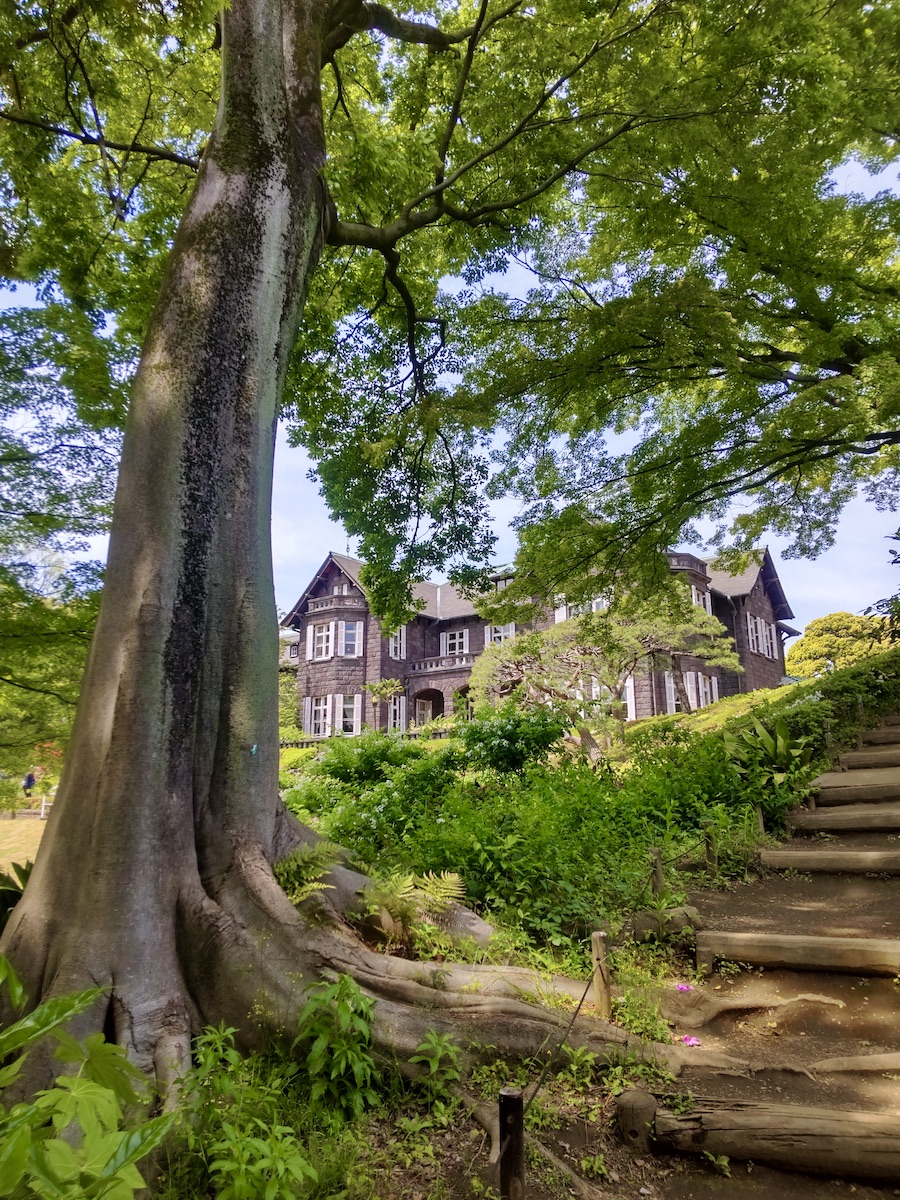 As I walked up the wooden stairs, the mansion gradually came into view. It felt like an entirely different world from the Japanese garden I had just visited, almost as if I were somewhere overseas.
The mansion and garden were designed by Dr. Josiah Conder, a British architect. He is also known for designing several famous buildings in Japan, including the Western-style building at the Iwasaki Residence Garden, the Rokumeikan, and the Nikolai Cathedral.
In the garden, I saw gardeners carefully tending the flowers. Countless buds were stretching upward, which would likely bloom in May for the Rose Festival.
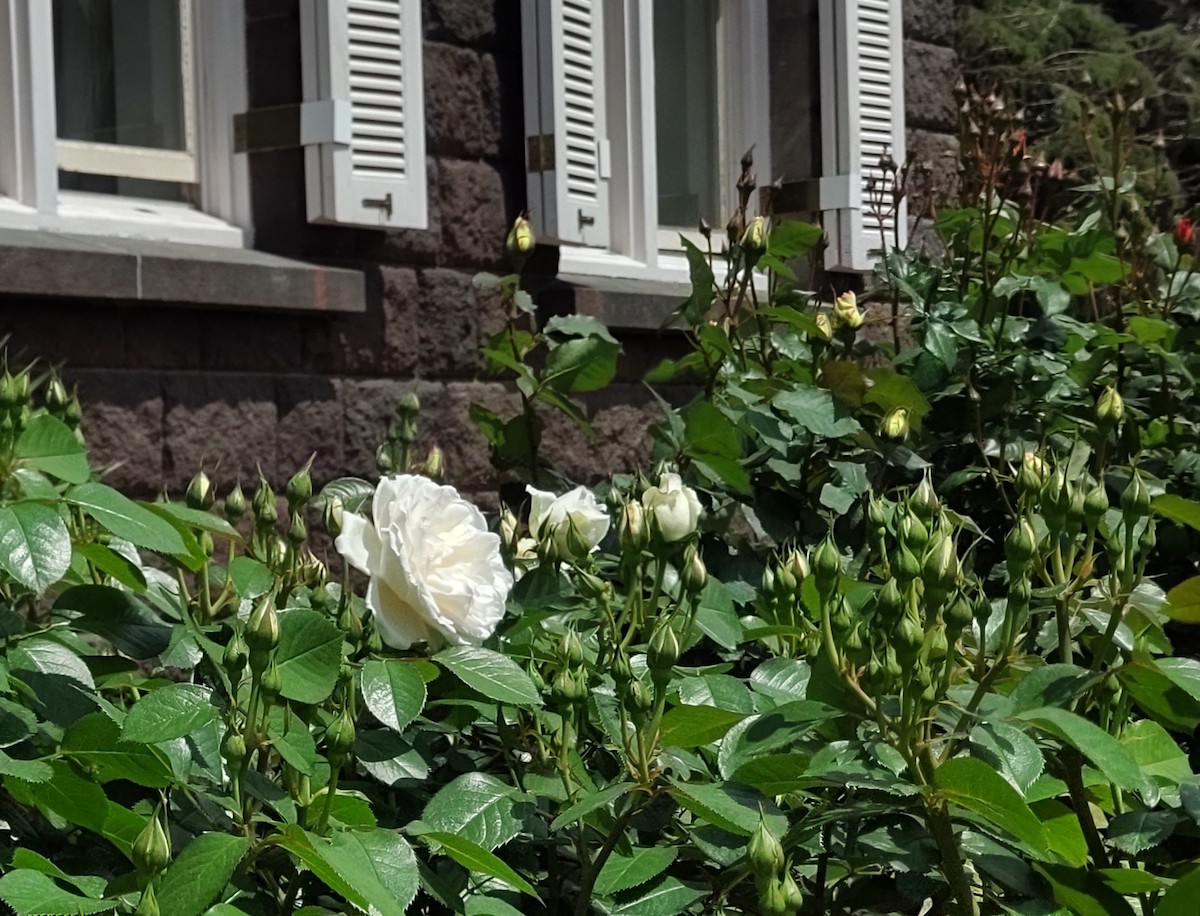
This time, I came to enjoy the greenery while avoiding the crowds. It was a little early to see the roses in full bloom, but still, a few of them were already there to delight me.
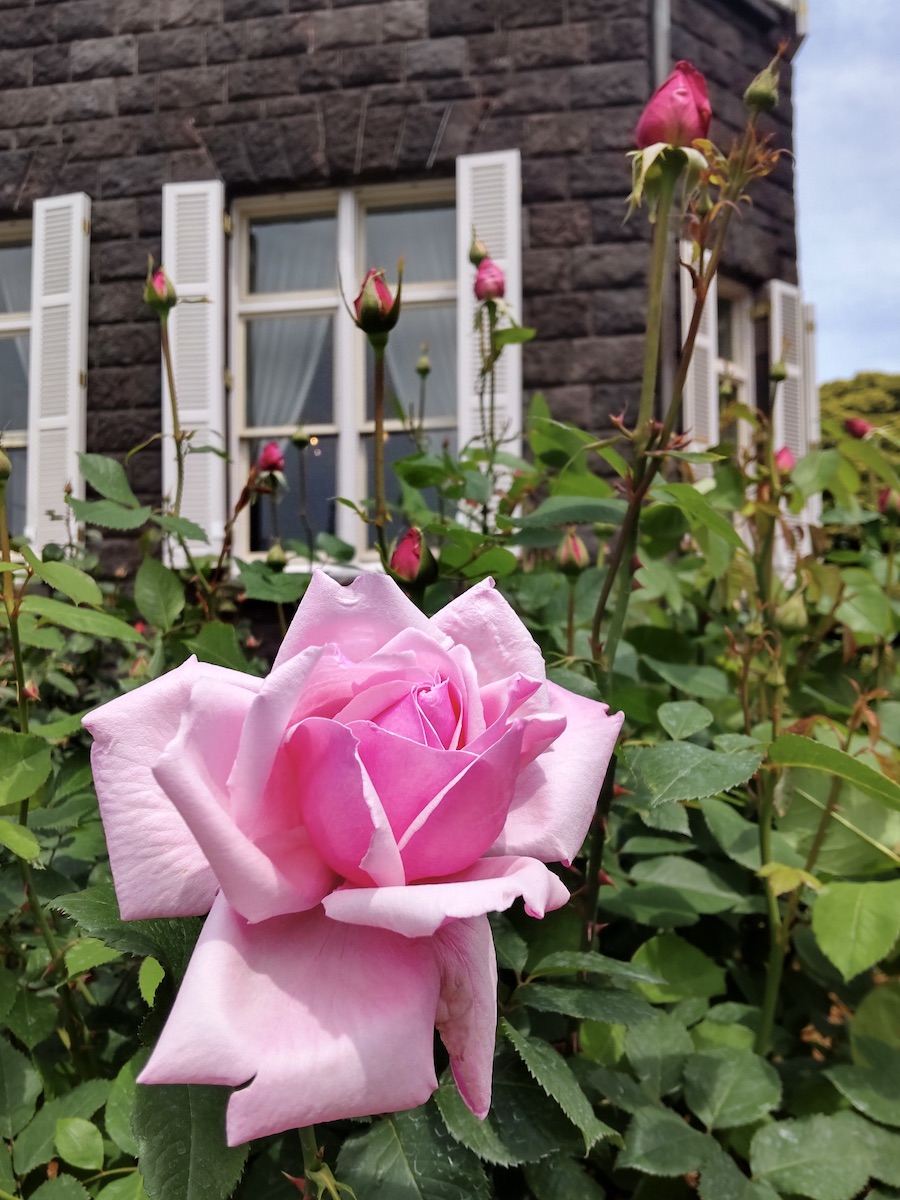
This rose seemed to be a particularly fragrant variety. When I leaned in closer, it gave off a wonderful scent. This rose also looked like it would bloom abundantly, and I imagined that when it is in full bloom, the whole area would be filled with its fragrance.
Former Furukawa Residence
I didn’t go inside the mansion this time, but I would like to show you the entrance area. The building appears to have a sense of elegance and grandeur, while still offering beautiful views of the surrounding greenery and roses. Today, the mansion is home to the Otani Art Museum.
In Japan, traditional Japanese aesthetics and an appreciation of Western culture have long existed side by side. Still, it’s quite rare to find a place with this level of both Western and Japanese-style highlights within the same grounds.
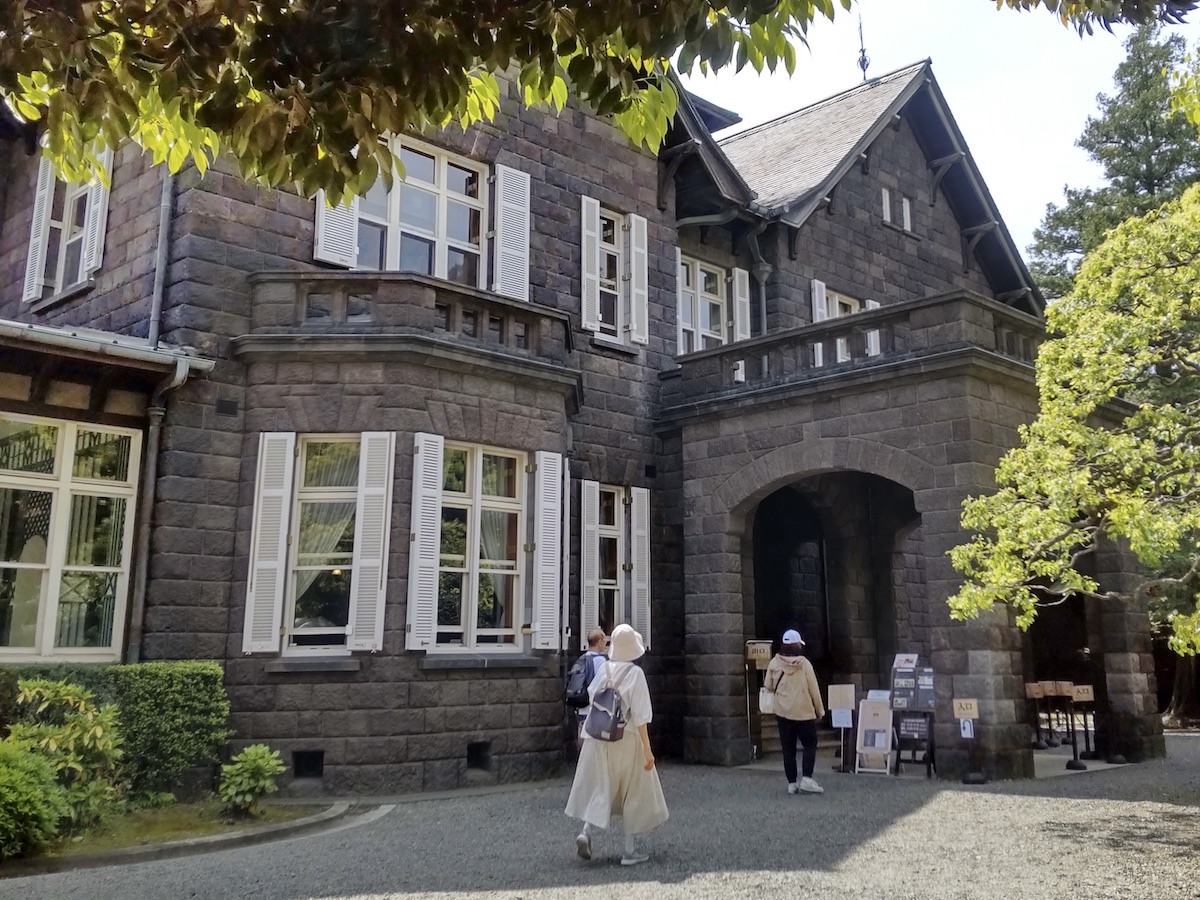
An additional fee is required to tour the mansion. However, if you only visit the tea room without touring the mansion, you do not need to pay the additional mansion admission fee.
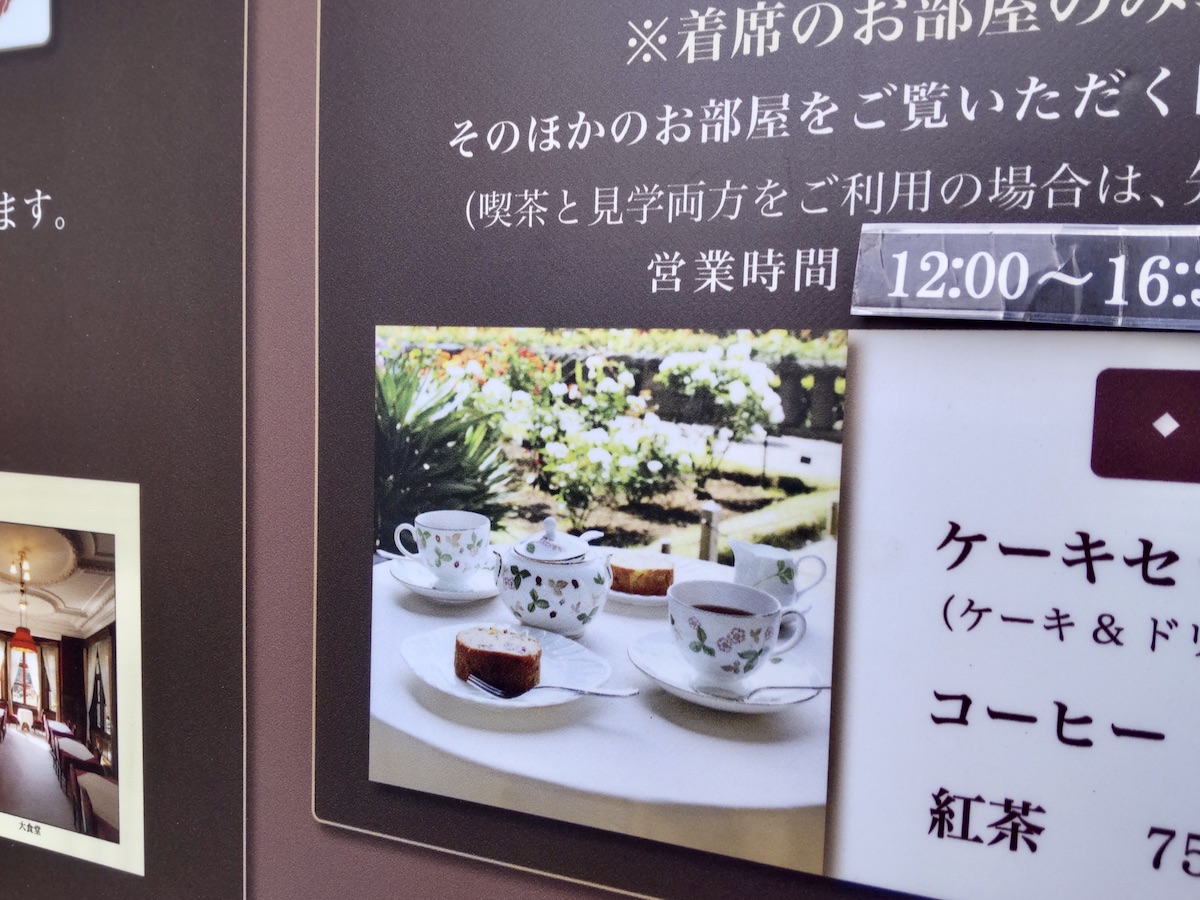
Based on the information photos, it also looks like a wonderful place to spend time. I would love to visit again when the roses are in full bloom.
Photography Policy:
Photography is not allowed inside, including photos of food served, in order to preserve the building.
After this visit, I also visited Kyu-Furukawa Gardens during the rose season. The garden was filled with beautiful blooms, and you can read about my experience here.
Conclusion
Kyu-Furukawa Gardens is a truly unique destination where you can experience the beauty of both Japan and the West in a single location. Visiting in late April, just before the bustling Rose Festival, allowed me to slow down and fully appreciate the vibrant fresh greenery and the peaceful atmosphere that this historic site offers.
From the elegant matcha experience in a traditional tea house to the quiet walk through the lush garden, it was a day filled with relaxation and seasonal delights. If you are looking for a quiet escape from the busy city center, I highly recommend spending a morning here during the fresh green season.
The gentle breeze, the sound of the waterfall, and the anticipation of the blooming roses will surely make your visit to Tokyo even more memorable.
Recommended For:
• Solo travelers looking for a peaceful and flexible morning itinerary in Tokyo
• Nature lovers who want to enjoy lush greenery and seasonal flowers away from the crowds
• Cultural explorers interested in experiencing an authentic matcha tea ceremony in a traditional setting
• History and architecture fans who appreciate the blend of Meiji-era Western buildings and Japanese gardens
• Travelers visiting Tokyo in late April who are looking for peaceful spring activities and fresh greenery
Explore Kyu-Furukawa Gardens during rose season below:
Discover more Japanese garden and matcha experiences below:
Fall Foliage in Japan: Koishikawa Korakuen Morning Walk Guide
Information
Information, prices and exchange rates are current as of my visit but may change. Please check official sites.
Japanese Tea Room & Former Furukawa Residence
Otani Art Museum
The opening days and hours differ from the Kyu-Furukawa Gardens.
– Official website and Opening Calendar (Japanese Only)
– Green marks indicate days when the Japanese Tea Room is open
– Greyed-out days mean the facilities are closed
Matcha Experience in a Japanese Tea Room
– ¥700 (approx. $4.5 / €3.8)
Former Furukawa Residence Self-Guided Visit
– Adult (General): ¥500 (approx. $3.2 / €2.7)
– Elementary school children and younger: Free
– No reservation required
Kyu-Furukawa Gardens
– Official website
– English available via language selector
Admission fees
– General: ¥150 (approx. $1.0 / €0.8)
– Ages 65 and over: ¥70 (approx. $0.5 / €0.4)
– Elementary school children and younger: Free
Closed
– New Year’s holidays
Opening Hours
9:00 a.m. – 5:00 p.m.
Last entry: 4:30 p.m.
Access
– About 2620 ft (800 m) from Komagome Station
Kita City Community Bus
Official Timetable and Route Map
Blue route: Oji–Komagome Route (Weekdays)
– From 7:25 a.m., every 24 minutes
– JR Komagome Station Bus Stop (No. 14)
– Kyu-Furukawa Gardens Bus Stop (No. 17)
Red route: Available on weekends and public holidays
Return Route to Komagome Station
To return to Komagome Station, you have two options: No. 11(Kyu-Furukawa Gardens) on the Oji–Komagome Route, or Bus Stop No. 11(Takinogawa Kaikan) on the Tabata Circular Route (purple route).