Last Updated on September 29, 2026
Disclosure: This article may contain affiliate links.
Fall foliage in Tokyo. In late November, I took a peaceful solo walk through Koishikawa Korakuen in Tokyo to enjoy the vibrant autumn leaves. If you’re planning a visit during the fall season, this guide shares my experience along with practical tips for making the most of the garden and nearby treats.
In this article, you will find:
- Best time to visit and how to avoid crowds
- Entrance tips and scenic viewpoints, including Tokyo Dome views
- Enjoying matcha and seasonal wagashi at a traditional tea spot
- Walking through autumn foliage, ponds, and traditional garden features
- Sampling Japanese snacks like dango and watching seasonal performances
- Information on English support, admission fees, and access
Koishikawa Korakuen in Fall
When it comes to enjoying autumn, nothing beats the fall foliage. While it’s nice to admire the leaves around your neighborhood, visiting famous spots for autumn colors is another great way to fully enjoy the season.
Best Time to Visit
When I visited Koishikawa Korakuen in December last year, the leaves were beautiful, but the peak season was already coming to an end. That’s why I decided to visit a bit earlier this year. Late November is the best time to see the fall leaves, but up-to-date information is available online. Check the details in the info section below.
Since Koishikawa Korakuen is known for its fall leaves, I arrived before 10 a.m. to avoid the crowds. However, the garden is surrounded by tall trees and buildings, so it can be quite shaded if you go too early in the morning. A bit of timing is needed, and I recommend starting your visit around 10:30 a.m.
Timing for the Best Photos
While arriving early helps avoid crowds, the garden can be quite shaded in the early morning due to surrounding buildings. Aim to start your walk around 10:30 a.m. when the sun is higher; this allows the sunlight to illuminate the autumn leaves, making their colors appear more vibrant and brilliant.
Entrance and Location Tips
There are two entrances to Koishikawa Korakuen, the East Gate and the West Gate. I had planned to enter from the West Gate with the restaurants, Kantokutei, but I seem to have made a mistake and went in through the East Gate instead. As it was still early in the day, the East Gate area was mostly shaded, so I walked through the garden to the West Gate where the restaurants are.
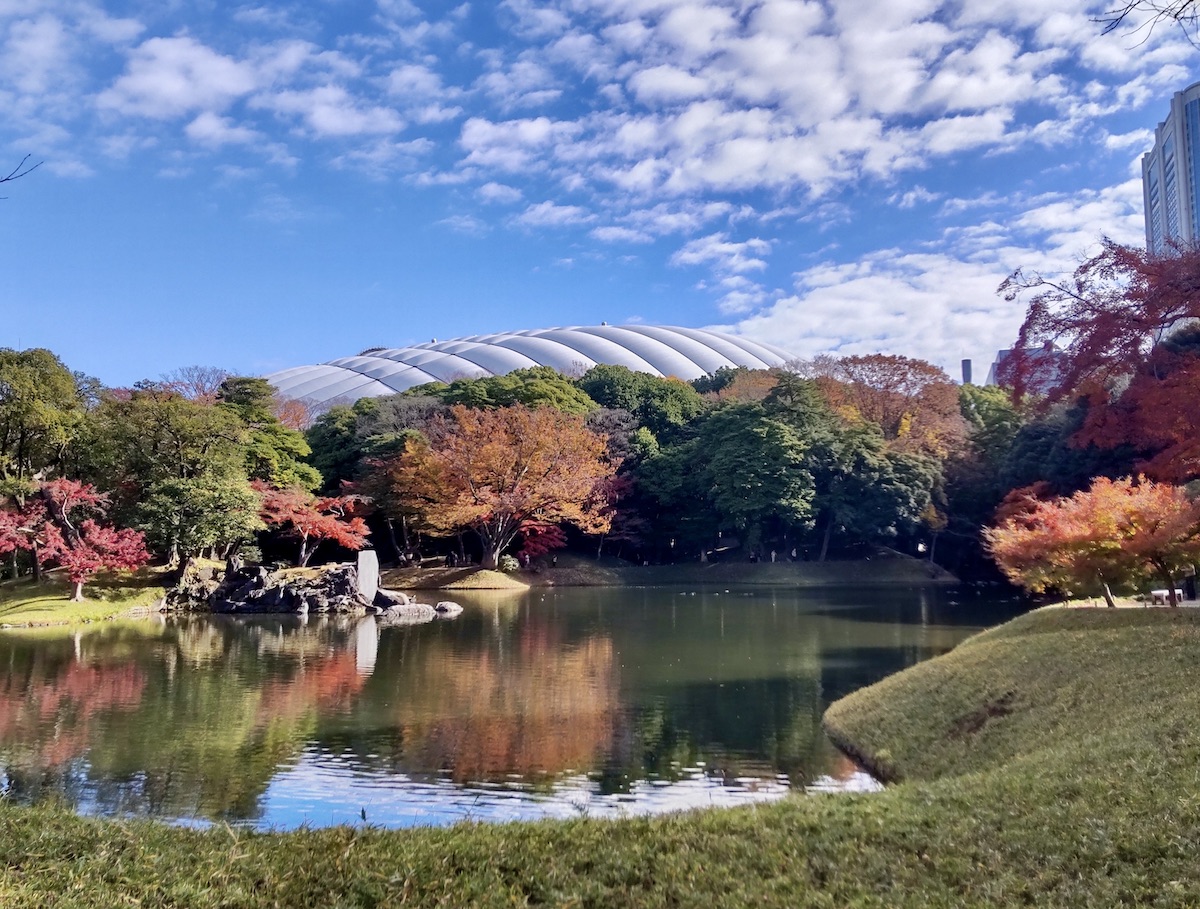
Looking back from near the restaurant at the West Gate, I could see Tokyo Dome and Tokyo Dome Hotel. This garden is located right next to Tokyo Dome. It was such a sunny day, and the white Tokyo Dome along with the colorful trees looked wonderful against the wide-open scenery. There are an amusement park, restaurants, hotels, and more around Tokyo Dome, so I’ll share about them someday.
Seeing Tokyo Dome Hotel from the garden reminded me how convenient the area is for a short stay. If you’re planning to visit Tokyo Dome City, the hotel is right next to the attractions and makes a comfortable base for exploring Tokyo.
Matcha and Wagashi
I decided to take a leisurely walk around the garden until the sun rose higher, so I headed to the restaurant first to enjoy a morning tea. It is a traditional Japanese building, but it had tables and chairs. I enjoyed a set of matcha and Japanese traditional sweets (wagashi) while admiring the autumn leaves through the glass walls.
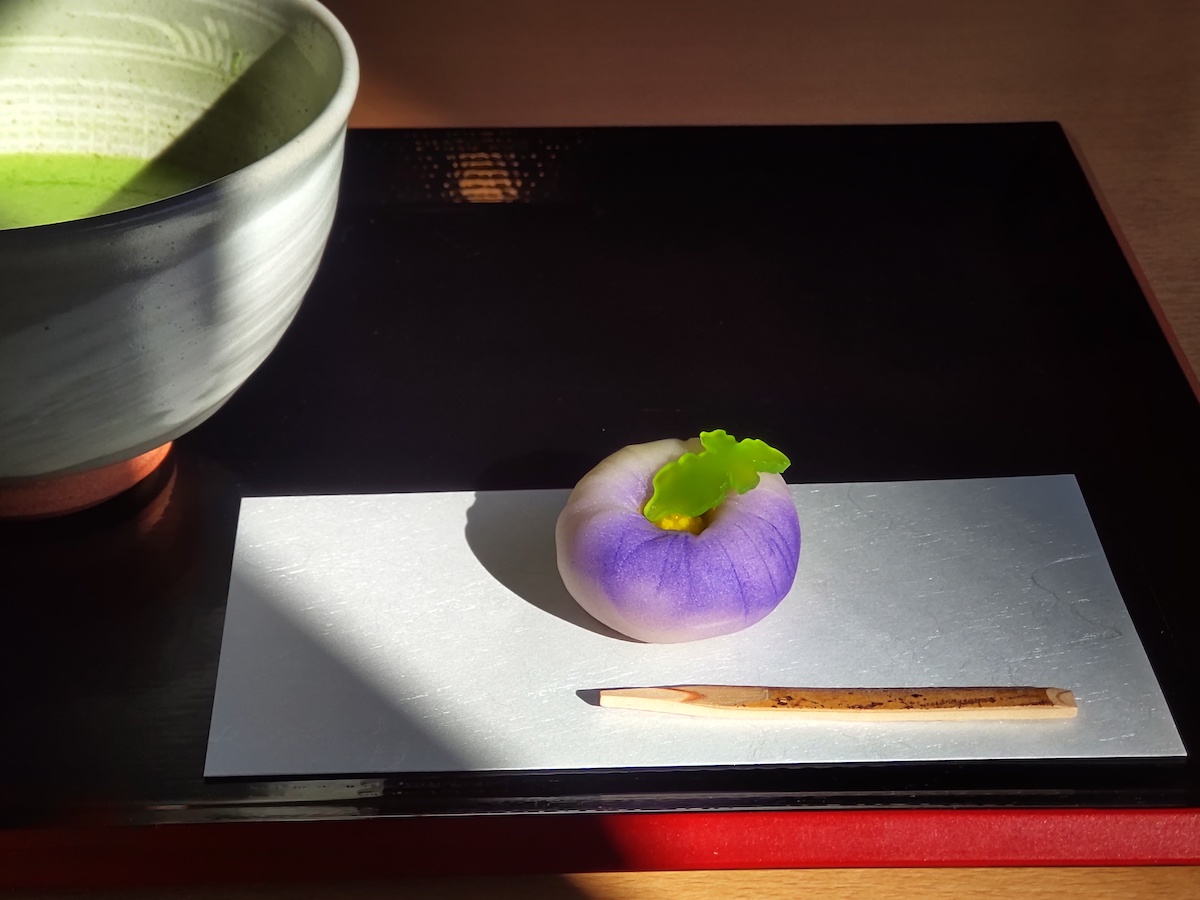
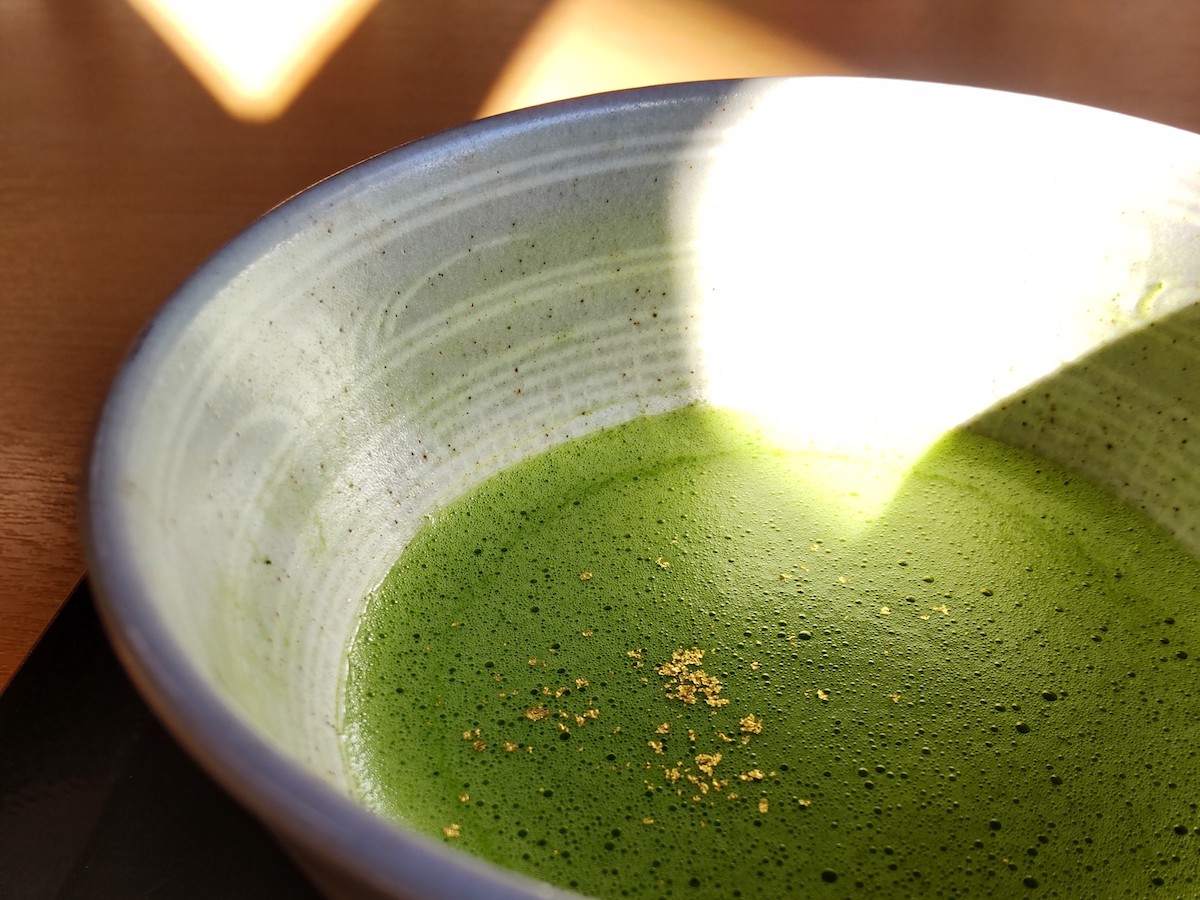
With every sip of warm matcha on an autumn morning, I could feel a comforting warmth spreading through my body. Outside, the vibrant colors of the changing leaves created a truly elegant atmosphere. Since the walls are mostly large windows, you can enjoy the stunning garden views from any seat.
The name of this sweet is Zangiku, which apparently means a chrysanthemum that remains in bloom from late fall to early winter. The restaurant also offers coffee and other drinks, so it’s a great choice even if you’re not a Japanese tea fan.
Seasonal Flavors at Kantokutei
Enjoying a matcha set with wagashi (traditional sweets) is a highlight of any garden visit. The sweets are often inspired by the season, such as the “Zangiku” chrysanthemum. Even if you aren’t a fan of matcha, the restaurant offers coffee and floor-to-ceiling garden views, making it a perfect spot to warm up and soak in the atmosphere.
How to Approach a Tea Ceremony
As I mentioned in a previous post, the tea ceremony is really about the interaction between people. I couldn’t help but appreciate how the staff prepared and beautifully presented the seasonal sweets. I never got to see the face of the person who made the tea, but I said “Gochiso-sama deshita” and left there. I’d definitely like to enjoy a meal there next time!
A Useful Phrase to Try
“Gochiso-sama deshita” (ごちそうさまでした) means “thank you for the meal.” It is a custom in Japan to express gratitude not only to the person who served the food, but also, in a sense, to the producers who grew or made it, and even to the ingredients themselves. You could say that almost all Japanese people learn this at home and at school. Be sure to try using this phrase.
Autumn Leaves
After warming my stomach and heart with tea, I headed to a sunny spot to start my walk. Looking up, the colorful leaves were absolutely beautiful.
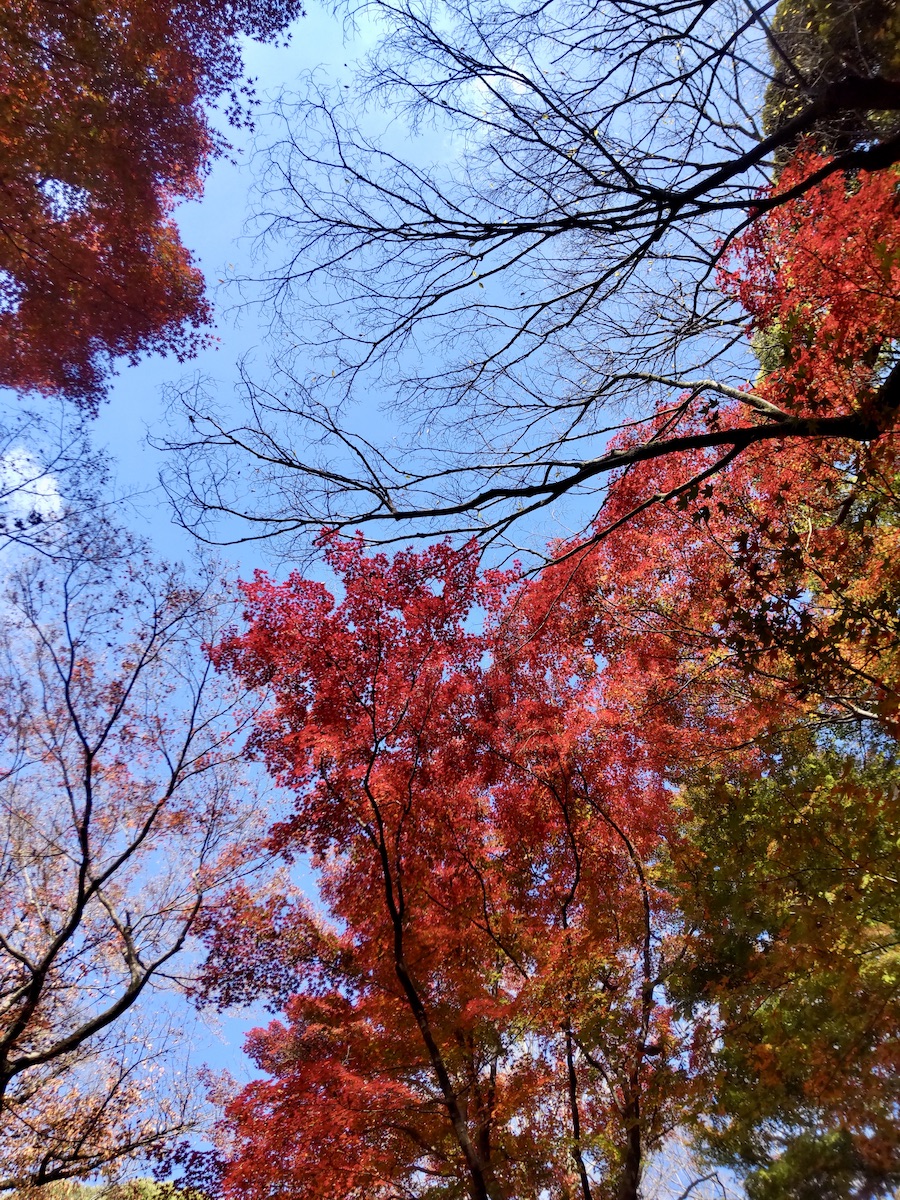 The garden incorporates scenery themed around mountains, rivers, and rural villages, so walking around never gets boring. It feels like exploring.
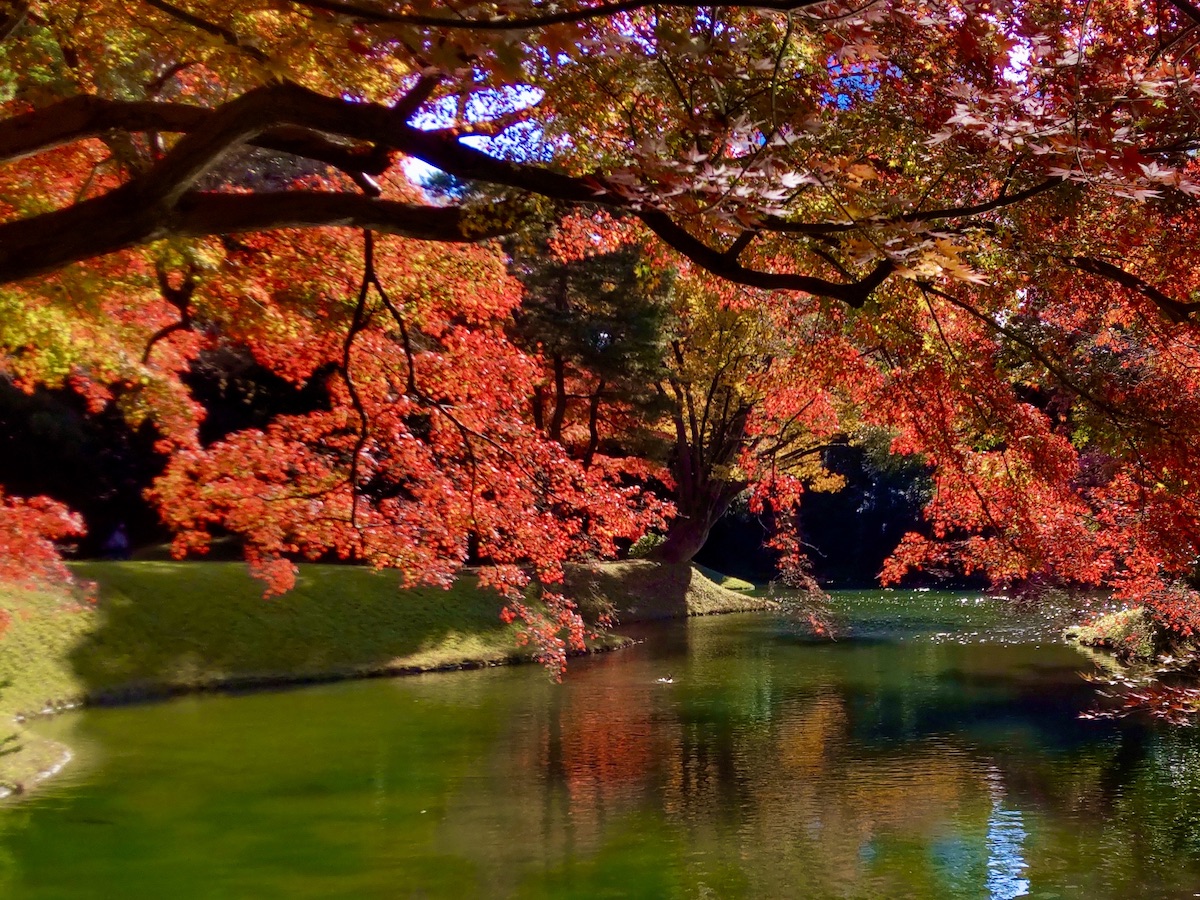
Now I’ve reached the pond at the center of the garden. Here too, fall leaves spread out in a dramatic display. The morning light reflects off the water and the fall leaves, shimmering gently with every ripple. The surface of the pond sparkles all the way into the distance.
Koishikawa Korakuen is a garden that dates back to the Edo period and is designated as a national cultural property, along with places such as Kinkaku-ji (Rokuon-ji) in Kyoto. Tokyo Metropolitan Government now manages the park.
The garden was completed by Tokugawa Mitsukuni, a grandson of Tokugawa Ieyasu, who shaped the Edo period. Thinking that people of that era also walked and enjoyed this place makes me feel a connection between the past and the present.
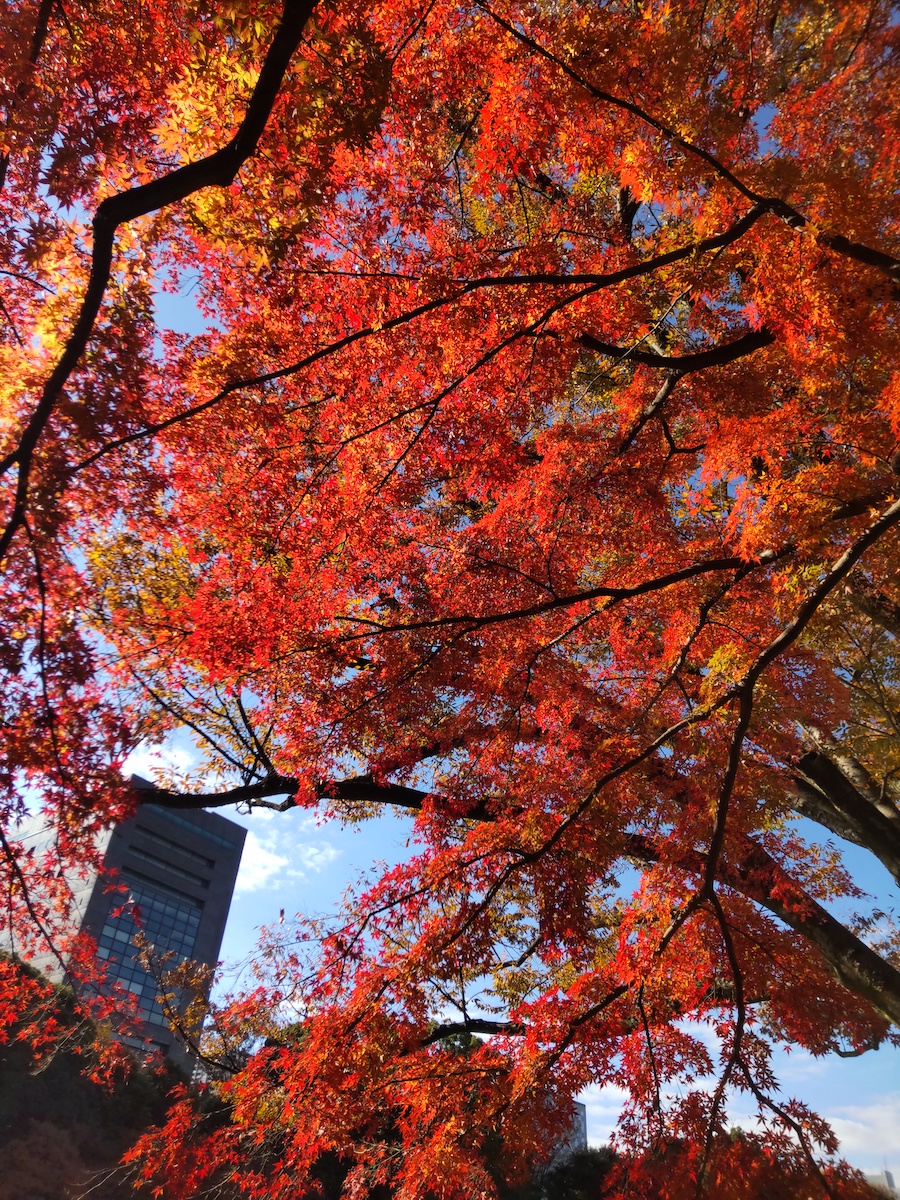 When I looked up at the fall leaves, Tokyo’s buildings peeked through the gaps. It really felt like I had come at the perfect time for fall leaves, with their brilliant, fiery reds.
Traditional Japanese Techniques
While enjoying the many different views of the garden, I made my way to the area near the East Gate.
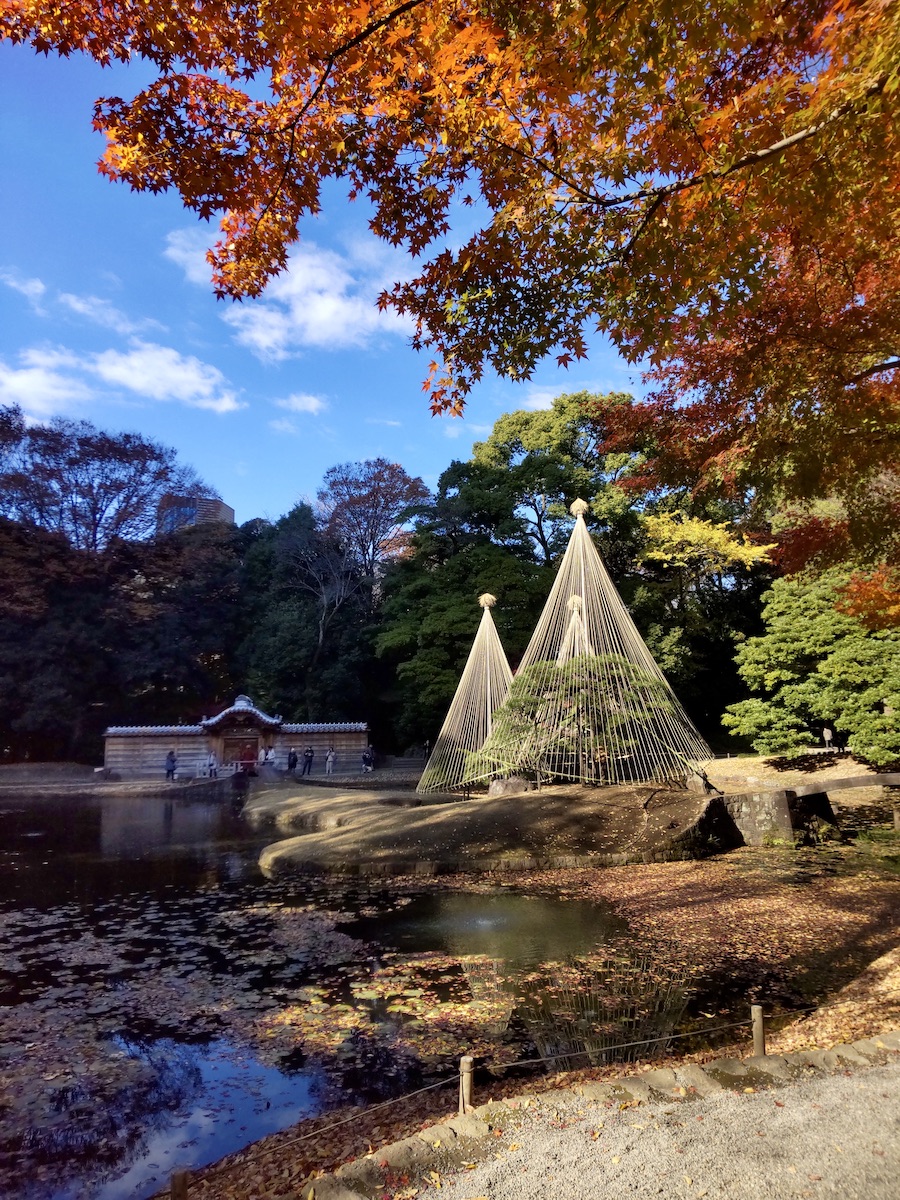 The trees around here were still shades of orange. What looks like a Christmas tree in the center is actually a pine decorated with yukitsuri, a traditional technique used to protect trees from heavy snow.
Let’s take a closer look at the gate in the background.
The Proper Way to Enter
Originally, the surrounding walls extended much farther, and this Karamon gate served as a formal boundary between the garden and the outside world. However, it was destroyed by air raids in 1945. Restoration work was completed in 2020, and on special occasions, the Karamon Gate is opened to the public and can be passed through.
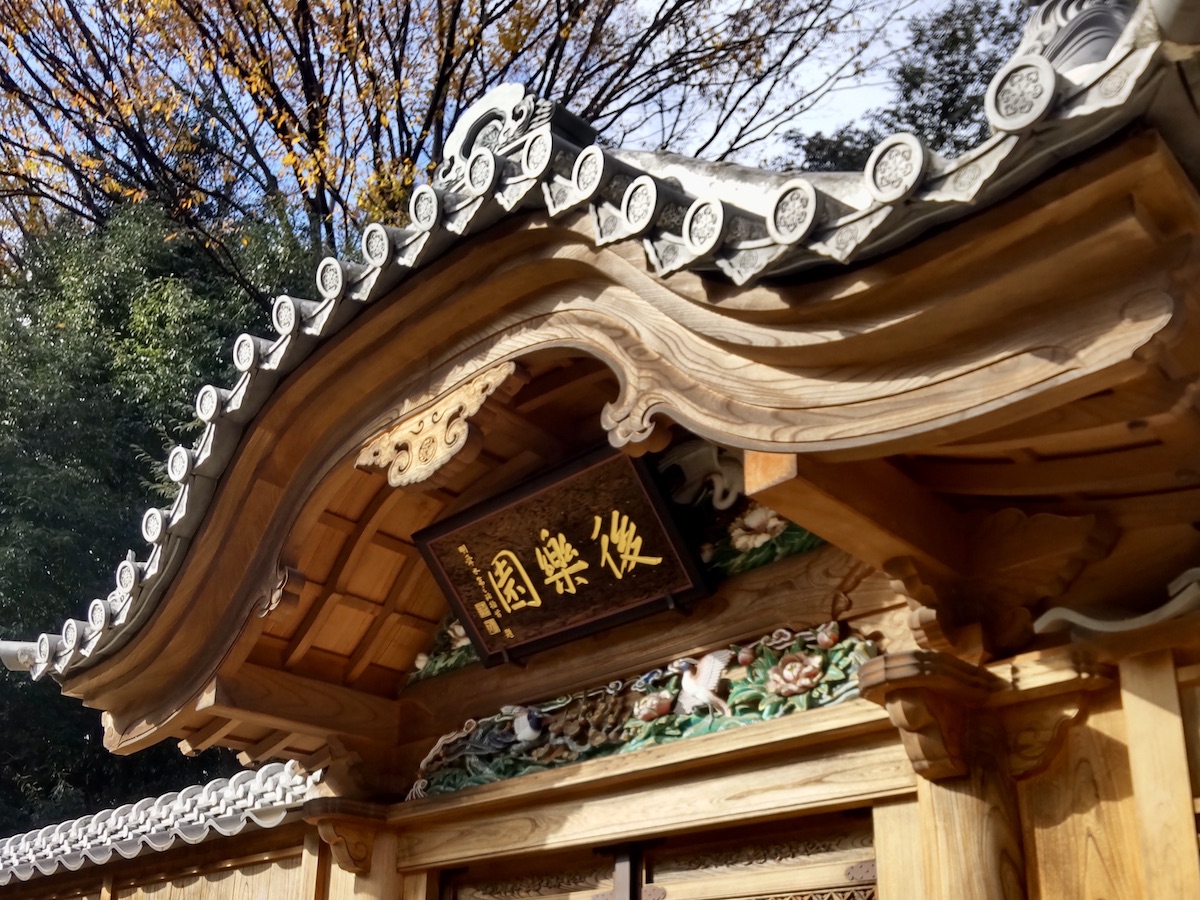
The garden was originally designed to be entered from the Karamon Gate, and it seems that the Tokyo Metropolitan Government, which manages the garden, also recommends entering from the East Gate. If you visit on the opening day, be sure to enter through this gate.
Entering Through History
Although there are two gates, entering through the East Gate allows you to experience the garden’s intended design, passing near the beautifully restored Karamon Gate. Check the official schedule for special days when the gate is open to the public, offering a rare opportunity to walk the same path as the lords of the Edo period.
Enjoy Japanese Snacks
On my way to the West Gate, I caught a tempting, savory aroma. A dango shop that usually operates on Mount Takao in western Tokyo had set up a stall here for the fall leaves season. After finishing my walk around the West Gate, I returned to that dango stall.
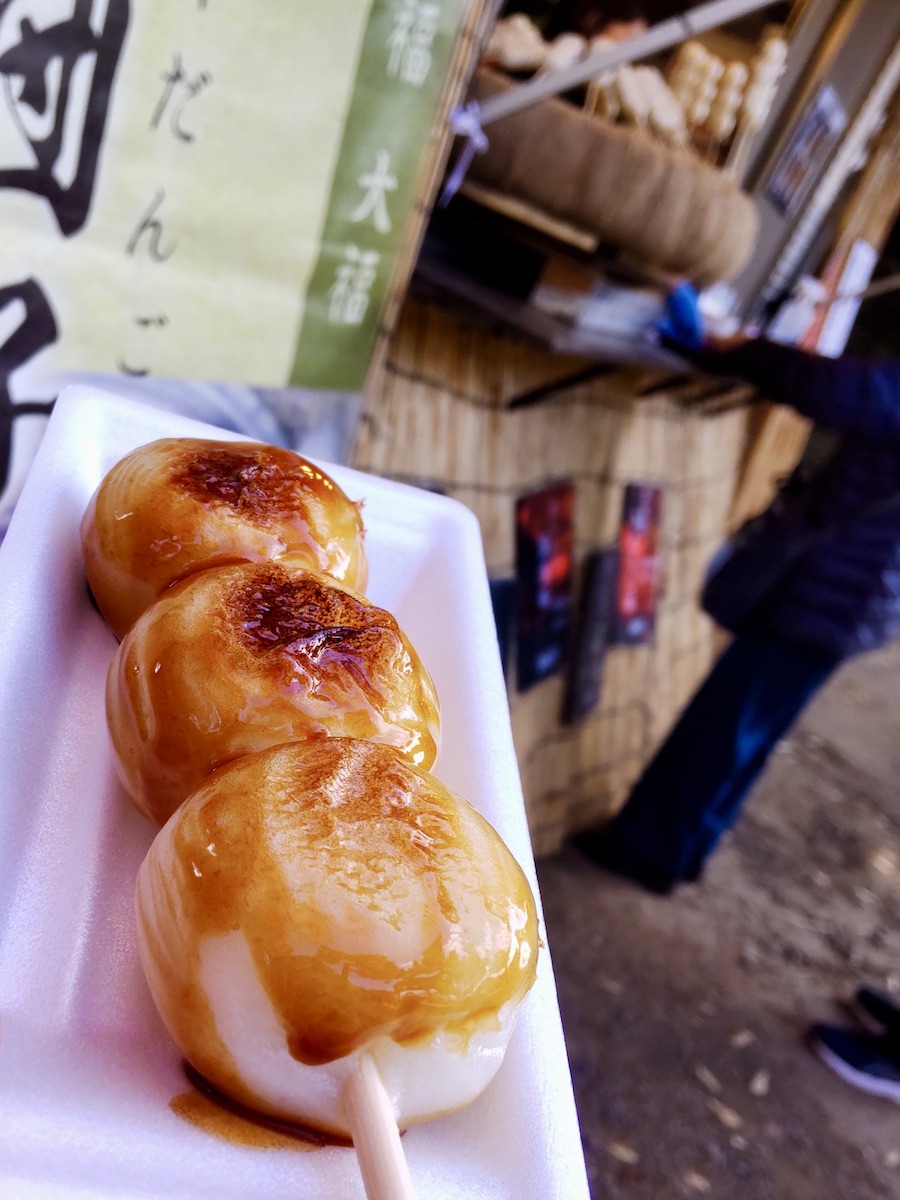 Dango are mainly made of rice cakes on skewers and come with a variety of sauces, from sweet to savory. Since I had just eaten something sweet, I decided to try the soy sauce-flavored dango. These dumplings themselves were slightly sweet, while the sauce was salty. Usually, the sauce is also sweet, so if you’re unsure, it’s best to ask the staff.
Traditional Japanese Performance
Since it was a holiday, an Dai-Kagura event was held in front of the dango stall.
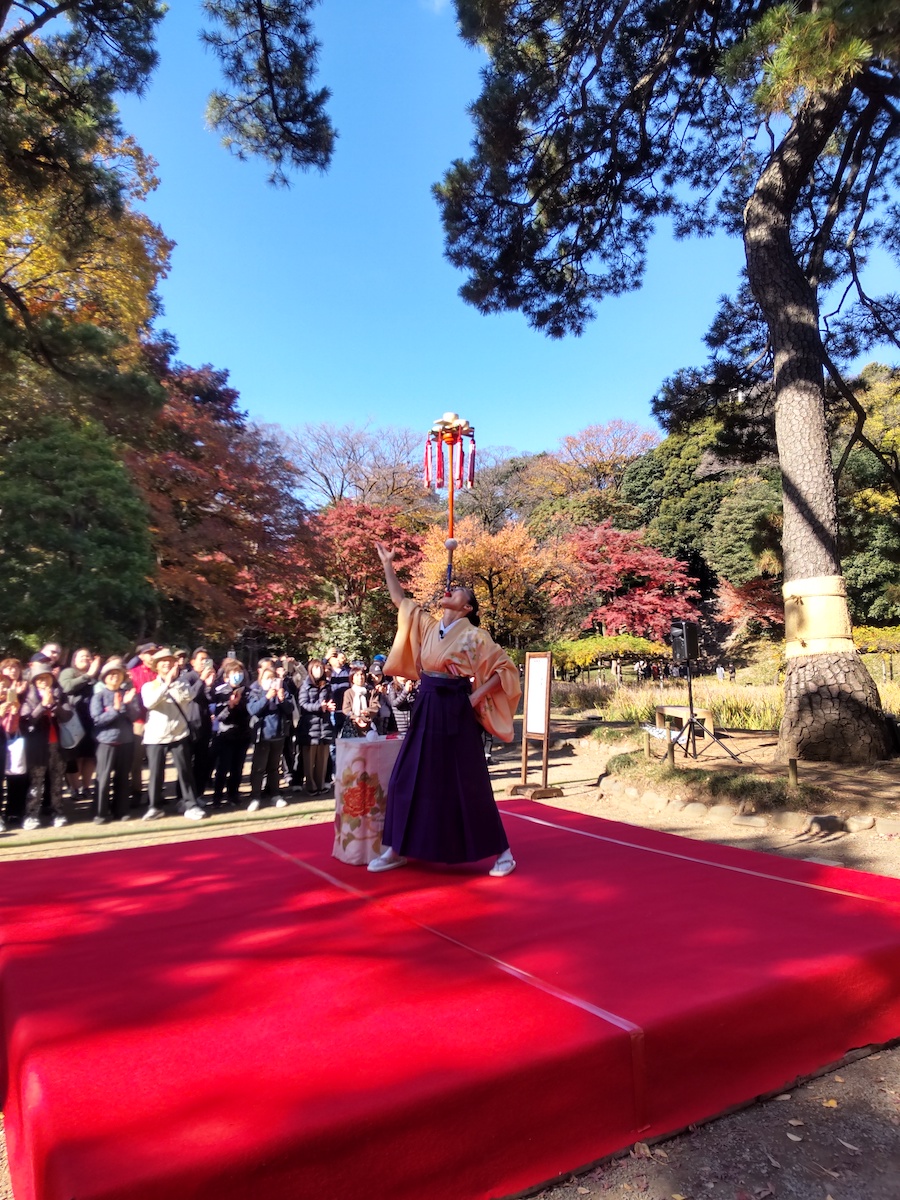 Dai-Kagura is a celebratory acrobatic performance that originated from Shinto shrine rituals and became popular during the Edo period. Many of the acts were quite acrobatic, making us gasp or feel nervous, and we applauded whenever they succeeded.
This performance is not held regularly. Please check the official website for the latest event information before your visit.
English Support
The performer gave explanations in both Japanese and English, and I could feel that the number of travelers to Japan is increasing. It seemed that the garden also offers an English-guided tour twice a day. Check the info section below for more details.
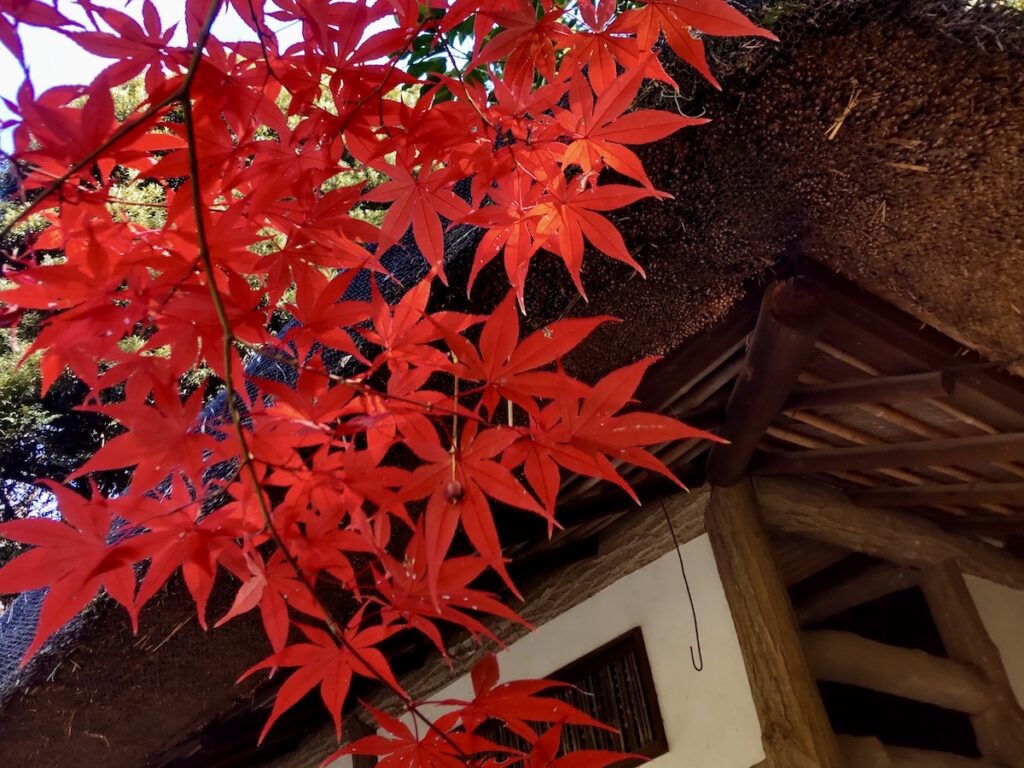
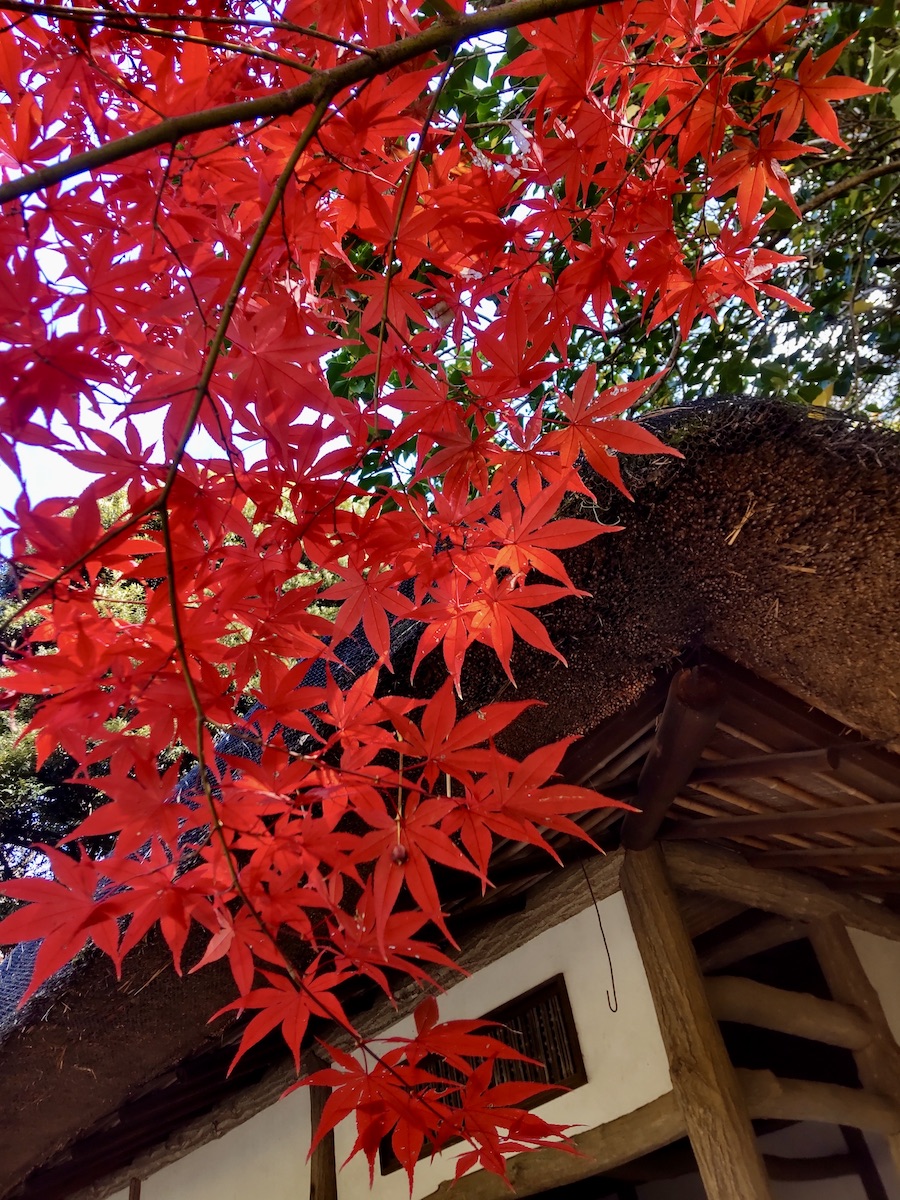 After enjoying the various fall scenes, indulging in sweets, and watching the performances, I took a break in a thatched-roof hut. In front of the hut stood a low maple tree, allowing me to appreciate the vivid colors up close. There are rest pavilions scattered around the garden—be sure to step inside and take a break.
It was a morning walk that let me fully enjoy the fall season. I hope I can continue to take walks like this from time to time and feel the seasons as I go.
The website has information on the best times to see these flowers, including cherry blossoms and other seasonal blooms.
Conclusion
A visit to Koishikawa Korakuen in late autumn is a perfect blend of natural beauty, seasonal flavors, and traditional Japanese culture. Strolling among vibrant fall leaves, enjoying matcha with wagashi, sampling dango, and watching local performances makes for a calming yet memorable experience. Timing your visit and exploring the garden fully allows you to appreciate both its historical charm and serene atmosphere.
Recommended For:
• Nature lovers wanting to see Tokyo’s best autumn foliage
• Fans of traditional Japanese sweets and matcha
• Travelers seeking a peaceful, cultural experience in the city
• Anyone interested in seasonal festivals, performances, and local snacks
Discover more traditional Japanese lifestyle ideas below:
Seasonal Japanese Entryway Decor: Simple, Cozy & Traditional Ideas
Check out the related posts about Japanese food below!
Information
Information, prices and exchange rates are current as of my visit but may change. Please check official sites.
Koishikawa Korakuen
Opening Hours
9:00 AM – 5:00 PM (Last admission 4:30 PM)
– Hours may be extended during special events.
– Closed over the New Year period
Official website
English available via language selector
– Bloom Status
English Guides
– Saturdays only (10:30 AM & 1:30 PM)
Admission Fee
– ¥300 (approx. $1.9 / €1.6)
Access
– About 890 ft (270 m) from Suidobashi Station
Kantoku-tei
– Within Koishikawa Korakuen
– Entering the Koishikawa Korakuen requires a fee
Opening Hours
Cafe: 10:00 AM – 4:00 PM (Last Order 3:30 PM)
Lunch: 11:00 AM – 2:30 PM
Matcha set
– ¥1,000 (approx. $6.4 / €5.4)
– Google Maps
Tokyo Dome Hotel
– Check rates on Booking.com
– Check rates on Expedia
Access
– About 1150 ft (350 m) from Suidobashi Station
– Google Maps
This article contains affiliate links. We may earn a commission at no extra cost to you.