Last Updated on June 10, 2026
In my current home, I have a small display space on top of my shoe cabinet, where I used to showcase my children’s handmade crafts. Recently, I started decorating this space with seasonal items I choose myself, blending traditional Japanese customs with a simple, modern style.
If you’re interested in decorating a small space in a Japanese home, this guide will give you practical and easy-to-follow ideas you can try throughout the year.
What you’ll find in this guide:
- How to decorate a small space in a Japanese home throughout the seasons
- Traditional Japanese decorations like Hina dolls, kabuto, and folk crafts
- Simple styling ideas using dried flowers, vases, and everyday items
- Where to buy decorations, from specialty shops to 100-yen stores
Spring
Cherry blossoms aren’t the only highlight of spring in Japan. We also celebrate traditional festivals for children.
Girls’ Day Decorations
When it comes to spring decorations in Japan, Hinamatsuri is one of the most well-known traditions. Also known as Girls’ Day, families celebrate it every year on March 3. People believe that Hina dolls take on misfortune in place of young girls, protecting them from illness and bad luck. For this reason, families with daughters often display these dolls in their homes during the season.
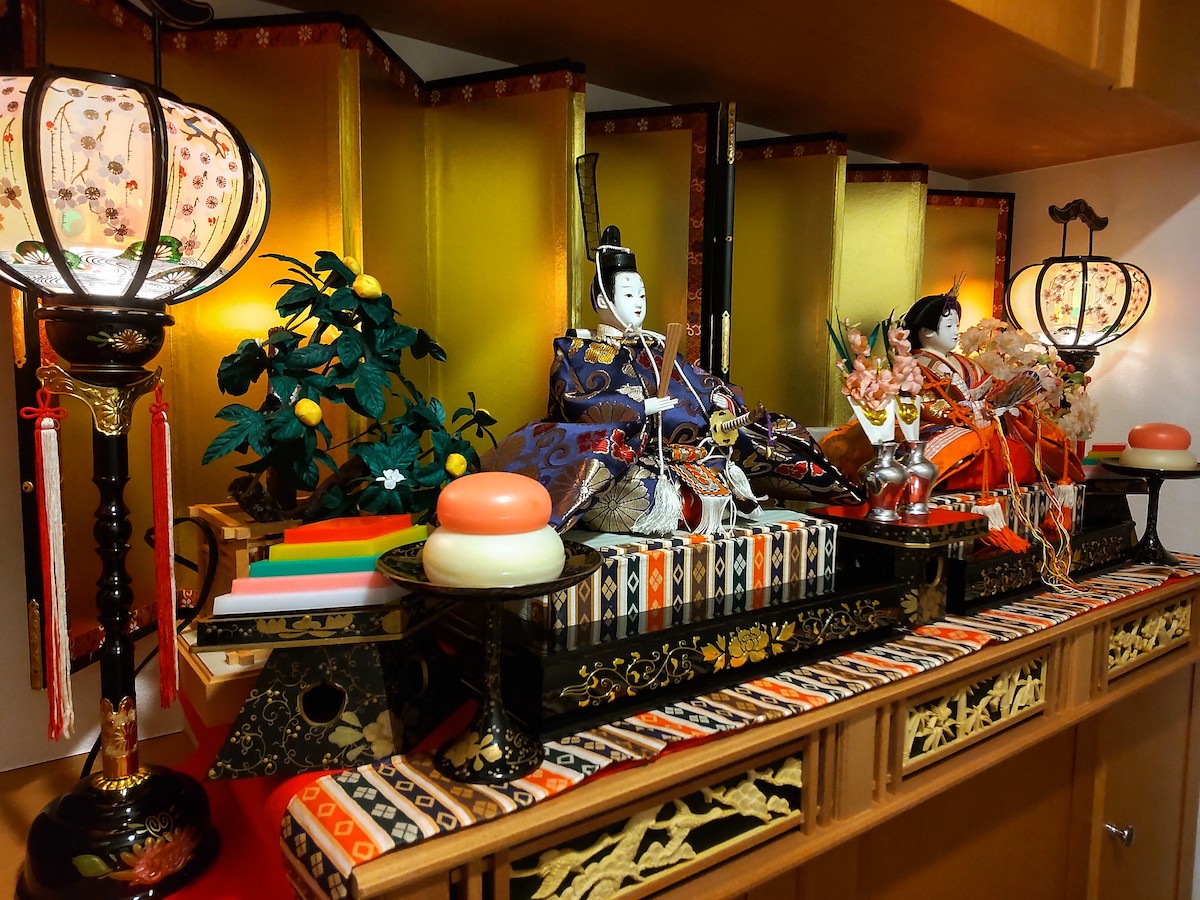
This is the Hina doll set my parents prepared for me when I was a child. After I got married and moved away, my parents stopped setting it up for a while. I don’t have a daughter of my own, but I felt inspired to display it for myself. So I brought the dolls from my parents’ home and arranged them in my own space.
Why I Display Hina Dolls Even Without a Daughter
In Japan, Hina dolls are traditionally displayed for girls. However, I do not have a daughter. But I realized that these dolls also represent wishes for health, happiness, and protection — values that are meaningful for anyone, regardless of age or gender. Since there is no age limit for displaying Hina dolls, more adult women in recent years have begun to display them for themselves as a small act of self-care.
For me, setting them up is not only about tradition. It is also a way to reconnect with my childhood and my parents’ love. Each time I open the box, I remember how carefully my parents prepared this set for me. Now, displaying it in my own home feels like carrying that love forward.
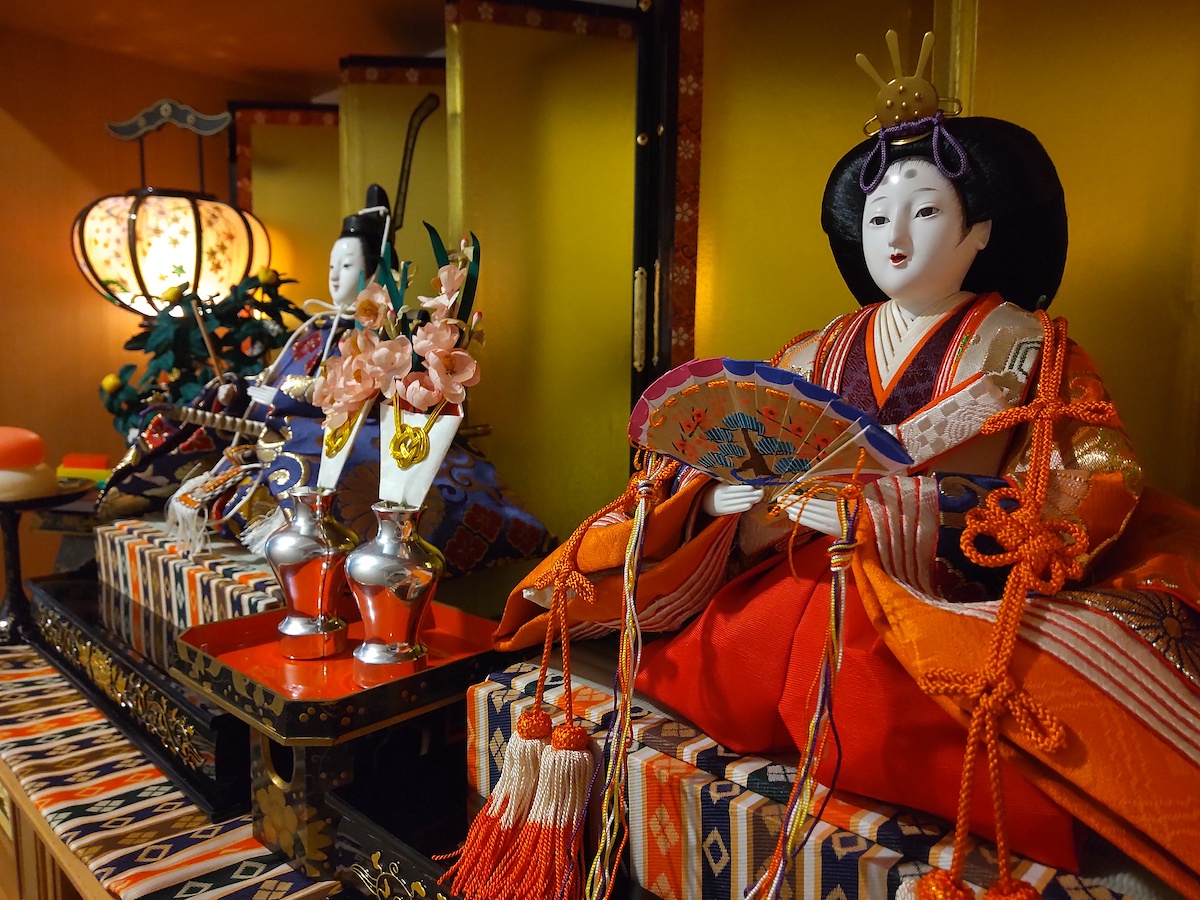
Yoshitoku
Yoshitoku, a well-known Japanese doll maker with a long tradition of craftsmanship, creates these Hina dolls. They feature elegant and refined facial expressions that are both charming and delicate. The gentle, subtle smile on their faces is especially charming. For over 300 years, Yoshitoku’s dolls have continued to captivate people with their beauty and artistry.
How to Display
What I realized from actually displaying the set is that it takes quite a bit of time. There are many different pieces, each with a designated place, and you also have to return everything to the correct boxes afterward.
The same can be said for a Christmas tree, but the most important part is enjoying the time spent decorating with your family. However, in modern Japan, many households don’t have the opportunity to do this. For this reason, you can now buy Hina doll sets that are already arranged in boxes, so anyone can easily enjoy them nowadays.
Additionally, the release of Lladró’s beautiful Hina doll collection in recent years has brought renewed attention to ceramic Hina displays. Since no assembly is needed, these sets are easy to display and blend beautifully with modern interiors. As another option, some people enjoy making Hina dolls by hand using origami or clay, and Japanese people celebrate Girls’ Day in a variety of ways.
Modern Ways to Enjoy Tradition
If you have limited space or a busy schedule, consider compact options like pre-arranged box sets or ceramic Hina dolls (e.g., Lladró). They blend seamlessly with modern interiors and require no complex assembly, making it easy to keep traditions alive in a small home.
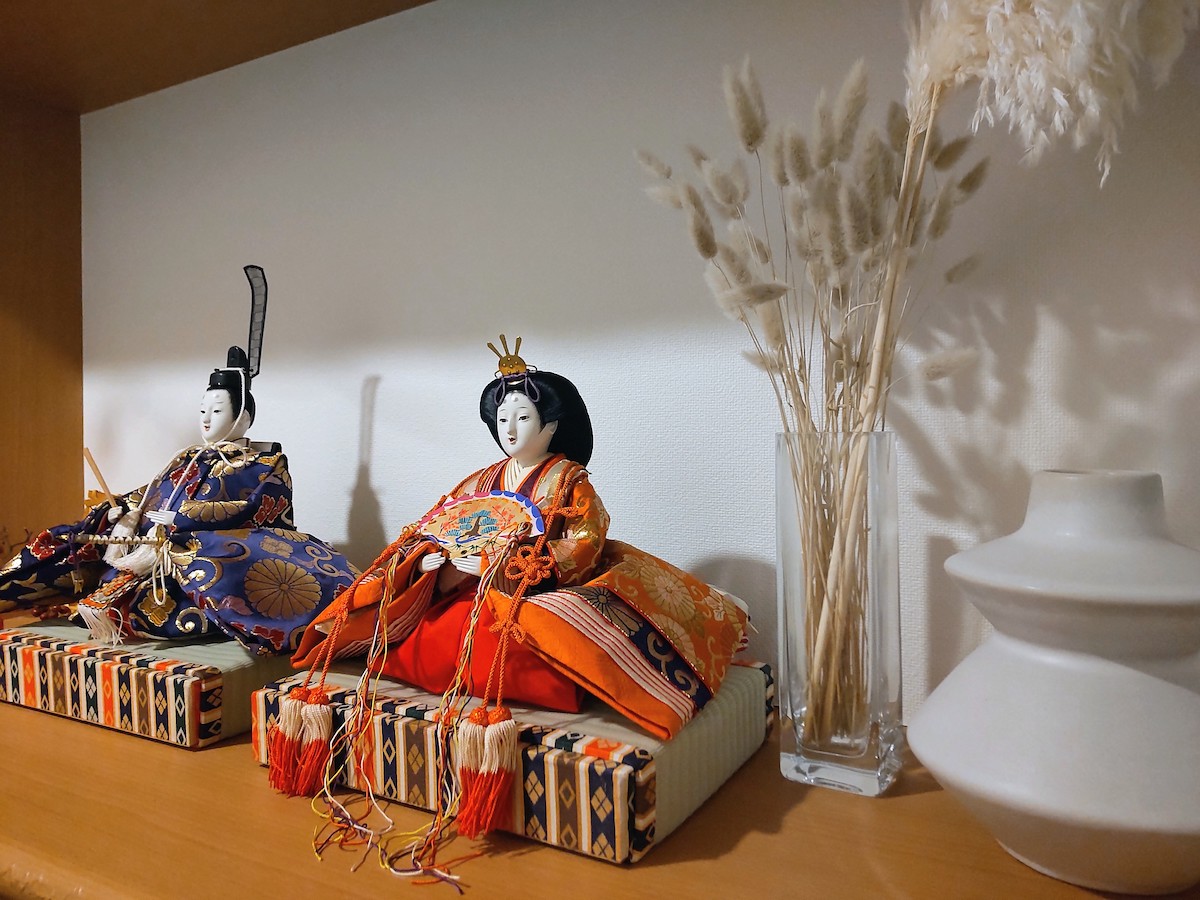
Modern-Style Twist
In another year, I tried simplifying the display by using fewer decorations. This way, the display blended nicely with dried flowers and a modern white vase, giving it a slightly contemporary feel.
The traditional displays are also extravagant and beautiful, so I like to enjoy them in different ways depending on my mood.
Boy’s Day Decorations
Now, let’s move on to Boys’ Day decorations. Boys’ Day, which is more of an early-summer celebration than a spring one, also involves displaying kabuto helmets and samurai armor on May 5 to protect children from illness and misfortune.
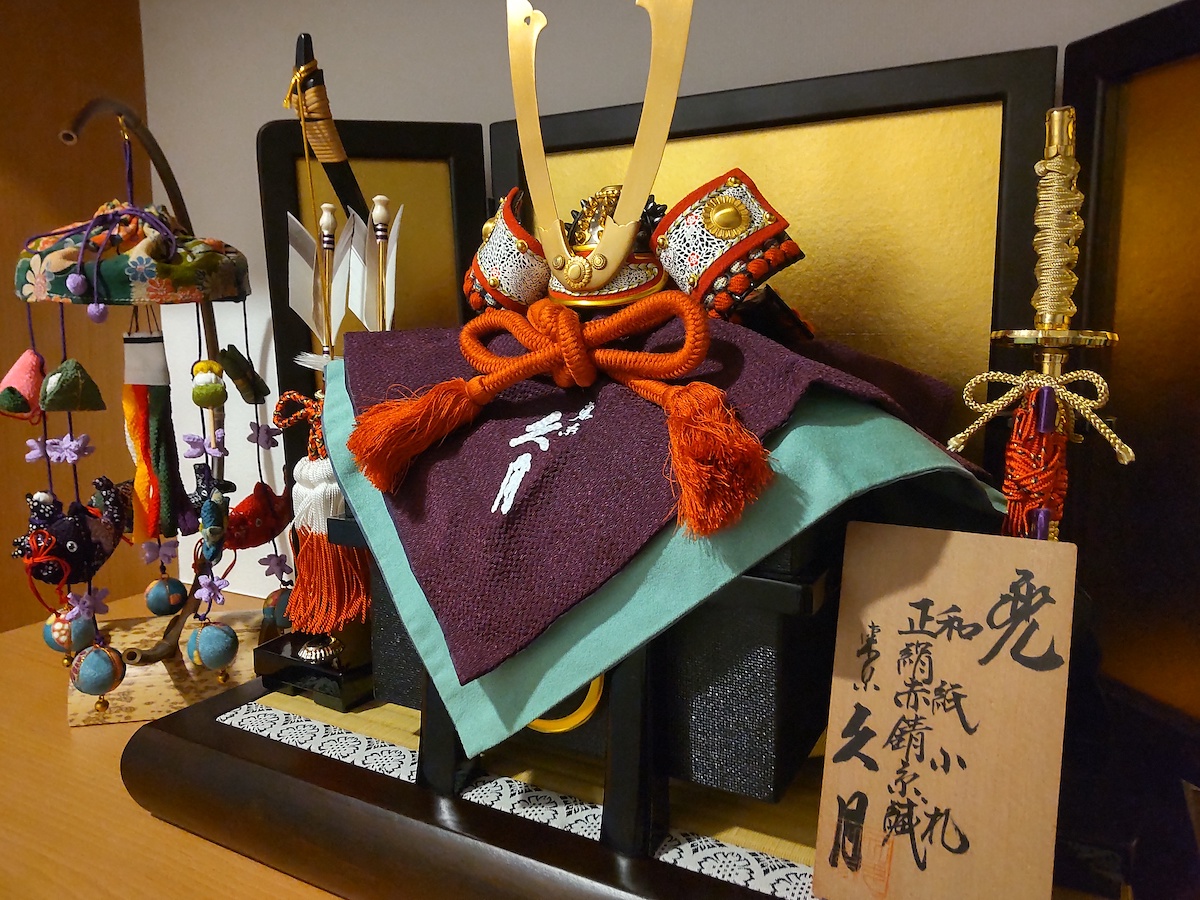
Kyugetsu
This kabuto display was prepared for my sons and comes from Kyugetsu, a renowned Japanese doll maker. It is compact, and the thick wooden frame gives it a slightly modern touch. Kyugetsu is not only skilled in traditional craftsmanship but also excels at creating pieces suited to modern times. This kabuto was cleverly designed to fit into its display stand, making it compact and easy to store in a contemporary Japanese home.
Although small, this kabuto features a beautifully crafted and impressive kuwagata crest and a vivid vermilion shinobi-o (chin strap), which I particularly love. The kuwagata is a pair of horn-like metal ornaments on the kabuto, and its shape varies depending on the samurai. Some people choose a kabuto based on the kuwagata of their favorite warrior.
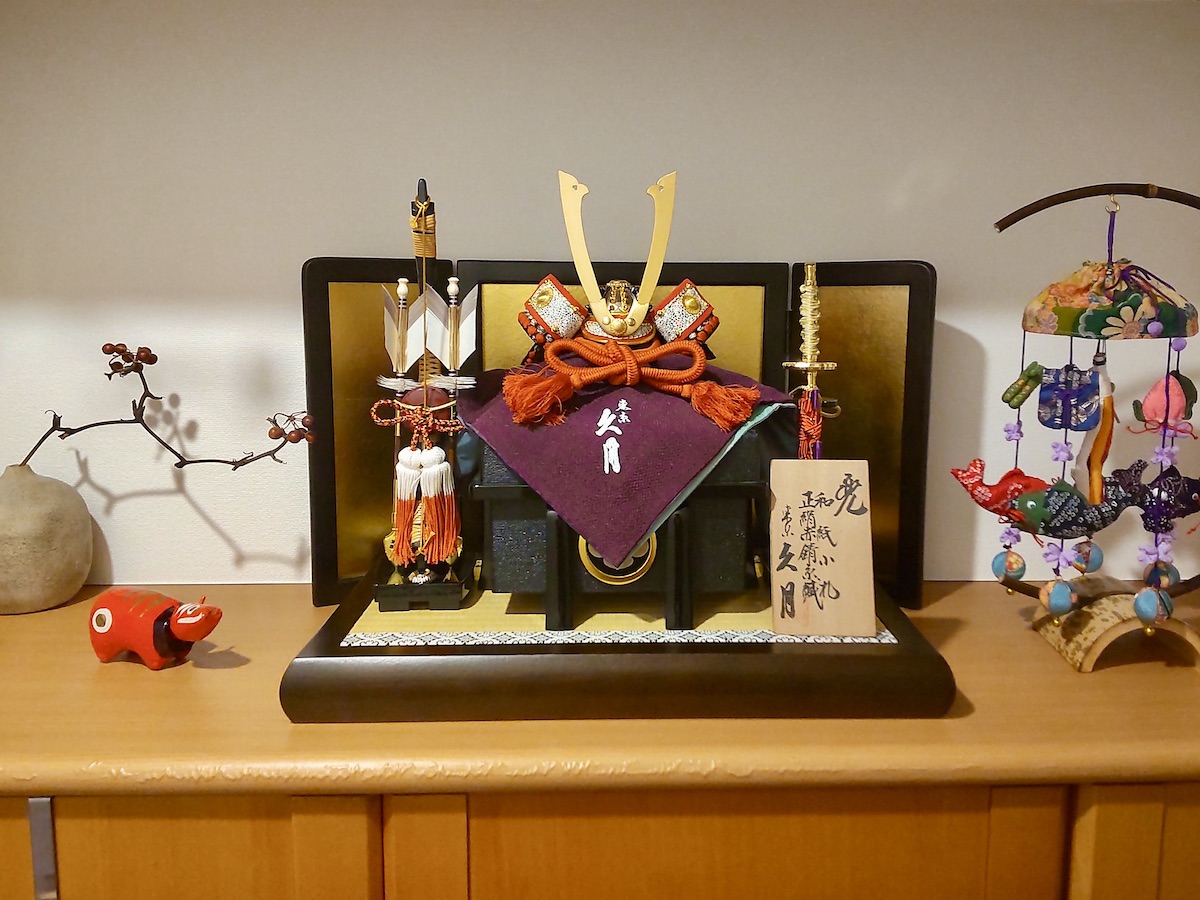
Modern-Style Twist
This kabuto set already has a slightly modern design, so it blends well with other vases without any extra adjustments. Keeping the number of decorations minimal helps the main piece stand out and creates a pleasant, balanced space.
The hanging decoration displayed beside the kabuto includes small ornaments inspired by carp streamers, iris flowers, and figures related to Momotaro (a story about a brave boy). Like the kabuto, they symbolize protection and good health, which makes this piece an essential item in our home.
However, if you prefer a more modern look, I recommend choosing something simpler, like the vase on the left.
Summer
On a hot summer day, I wanted to add something refreshing to the space, so I displayed blue dried thistles and eucalyptus. Muted shades of blue and green pair beautifully with the white wallpaper and the natural tone of the stand, creating a cool and refreshing look.
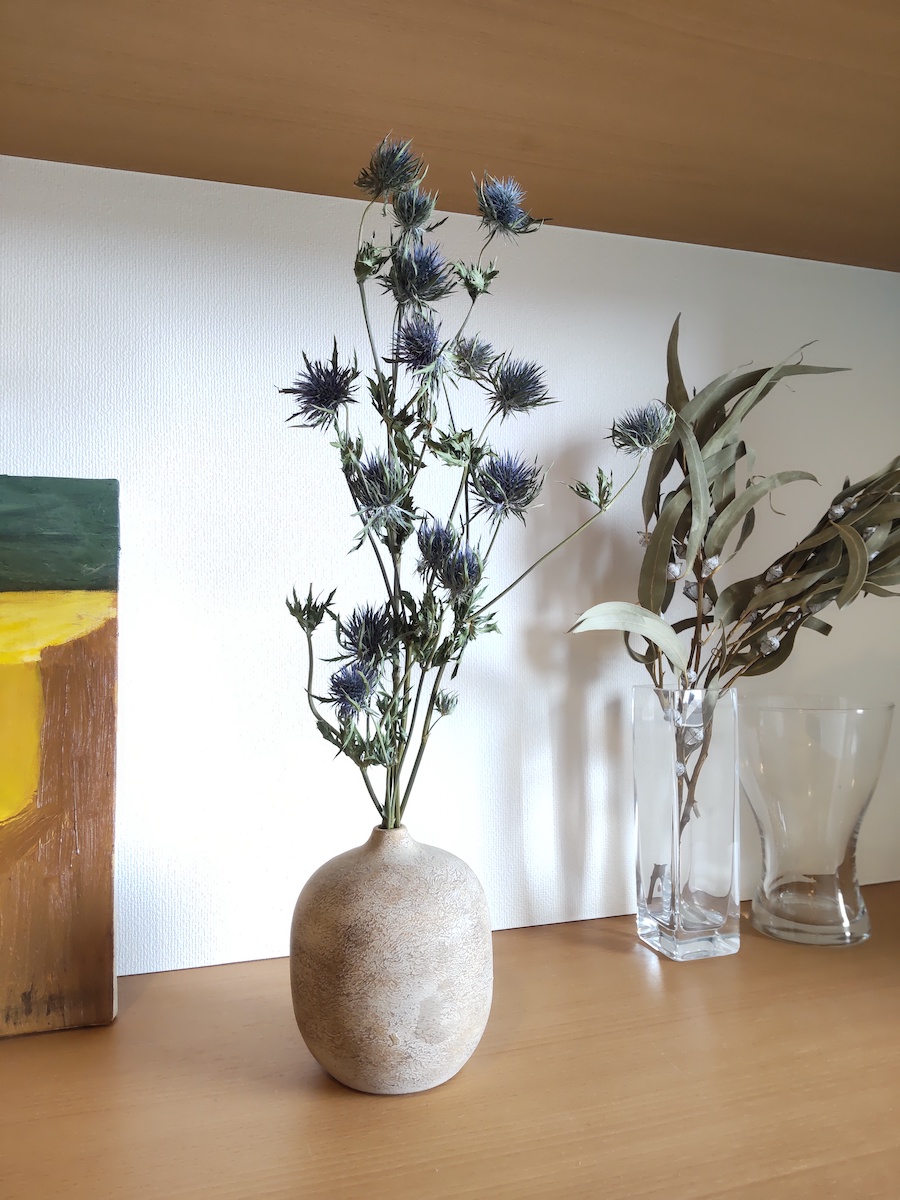 I bought the dried flowers at garage TOKYO, a shop located in the Marunouchi Building (Maru-biru), which is directly connected to Tokyo Station via an underground passage. It’s an incredibly convenient spot to stop by while you’re in the area. The shop offers both finished flower arrangements and raw materials, so you can choose the style that best fits your needs.
Flower Vases
The flower vase I used this time was purchased at ACTUS Marunouchi, an interior goods store located in the Shin-Marunouchi Building (Shin-Maru-biru). It may sound a bit odd, but I was drawn to it because of its look, which reminds me of a slightly shriveled potato. It’s simple, yet has a textured charm that suits both Japanese and Western styles. You can also put plants in it, but even leaving it empty creates a nice atmosphere.
The glass vases are from IKEA. When I use a wide one, the flowers spread out naturally, while a tall, narrow vase keeps them upright. I choose the shape depending on the flowers and the mood of the space. They are also reasonably priced, so I recommend them if you’d like to have several on hand.
Choosing the Right Vase
To create a balanced look in a small space, try mixing different shapes. A wide vase allows flowers to spread naturally for a relaxed feel, while a tall, narrow one keeps stems upright for a clean, modern look. Even an empty, uniquely textured vase can serve as a beautiful decorative object.
My Child’s Artwork
Also, I sometimes display my child’s drawings in this space. They remind me of the days when my child came home with paint all over their school uniform. Now, the artwork blends in beautifully with the space, so I often keep it on display.
For those who prefer a modern look, I recommend displaying just one piece of artwork in a space. If you want to display multiple pieces, it’s best to choose works from the same series for a cohesive look.
Fall
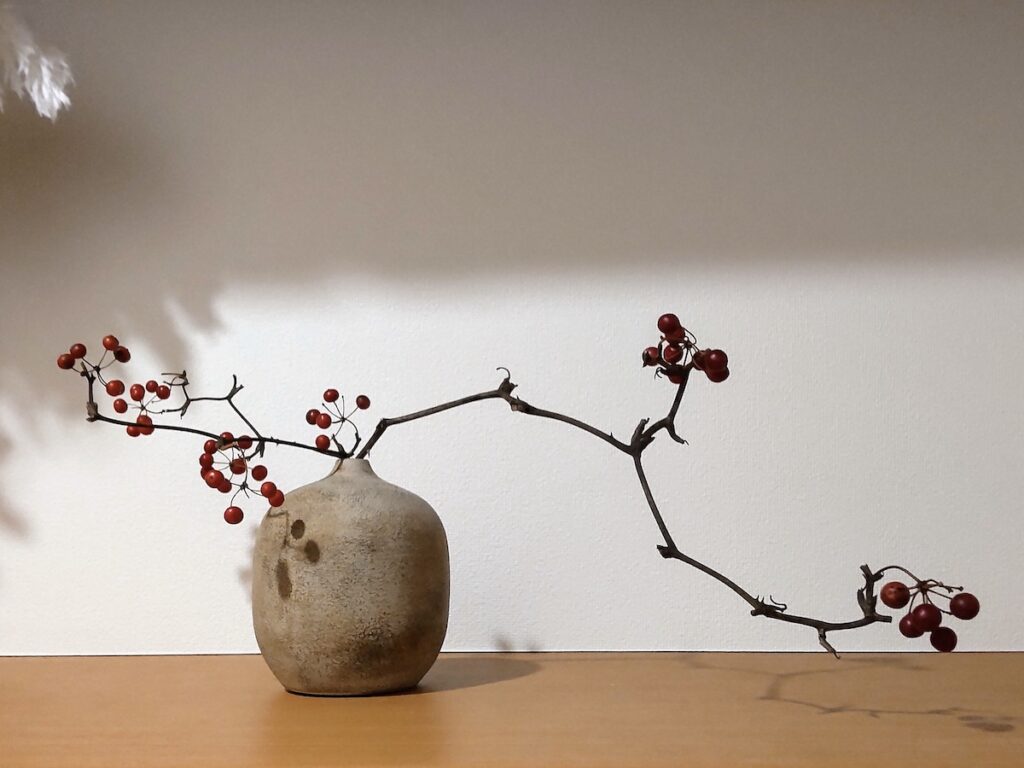
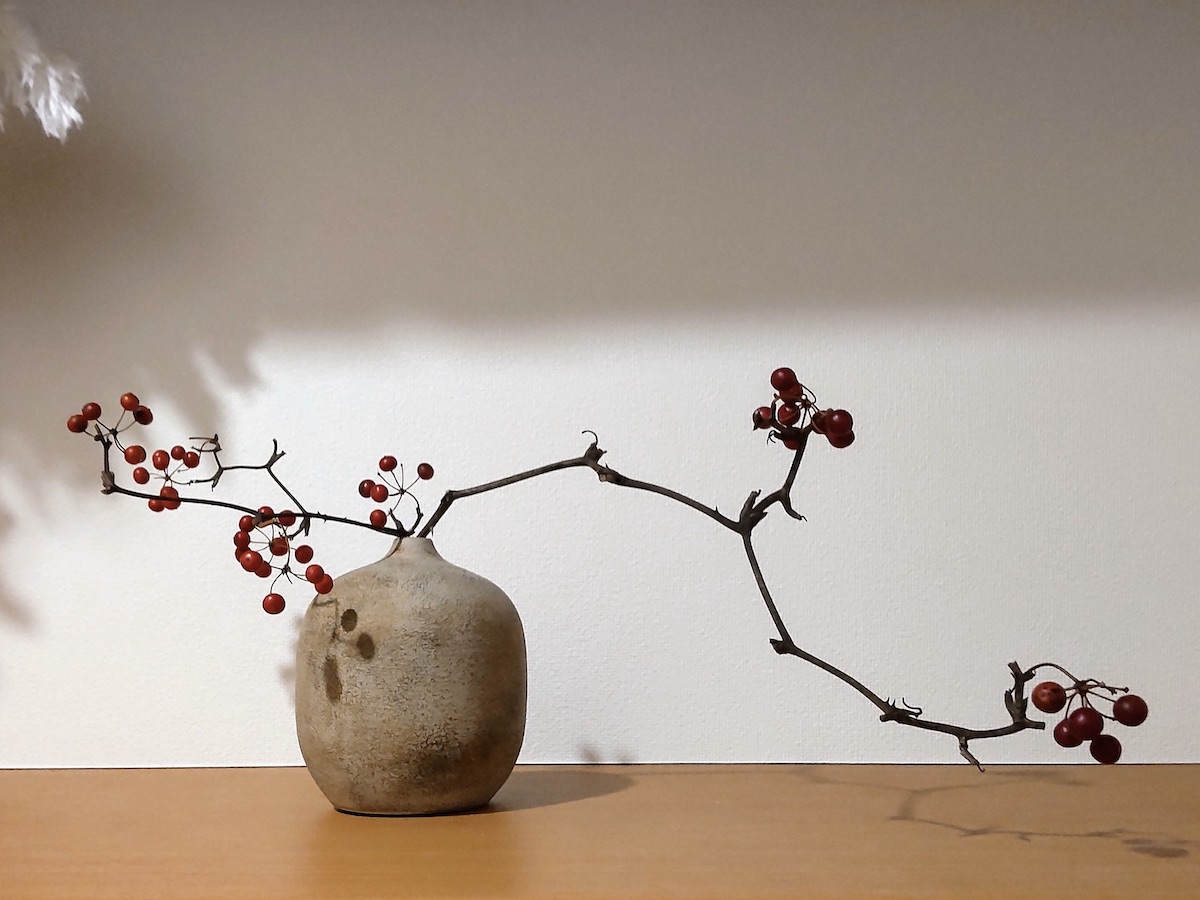
Fall is all about the changing leaves. Since red adds warmth, I decided to display a vine plant with red berries to create that cozy seasonal atmosphere. Since my days are quite busy, I prefer decorating with dried flowers and greenery that don’t require daily care. This way, I can still enjoy a touch of nature in my home without feeling overwhelmed.
Plants
The plant is a vine that I bought during the Christmas season from a nearby florist. It is called Sankirai(Smilax glabra Roxburgh). I thought it was a Western plant since sellers presented it as a Christmas wreath, but I discovered that it naturally grows in Japan and other parts of Asia. When I first bought it, the berries were bright red, but over time they darkened, giving them a calm and mature look. I took apart the wreath and removed some pieces to create a small arrangement.
Low-Maintenance Seasonal Decor
For those with a busy lifestyle, decorating with dried flowers or sturdy vines like Sankirai is a great way to enjoy nature without daily care. These items age beautifully over time, shifting from vibrant to mature tones, allowing you to enjoy the season’s transition effortlessly.
Quick Tip: Thorns
This plant has thorns, and its vines are stiff, so you need to handle it with care. However, its stubborn nature and the striking red accent give a strong impression to anyone who sees it. Also, it evokes the brushstrokes of Japanese calligraphy.
Japanese Touches
Here’s something else I added. This bamboo basket is actually the container for some sweets I bought as a souvenir when I visited Karuizawa in Nagano Prefecture.
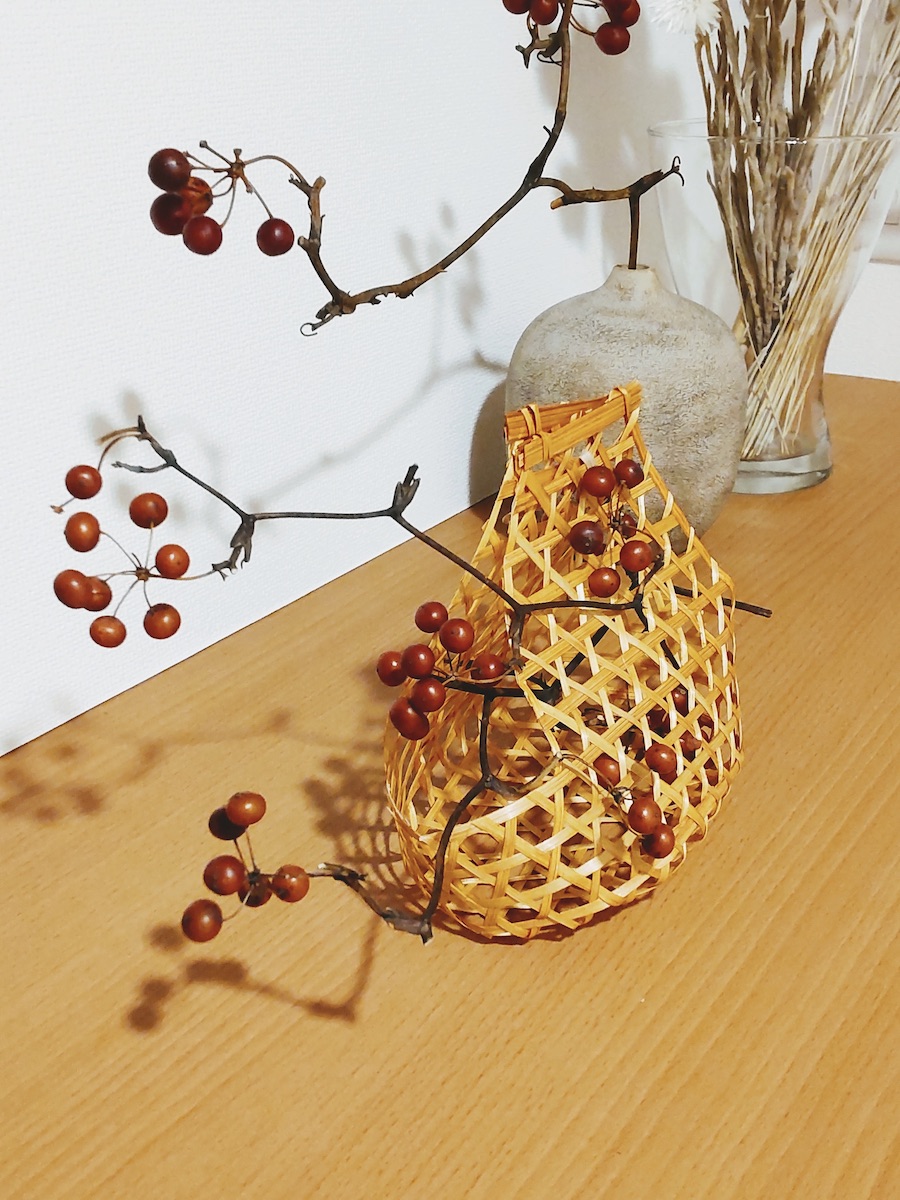 The sweets were delicious, and since the container was so cute, I decided to use it. Karuizawa is a popular area for vacation homes and a beautiful place. You’ve arranged flowers in something other than a vase, like I did, haven’t you?
And one more thing. This is a traditional folk toy from Fukushima Prefecture called Akabeko.
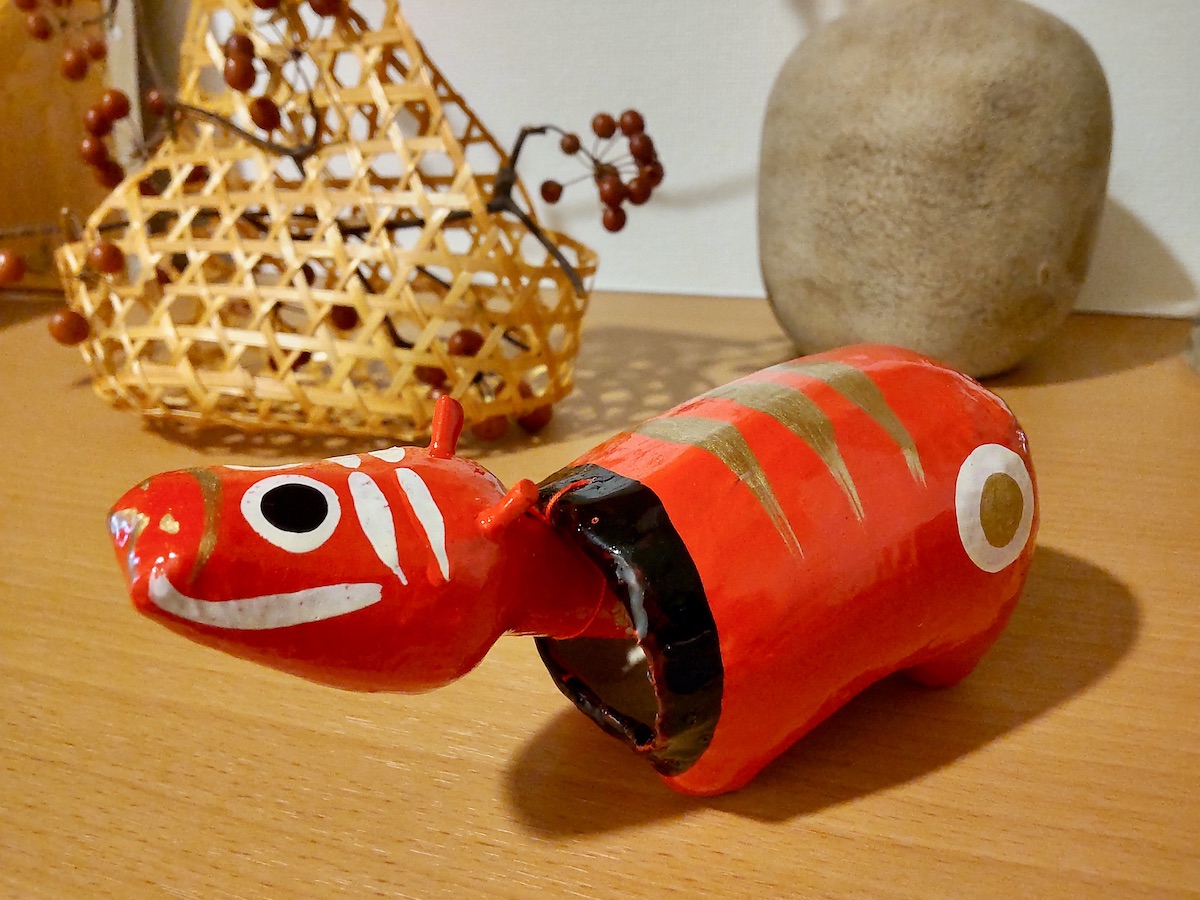
The head wobbles back and forth when you tap it. It is bright red, very cute in a Japanese style, and also serves as a charm for warding off evil and protecting against illness. At that time, some of my family members weren’t feeling very well, so I put it on display.
Where to Buy Crafts
I didn’t buy this in Fukushima; I got it at a Fukushima specialty store “MIDETTE” in Nihonbashi. Various regional specialty stores from all over Japan have branches in Tokyo. They are called antenna shops. Most of these antenna shops are operated by local governments, such as prefectures and municipalities. They are established in major cities like Tokyo to promote local specialties and tourism of their respective regions.
In Nihonbashi alone, there are six shops offering a variety of local specialties, crafts, and souvenirs. Some of the shops even serve regional dishes. They are very popular spots in Tokyo, offering new discoveries for people who have never visited these regions and niche products for fans of those areas.
Winter
In Japan, Christmas events are well known. Although the way they are celebrated may not fully match the original tradition, they provide a cozy and cheerful highlight during the cold winter. Every year we decorate a small tree in our house.
Red decorations
Both the nutcracker and the decorative runner were souvenirs my parents brought back from Christmas markets in Germany. They have become essential items during the holiday season. This year, I also received some red ornaments and a wooden toy that my parents no longer use, and I added them to the tree as well.
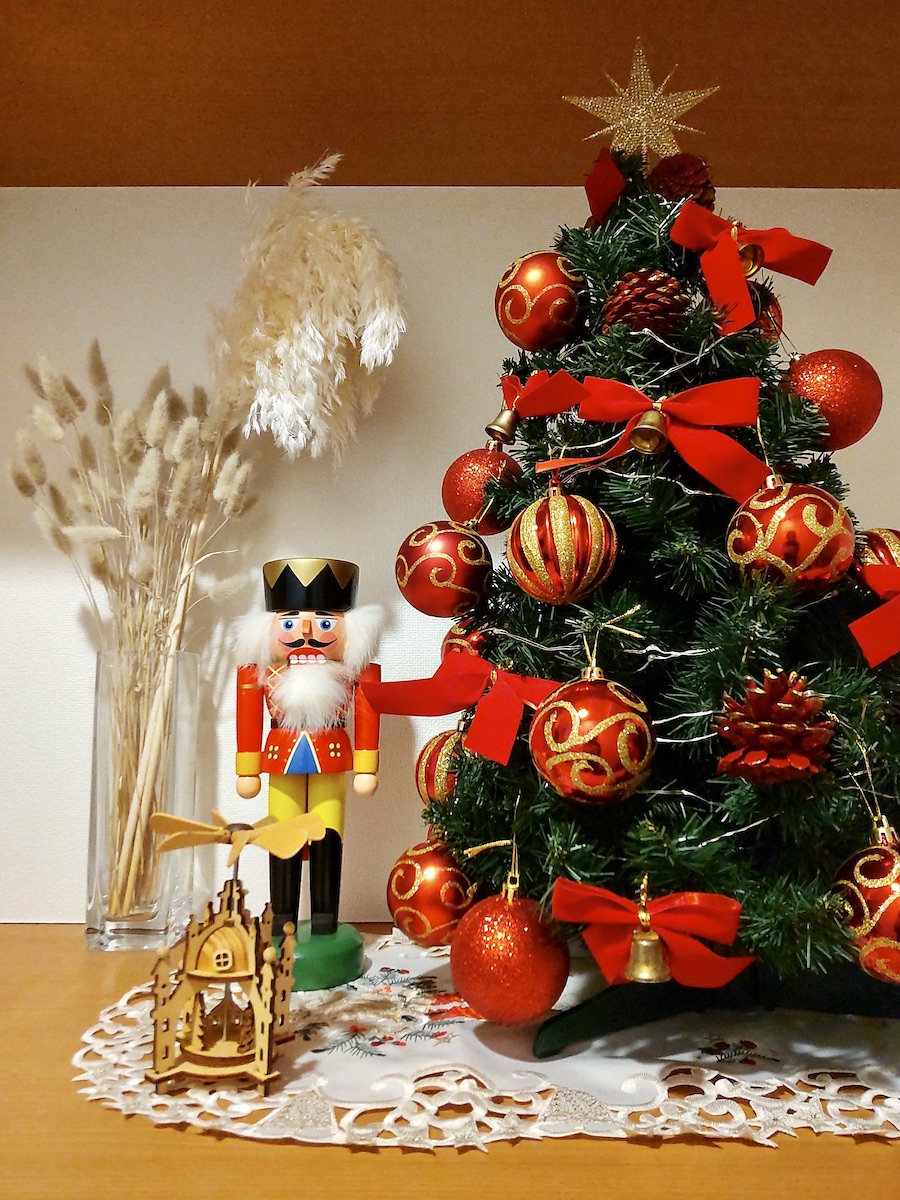
The wooden toy and the nutcracker are from Käthe Wohlfahrt. By decorating the tree with red ornaments and wooden toys, I created a warm and cozy atmosphere that made me feel as if I were back at my parents’ house. It’s not exactly a simple modern style, but I still love how it feels.
White and silver decorations
This is my Christmas tree from last year. I decorated it with white and silver ornaments, along with large transparent snowflakes from a 100-yen shop, Can-do. The gift box decorations were from IKEA. My favorite is the snowflake ornament. Although it has a simple design, it is as beautiful as if it were made of ice frozen on water.
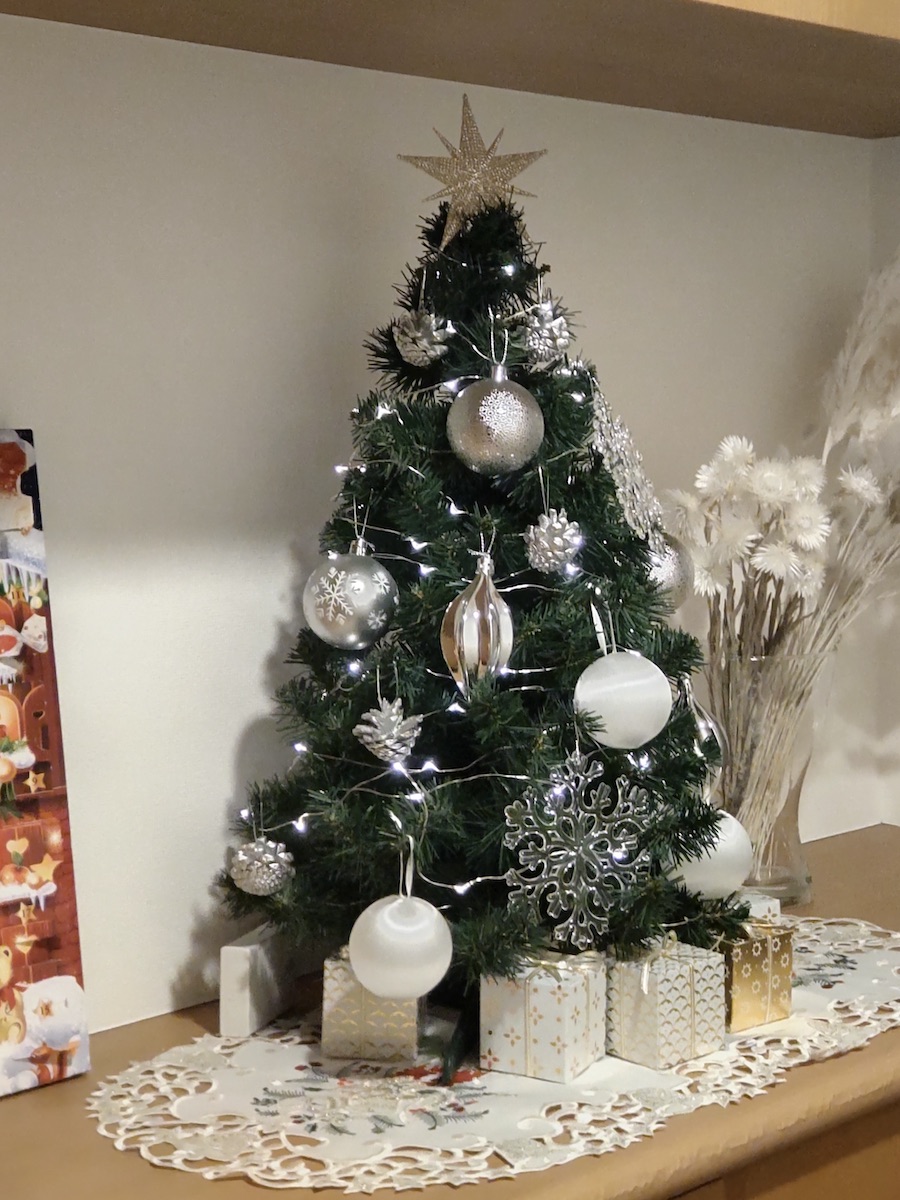 One of my favorite things about this small Christmas tree is how I decorated it with large ornaments. The contrast between the tiny tree and the oversized decorations makes it feel playful and cozy at the same time. I love how it draws the eye and gives the space a cheerful, festive touch without taking up too much room.
What is a 100-Yen Shop?
A 100-yen shop is a store that offers a wide variety of items for 100 yen each (approx. $0.6 / €0.5), and it is also very popular among tourists. They are very convenient when you want to buy small items because they are affordable and the total cost is easy to calculate. Also, please note that seasonal items, such as calendars and holiday event goods, are not available year-round.
Next Year’s Color
Actually, a friend also gave me a beautiful champagne gold ornament recently, so I was planning to go with a gold theme. However, I couldn’t get everything ready in time this year. I’ll look forward to trying that look next year!
Enjoy with Your Eyes and Taste Buds
This is a Lindt advent calendar that I bought at the Lindt shop in LaQua near Suidobashi. It’s covered in cute bear illustrations and brings a little joy to my home every day leading up to Christmas.Inside, there are classic chocolates along with bear-shaped ones. Sometimes, two chocolates come out at once, which my child seemed to really enjoy.
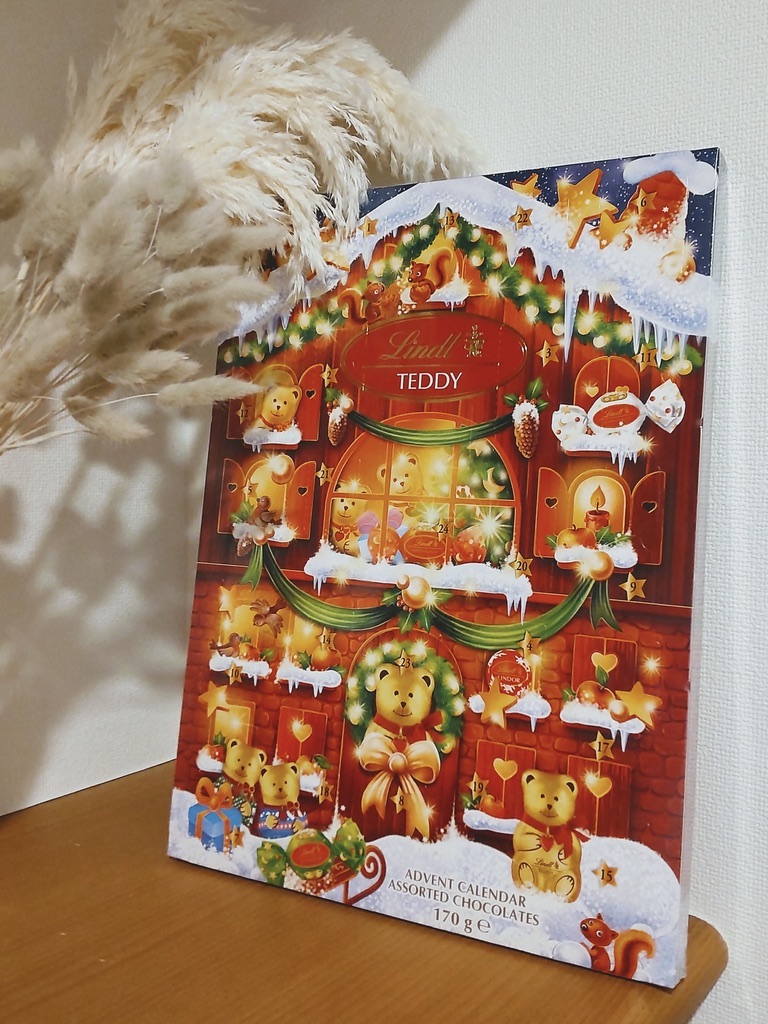 Since I decorated the tree in red this year, I wondered if I should have bought the calendar again. However, I decided to skip it because the illustrations were exactly the same as last year. Still, thinking about the sweet, smooth taste of Lindt chocolate makes it irresistible! There are also versions with more sophisticated designs, not just for children, so I’d like to get one next time.
White Dried Flowers
After the holidays, I packed up the decorations and transitioned to a simpler look, featuring the fluffy white dried flowers as the centerpiece. I bought these dried flowers for the fall and winter seasons. They add an extra sense of warmth that is perfect for the cold weather.
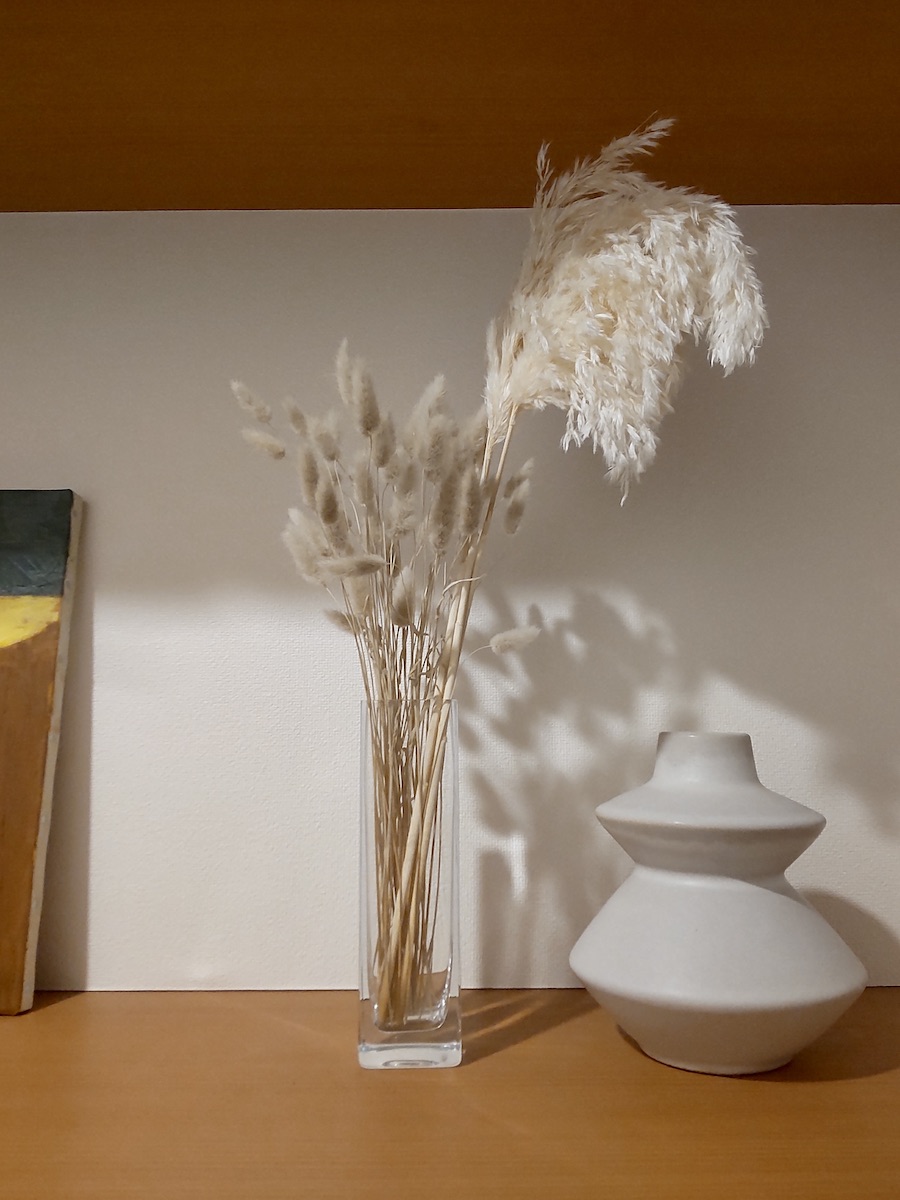 The white vase next to them was purchased at ACTUS, which I mentioned earlier. I love its unique shape—it reminds me of a Baumkuchen or even a torso. Although this vase isn’t designed for water, it works beautifully as a decorative object on its own. It’s also an ideal match for my dried flowers, so the limitation hasn’t been a problem for me.
Conclusion
Decorating a small space with seasonal items is a simple yet meaningful way to bring a sense of time and tradition into your home. From traditional Japanese celebrations to modern, minimal displays, even a small corner can reflect the beauty of each season. By combining personal memories with thoughtful styling, you can create a space that feels both comforting and uniquely your own.
Recommended For:
- Those interested in Japanese seasonal traditions and home styling
- People looking for simple, small-space decorating ideas
- Anyone who enjoys blending traditional and modern aesthetics
- Home decorators who prefer low-maintenance, seasonal displays
- Solo homeowners or families wanting to add a personal touch to everyday spaces
Explore more everyday Japanese food experiences below:
Japanese Food Experiences: Hot Pot, Bento, Cakes, and Eel Rice Bowls
Explore experiences in Karuizawa and LaQua below:
Information
Information, prices and exchange rates are current as of my visit but may change. Please check official sites.
Yoshitoku Dolls
- Hina doll – from around ¥100,000 (approx. $635 / €542)
- Access – Just a few steps from Asakusabashi Station
Kyugetsu
- Official English website
- Kabuto – from around ¥100,000 (approx. $635 / €542)
- Access – Just a few steps from Asakusabashi Station
- Google Maps
Lladró’s Hina doll
- Official English website
- Prices may vary by country. In Japan, usually from around ¥300,000 (approx. $1935 / €1637)
Dried Flowers
- Raw materials (bundle) – around ¥800 (approx. $3.2 / €2.7)
- Access – About 490 ft (150 m) from Tokyo Station
- garage TOKYO
Flower Vases
- Price – ¥3,000 (approx. $19.0 / €16.2)
- Access – About 560 ft (170 m) from Tokyo Station
- ACTUS Marunouchi
Akabeko
- Price – ¥1,000 (approx. $6.3 / €5.4)
- Access – About 1150 ft (350 m) from Kanda Station
- MIDETTE